


Wydawcy
Katalog tematyczny
- Archeologia (109)
- Ekonomia, finanse, business (13704)
- Filozofia (1445)
- Historia (3040)
- Języki i językoznawstwo (2356)
- Lifestyle, hobby i rozrywka (475)
- Medycyna (9704)
- Nauki humanistyczne (4)
- Nauki o Ziemi i środowisku (2638)
- Nauki ścisłe (20412)
- Nauki społeczne (8486)
- Nauki techniczne (13450)
- Prawo (1696)
- Publikacje informacyjne i interdyscyplinarne (1288)
- Religia i wierzenia (917)
- Technika komputerowa (4067)
- Zdrowie, relacje międzyludzkie i rozwój osobisty (657)





Informacje szczegółowe o książce
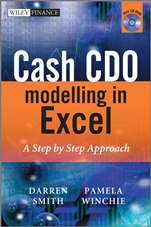
Cash CDO Modelling in Excel: A Step by Step Approach
ISBN 9780470741573
Autor: Darren Smith, Pamela Winchie
Wydawca: Wiley
Dostępność: 3-6 tygodni
Cena: 312,90 zł
Przed złożeniem zamówienia prosimy o kontakt mailowy celem potwierdzenia ceny.
ISBN13: |
9780470741573 |
ISBN10: |
0470741570 |
Autor: |
Darren Smith, Pamela Winchie |
Oprawa: |
Hardback |
Rok Wydania: |
2010-05-21 |
Ilość stron: |
356 |
Wymiary: |
251x170 |
Tematy: |
KF |
This book is an introduction to the modelling of cash collateralised debt obligations (“CDOs”). It is intended that the reader have a basic understanding of CDOs and a basic working knowledge of Microsoft Office Excel. There will be written explanations of concepts along with understandable mathematical explanations and examples provided in Excel. A CD–ROM containing these Excel examples will accompany the book.
Spis treści:
Acknowledgments.
1 Introduction.
1.1 To Excel or Not to Excel?
1.2 Existing Tools and Software.
2 What is a Cash CDOs?
2.1 Types of CDOs.
2.2 Description of a Cash Flow CDO.
2.3 Life Cycle of a Cash CDO.
2.4 Contribution to the "Credit Crunch".
3 Introduction to Modelling.
3.1 Goals in Modelling.
3.2 Modelling Philosophies and Trade–Offs.
3.3 Flexibility.
3.4 Organization and Layout of a Model.
3.5 Life–Cycle Issues: Building an Adaptable Model.
4 Prerequisites to Cash Flow Modelling.
4.1 Modelling Dates.
4.2 Interest Rate Curve Modelling.
4.3 Present Value Modelling.
5 Getting Started.
5.1 Create the Input Sheet.
5.2 The Value of Labelling.
6 Modelling Assets.
6.1 Initial Asset Pool: Rep Line Modelling vs. Actual Assets.
6.2 The Collateral Sheet in the Cash Flow Model.
6.3 Modelling Defaults and Recoveries.
6.4 Amortization.
6.5 Modelling Reinvestment.
6.6 Reinvestment Cohorts.
6.7 Accounts.
6.8 Timing Models vs. Actual Timing.
6.9 Simple Warehouse Modelling.
7 Basic Waterfall Modelling.
7.1 Basic Waterfalls.
7.2 Layout and Design.
7.3 Avoiding Negative Values.
7.4 Timing Modelled vs. Actual Timing.
7.5 Liabilities Cash Flows.
7.6 Fees and Expenses Cash Flows.
7.7 Interest Waterfall.
7.8 Interest Waterfall (Available Funds after Payment).
7.9 Interest Waterfall Calculations.
7.10 Principal Waterf
all.
7.11 Principle Waterfall (Available Funds after Payment).
7.12 Principal Waterfall Calculations.
7.13 Adding Over–Collaterization Tests.
7.14 Adding Interest Coverage Tests.
7.15 Technical Issues with Coverage Tests.
8 Outputs Sheet.
8.1 Purpose of the Outputs Sheet.
8.2 Collating Waterfall Outputs.
8.3 Present Value.
8.4 Duration.
8.5 Weighted Average Life and Internal Rate of Return.
8.6 Equity Analysis.
8.7 Basic Auditing.
9 Moody′s Rating Agency Methodology.
9.1 Introduction to Agency Methodologies.
9.2 The Bet Approach.
9.3 Evaluating the Collateral.
9.4 Creating the Moody′s Sheet and Related References in the Cash Flow Model.
9.5 Default Profiles.
9.6 Interest Rate Profiles.
9.7 Running the Analysis.
9.8 Variations on the BET.
9.9 2009 Methodology Update.
10 Standard & Poor’s Rating Methodology.
10.1 The S&P Approach.
10.2 Evaluating the Collateral.
10.3 Modelling Recovery Rates.
10.4 CDO Evaluator.
10.5 Default Rates.
10.6 Interest Rate Stresses.
10.7 Amortization.
10.8 Additional S&P Modelling Criteria.
10.9 Building the S7P Sheet and Related References.
10.10 Running the Stress Scenarios.
11 Advanced Waterfall Modelling.
11.1 Hedge Agreements.
11.2 Fixed Notes.
11.3 Variable Funding Notes.
11.4 Liquidity Facilities.
11.5 Interest Reserve Accounts.
11.6 Other Structural Features.
11.7 Combination Notes.
11.8 Collateral Manager Equity Analysis.
12 Maintaining the Cash Flow Model.
12.1 Adapting Your Model for Different Capital Structures.
12.2 Audit Sheet.
12.3 Debugging.
13 Advanced Structuring Issues.
13.1 Projecting Accrued Interest.
13.2 Collating Collateral Cash Flows.
14 Sourcing and Integrating Data From External Systems.
14.1 Data Requirements.
14.2 Trustee Reports.
14.3 Bloomberg.
14.4 Lo
an Level Information Sources.
15 Regulatory Applications of CDO Technology.
15.1 The Basel Accords.
15.2 Regulatory Capital Requirements for CDO Notes.
15.3 The Standardized Approach for CDOS.
15.4 The Internal Ratings–Based Approach for CDOS.
15.5 The Internal Ratings–Based Approach for CDOS: The Ratings–Based Approach.
15.6 The Internal Ratings–Based Approach for CDOS: The Supervisory Formula Approach.
15.7 The Internal Ratings–Based Approach: Liquidiity Facilities, Overlapping Exposures, Credit Risk Mitigation and Early Amortization Features.
15.8 Supervisory Provisions.
15.9 Updates to Basel II.
16 CDO Valuation.
16.1 Introduction.
16.2 Basic Valuation Approaches.
16.3 Traditional Underwriter Analysis.
16.4 Fundamental Cash Flow Analysis.
16.5 Using Rating Agency Models.
16.6 Transition Matrices.
16.7 Conclusion.
17 In Conclusion.
Index.
Koszyk
Książek w koszyku: 0 szt.
Wartość zakupów: 0,00 zł
Informacje


Kontakt
Gambit
Centrum Oprogramowania
i Szkoleń Sp. z o.o.
Al. Pokoju 29b/22-24
31-564 Kraków
Siedziba Księgarni
ul. Kordylewskiego 1
31-542 Kraków
+48 12 410 5991
+48 12 410 5987
+48 12 410 5989
Subskrypcje
Administratorem danych osobowych jest firma Gambit COiS Sp. z o.o. Na podany adres będzie wysyłany wyłącznie biuletyn informacyjny.
Autoryzacja płatności

Informacje na temat autoryzacji płatności poprzez PayU.

© Copyright 2012: GAMBIT COiS Sp. z o.o. Wszelkie prawa zastrzeżone.
Projekt i wykonanie: Alchemia Studio Reklamy