


Wydawcy
Katalog tematyczny
- Archeologia (109)
- Ekonomia, finanse, business (13704)
- Filozofia (1445)
- Historia (3040)
- Języki i językoznawstwo (2356)
- Lifestyle, hobby i rozrywka (475)
- Medycyna (9704)
- Nauki humanistyczne (4)
- Nauki o Ziemi i środowisku (2638)
- Nauki ścisłe (20412)
- Nauki społeczne (8486)
- Nauki techniczne (13450)
- Prawo (1696)
- Publikacje informacyjne i interdyscyplinarne (1288)
- Religia i wierzenia (917)
- Technika komputerowa (4067)
- Zdrowie, relacje międzyludzkie i rozwój osobisty (657)





Informacje szczegółowe o książce
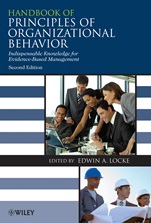
Handbook of Principles of Organizational Behavior: Indispensable Knowledge for Evidence–Based Management
ISBN 9780470740941
Autor: Edwin Locke
Wydawca: Wiley
Dostępność: 3-6 tygodni
Cena: 260,40 zł
Przed złożeniem zamówienia prosimy o kontakt mailowy celem potwierdzenia ceny.
ISBN13: |
9780470740941 |
ISBN10: |
0470740949 |
Autor: |
Edwin Locke |
Oprawa: |
Paperback |
Rok Wydania: |
2009-07-17 |
Numer Wydania: |
2nd Edition |
Ilość stron: |
682 |
Wymiary: |
244x170 |
Tematy: |
KM |
Developed from decades of research and consulting, this international handbook identifies 30 timeless management principles every manager should know. With contributions from some of the foremost experts in organizational behavior, this insightful book demonstrates how theories of organizational behavior can be successfully applied to the workplace. With additional coverage on change, leadership, and knowledge, the new updated edition includes contributions from such notables as Teresa Amabile, Jay Conger, Fred Luthans, Antonio DeNisi, and Michael Beer.
Spis treści:
Preface: Evidence–Based Management, Denise Rousseau.
Editors Introduction: The Epistemological Side of Teaching Management: Teaching through Principles.
PART I: SELECTION.
1. Select on Intelligence (Frank L. Schmidt).
2. Select on Conscientiousness and Emotional Stability (Murray Barrick and Michael Mount).
3. Structure Interviews to Recruit and Hire the Best People (Cynthia Kay Stevens).
PART II: TRAINING AND PERFORMANCE APPRAISAL.
4. Design Training Systematically and Follow the Science of Training (Eduardo Salas and Kevin Stagl).
5. Conduct Performance Appraisals to Improve Individual and Firm Performance (Maria Rotundo).
PART III: TURNOVER AND SATISFACTION.
6. Promote Job Satisfaction through Mental Challenge (Timothy A. Judge and Ryan Klinger).
7. Control Voluntary Turnover by Understanding its Causes (Marion B. Eberly, Brooks C. Holton, Thomas W. Lee and Terence R. Mitchell).
PART IV: MOTIVATION.
8. Attain Emotional Control by Understanding What Emotions Are (Edwin A. Locke).
9. Motivate Employee Performance through Goal Setting (Gary P. Latham).
10. Cultivate Self–Efficacy for Personal and Organizational Effectiveness (Albert Bandura).
11. Using Empowerments to Motivate People to Engage in Effective Self– and Shared Leadership (Jay A. Con
ger and Craig L. Pearce).
12. Pay for Performance (Cathy C. Durham and Kathryn M. Bartol).
13. Provide Recognition for Performance Improvement (Fred Luthans and Alexander D. Stajkovic).
14. Promote Procedural and Interactional Justice to Enhance Individual and Organizational Outcomes (Jerald Greenberg).
PART V: TEAM DYNAMICS.
15. Foster Team Effectiveness by Fulfilling Key Leadership Functions (Richard Hackman and Ruth Wageman).
16. Compose Teams to Assure Successful Boundary Activity (Deborah Ancona and David Caldwell).
17. Making Group Process Work: Harnessing Collective Intuition, Task Conflict, and Pacing (Gerardo A. Okhuysen and Beth A. Bechky).
18. Manage Intra–Team Conflict Through Collaboration (Laurie Weingart and Karen Jehn).
PART VI: LEADERSHIP.
19. Use Power Effectively to Influence People (Gary Yukl).
20. Lead through Vision and Values (Shelley A Kirkpatrick).
21. Foster Trust through Ability, Benevolence and Integrity (Jason A. Colquitt and Sabrina C. Salam).
PART VII: ORGANIZATIONAL PROCESSES.
22. Design Structure to Fit Strategy (Lex Donaldson).
23. Communication Successfully by Seeking Balance (Deborah Cai and Edward L. Fink).
24. Use Participation to Share Information and Distribute Knowledge (John A. Wagner III).
25. Broaden the Decision Frame to Make Effective Decisions (Richard P. Larrick).
26. Stimulate Creativity by Fueling Passion (Teresa A. Amabile and Colin M.Fisher).
27. Manage Stress at Work through Preventive and Proactive Coping (Tabea Reuter and Ralf Schwarzer).
28. Manage Conflict through Negotiation and Mediation (Susan M. Taylor and Ashley Fielbig).
29. Sustain Organizational Performance through Continuous Learning, Change and Realignment (Michael Beer).
PART VIII: ENTREPRENEURSHIP.
30. Gain Entrepreneurship Success through Swiftn
ess and Experimentation (J. Robert Baum).
PART IX: WORK, FAMILY, TECHNOLOGY AND CULTURE.
31. Achieve Work–Family Balance through Individual and Organizational Strategies (Boris B Baltes and Malissa A. Clark).
32. Use Information Technology for Organizational Change (Maryam Alavi and Youngjin Yoo).
33. Make Management Practice Fit National Cultures and the Global Culture (Miriam Erez).
Index.
Koszyk
Książek w koszyku: 0 szt.
Wartość zakupów: 0,00 zł
Informacje


Kontakt
Gambit
Centrum Oprogramowania
i Szkoleń Sp. z o.o.
Al. Pokoju 29b/22-24
31-564 Kraków
Siedziba Księgarni
ul. Kordylewskiego 1
31-542 Kraków
+48 12 410 5991
+48 12 410 5987
+48 12 410 5989
Subskrypcje
Administratorem danych osobowych jest firma Gambit COiS Sp. z o.o. Na podany adres będzie wysyłany wyłącznie biuletyn informacyjny.
Autoryzacja płatności

Informacje na temat autoryzacji płatności poprzez PayU.

© Copyright 2012: GAMBIT COiS Sp. z o.o. Wszelkie prawa zastrzeżone.
Projekt i wykonanie: Alchemia Studio Reklamy