


Wydawcy
Katalog tematyczny
- Archeologia (109)
- Ekonomia, finanse, business (13704)
- Filozofia (1445)
- Historia (3040)
- Języki i językoznawstwo (2356)
- Lifestyle, hobby i rozrywka (475)
- Medycyna (9704)
- Chirurgia (272)
- Inne gałęzie medycyny (1871)
- Medycyna kliniczna (4187)
- Choroby wewnętrzne (514)
- Dermatologia (51)
- Diagnostyka medyczna (3)
- Endokrynologia (144)
- Gastroenterologia (27)
- Geriatria (50)
- Ginekologia i położnictwo (134)
- Hematologia (46)
- Hepatologia (10)
- Kardiologia (71)
- Laryngologia (12)
- Nefrologia (10)
- Neurologia (500)
- Oftalmologia (50)
- Pediatria (33)
- Pulmunologia (32)
- Reumatologia (14)
- Terapia genowa (1)
- Układ mięśniowo-szkieletowy (1)
- Urologia (14)
- Medycyna niekonwencjonalna (14)
- Medycyna przedkliniczna (269)
- Medycyna, ogólnie (1740)
- Medyczne służby pomocnicze (745)
- Studia medyczne (16)
- Weterynaria (548)
- Nauki humanistyczne (4)
- Nauki o Ziemi i środowisku (2638)
- Nauki ścisłe (20412)
- Nauki społeczne (8486)
- Nauki techniczne (13450)
- Prawo (1696)
- Publikacje informacyjne i interdyscyplinarne (1288)
- Religia i wierzenia (917)
- Technika komputerowa (4067)
- Zdrowie, relacje międzyludzkie i rozwój osobisty (657)





Informacje szczegółowe o książce
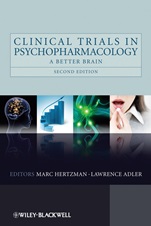
Clinical Trials in Psychopharmacology: A Better Brain
ISBN 9780470740767
Autor: Marc Hertzman, Lawrence Adler
Wydawca: Wiley
Dostępność: 3-6 tygodni
Cena: 473,55 zł
Przed złożeniem zamówienia prosimy o kontakt mailowy celem potwierdzenia ceny.
ISBN13: |
9780470740767 |
ISBN10: |
0470740760 |
Autor: |
Marc Hertzman, Lawrence Adler |
Oprawa: |
Hardback |
Rok Wydania: |
2010-01-22 |
Numer Wydania: |
2nd Edition |
Ilość stron: |
406 |
Wymiary: |
253x181 |
Tematy: |
MJ |
Although clinical trials were virtually unheard of in psychiatry for many years, they are now the gold standard for judging whether drugs are safe and useful. But should they be? What is the true status of clinical trials? Even when they ostensibly demonstrate a benefit of a certain treatment, the strict patient selection criteria, poor compliance and high drop–out rate leave the conclusions open to question. Are the new treatments really better or more cost–effective than the old? Do they have fewer side effects?
In this book the authors take a critical look at recent developments and present a series of trenchant and challenging observations. Section I examines the significant changes in law and the regulatory environment that have occurred during the past ten years. Has fossilization handicapped the US Food and Drug Administration in promoting treatment advances? How can the plethora of findings be regulated? This is particularly pertinent in genomic studies and there are two chapters addressing the impact of genomics on psychiatric research. This section also addresses the role of women in drug trials – a group long excluded but now demanding a part, for without testing how can optimal treatments be devised?
The next two Sections highlight clinical trials in the major areas of psychiatric pharmacological treatment, including Mood Disorders, especially Bipolar, Anxiety Disorders, and addictions. Chapters on pharmacological treatments for Eating Disorders, Attention Deficit Disorder, Autism and Asperger’s Syndrome, and Impulse Control Disorder represent the latest thinking on these subjects.
The final Section contains a consummate example of out–of–the [Western]– box thinking, namely consideration of herbal medicines – used by a large number of patients, with or without medical supervision. We conclude with a close look at the problem of side effects, then selected thoughts about methodology.
Clearly wri
tten, the text provides immediate access to new developments across the spectrum of drug testing. Clinical Trials in Psychopharmacology: A Better Brain is provocative reading for psychiatrists, pharmacologists and all those interested in improved drug treatments for patients with mental illness.Raises questions about the conduct of trials and the credibility of their outcomes that are relevant not just in psychiatry but all areas of medicine
Discusses the ethical problems in assessing outcomes in humans, including children
Spis treści:
Acknowledgments.
Introduction.
List of Contributors.
SECTION I: The Health Care Environment and Medications.
1. FDA Reform Déjà vu Encore (John J. Cohrssen).
1.1 Introduction.
1.2 The 1992 prescription drug user fee act adds funds and changes FDA’s focus.
1.3 PDUFA shortens drug review times and eliminates the drug lag.
1.4 PDUFA timetables feed safety concerns.
1.5 FDA responds to safety concerns.
1.6 The pipeline problem.
1.7 The 2007 FDA Science Board’s Subcommittee on Science and Technology report.
1.8 The FDAAA of 2007 reauthorize PDUFA and provide new authority to address safety and the critical path initiative.
1.9 The impact of PDFUA on FDA.
1.10 Comparative medical benefits, comparative effectiveness and FDA.
1.11 FDA and non–inferiority trials.
1.12 FDA and CMS decisions on medicare coverage.
1.13 Preemption: FDA’s role in relation to liability litigation in state courts.
1.14 FDA’s exclusivity in allowing access to experimental drugs.
1.15 Conclusions.
2. Do Antidepressants Cause Suicide (Marc Hertzman).
2.1 Some definitional problems.
2.2 A brief history of the concerns of suicidality caused by antidepressants.
2.3 Politics rears its ugly head.
2.4 The FDA responds to fear of its own shadow.
2.
5 What changes in public policy wrought.
2.6 A funny thing happened on the way to the forum.
2.7 Meanwhile back at the ranch.
2.8 Moral (maybe).
3. The Genome, Genes and Brain – Tailored Drugs (Lawrence Adler).
3.1 Introduction.
3.2 Issues in new drug development.
3.3 Early development of psychiatric pharmaceutical entities.
3.4 Advances in research technology.
3.5 Review of genetics.
3.6 Activation of genes by signal transduction cascades.
3.7 The human genome.
3.8 The sequencing of the genome.
3.9 DNA variation.
3.10 Genes and illness.
3.11 Genomic findings, potential targets and new drug development.
3.12 Conclusion .
4. Patenting and Licensing Concerns in Psychiatric Genetics (Jorge A. Goldstein and Karen R. Markowicz).
4.1 Genetic diagnoses in psychiatry.
4.2 The evolving patent landscape in psychiatry.
4.3 Approaches to solving potential problems.
4.4 Conclusions.
5. Women’s Issues in Clinical Trials (Mary Seeman).
5.1 History.
5.2 Perceived advantages of excluding women.
5.3 Change in perspective.
5.4 Have things changed?.
5.5 Progress since 1993.
5.6 Reported current difficulties in including women.
5.7 Contraception in clinical trials.
5.8 Drugs in lactating women.
5.9 How often do women take drugs during pregnancy?.
5.10 Ethical issues: risk/benefit analysis.
5.11 Adequate information.
5.12 Adolescent women.
5.13 Recruitment and retention of women.
SECTION II Clinical Trials and Mood Disorders.
6. Issues and Clues in the Pharmacological Treatment of Mood Disorders (F. Jollant, A Ionita and P Courtet).
6.1 What do we know about mood disorders that may be relevant for their pharmacological treatment?.
6.2 Are there clues for the pharmacological treatment of mood disorders?.
6.3 Perspectives.
7. Bipolar Disorder (A. Bochetta).
7.1 Trials in acute
mania.
7.2 Trials in acute bipolar depression.
7.3 Trials in maintenance of bipolar disorder.
7.4 What is a mood stabilizer?.
7.5 What controlled trials cannot tell us about treatment of bipolar disorder.
8. Special Issues of Research Methodology in Bipolar Disorder Clinical Treatment Trials (R. M. Post).
8.1 Introduction.
8.2 Efficacy–effectiveness gap.
8.3 Trials for drug registration versus those that are most clinically informative.
8.4 Needed for designs that more optimally inform clinical practice.
8.5 ‘Hidden’ high degrees of treatment resistance.
8.6 Controversy about optimal designs and rating instruments.
8.7 The traditional RCT is expensive, cumbersome and prone to failure.
8.8 Alternative designs for pilot and proof of principle efficacy studies.
8.9 Statistical analysis of N–of–1 trials.
8.10 Statistical approaches to estimating necessary trial durations in individual patients.
8.11 Crossover trials for enhancing clinical informatics and statistical power.
8.12 Carryover effects.
8.13 Long–term trend for understudy of bipolar disorder compared to other major mental disorders.
8.14 Parallel and pressing design issues for childhood–onset bipolar illness.
8.15 Contradictory balance between inclusiveness (for generalizability) and homogeneity (for efficacy).
8.16 Assessing moderators and mediators.
8.17 Conclusions and implications.
9. The Utility of Low–dose Antidepressants (Monica L. Zilberman, Clarice Gorenstein and Valentim Gentil).
9.1 Introduction.
9.2 Low dose antidepressants for chief indications.
9.3 Antidepressant use for other indications.
9.4 Emotion regulation in healthy individuals.
9.5 Conclusion.
SECTION III Clinical Trials in Anxiety and Other Disorders.
10. Clinical Trials for Anxiety Disorders (Marco Mula and Gionata Strigaro).
10.1 Introduction.
1
Koszyk
Książek w koszyku: 0 szt.
Wartość zakupów: 0,00 zł
Informacje


Kontakt
Gambit
Centrum Oprogramowania
i Szkoleń Sp. z o.o.
Al. Pokoju 29b/22-24
31-564 Kraków
Siedziba Księgarni
ul. Kordylewskiego 1
31-542 Kraków
+48 12 410 5991
+48 12 410 5987
+48 12 410 5989
Subskrypcje
Administratorem danych osobowych jest firma Gambit COiS Sp. z o.o. Na podany adres będzie wysyłany wyłącznie biuletyn informacyjny.
Autoryzacja płatności

Informacje na temat autoryzacji płatności poprzez PayU.

© Copyright 2012: GAMBIT COiS Sp. z o.o. Wszelkie prawa zastrzeżone.
Projekt i wykonanie: Alchemia Studio Reklamy