


Wydawcy
Katalog tematyczny
- Archeologia (109)
- Ekonomia, finanse, business (13704)
- Filozofia (1445)
- Historia (3040)
- Języki i językoznawstwo (2356)
- Lifestyle, hobby i rozrywka (475)
- Medycyna (9704)
- Chirurgia (272)
- Chirurgia naczyniowa (8)
- Chirurgia ogólna (37)
- Chirurgia plastyczna (20)
- Gastrologia (6)
- Kardiochirurgia (14)
- Neurochirurgia (23)
- Onkologia chirurgiczna (4)
- Ortopedia (72)
- Techniki chirurgiczne (1)
- Transplantologia (5)
- Inne gałęzie medycyny (1871)
- Medycyna kliniczna (4187)
- Medycyna niekonwencjonalna (14)
- Medycyna przedkliniczna (269)
- Medycyna, ogólnie (1740)
- Medyczne służby pomocnicze (745)
- Studia medyczne (16)
- Weterynaria (548)
- Nauki humanistyczne (4)
- Nauki o Ziemi i środowisku (2638)
- Nauki ścisłe (20412)
- Nauki społeczne (8486)
- Nauki techniczne (13450)
- Prawo (1696)
- Publikacje informacyjne i interdyscyplinarne (1288)
- Religia i wierzenia (917)
- Technika komputerowa (4067)
- Zdrowie, relacje międzyludzkie i rozwój osobisty (657)





Informacje szczegółowe o książce
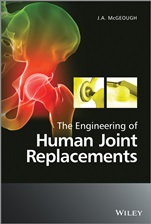
The Engineering of Human Joint Replacements
ISBN 9780470740279
Autor: J. A. McGeough
Wydawca: Wiley
Dostępność: 3-6 tygodni
Cena: 501,90 zł
Przed złożeniem zamówienia prosimy o kontakt mailowy celem potwierdzenia ceny.
ISBN13: |
9780470740279 |
ISBN10: |
0470740272 |
Autor: |
J. A. McGeough |
Oprawa: |
Hardback |
Rok Wydania: |
2013-12-13 |
Ilość stron: |
238 |
Wymiary: |
235x153 |
Tematy: |
MN |
Since the pioneering of joint replacement surgery more than 50 years ago, much research and progress has been made in the field of arthroplasty, with new insights into better materials, types of cement and bone–cell compatible coatings, and a better understanding of the causes of implant failure. With an increasingly ageing population the requirement for arthroplastic surgery is manifest; over 800 000 hips worldwide are replaced each year and replacement surgery is performed for almost every joint of the body. The Engineering of Human Joint Replacements covers the design, engineering, production and manufacture of human joint replacements, as well as associated engineering concerns such as surface coatings, orthopaedic bone cement, the causes and effects of wear and tear, and rapid prototyping for clinical evaluation. Materials evaluation and selection are discussed, as well as production processes and insertion methods. The author provides an overview of skeletal anatomy and the effects of pain and deterioration, in order to put the engineering principles into a medical context. Examples of joint replacements for the most common regions of the body are included, and aspects of clinical studies of these cases are discussed. Key features: Provides an overview of the engineering materials and processes involved in the manufacture of human joint replacements. Sets the scene for engineers and clinicians embarking on research into joint replacements. Includes clinical and industrial examples and points the way to future developments. Provides information on medical device companies, with an engineering guide to the requirements for joint replacement. The Engineering of Human Joint Replacements bridges the divide between engineering and orthopaedic surgery, offering an introductory text to young engineers entering the field, as well as a reference for medical staff, who will benefit from an understanding of the materials and methods used in their design, engineering and manufacture.
Preface xi 1 Introduction 1 References 5 2 Basic Anatomy 7 2.1 Terminology 7 2.2 Human Skeleton 8 2.3 Joints 10 2.4 Cartilage 10 2.5 Protein and Collagen 11 2.6 Human Bone 14 2.6.1 Structure of Bone 14 2.6.2 Mechanical Properties of Bone 18 2.6.3 Bases of Biomechanics of Joints 20 References 22 3 Anatomy of Joints 25 3.1 Shoulder 25 3.1.1 Anatomy of the Shoulder Joint 25 3.1.2 Biomechanics of the Shoulder Joint 27 3.2 Elbow 29 3.2.1 Anatomy of the Elbow Joint 29 3.2.2 Biomechanics of the Elbow Joint 30 3.3 Wrist 34 3.3.1 Anatomy of the Wrist Joint 34 3.3.2 Biomechanics of the Wrist Joint 36 3.4 Finger 38 3.4.1 Anatomy of the Finger Joint 38 3.4.2 Biomechanics of the Finger Joint 38 3.5 Hip 38 3.5.1 Anatomy of the Hip Joint 39 3.5.2 Biomechanics of the Hip Joint 41 3.6 Knee 43 3.6.1 Anatomy of the Knee Joint 43 3.6.2 Biomechanics of the Knee Joint 46 3.7 Ankle 49 3.7.1 Anatomy of the Ankle Joint 49 3.7.2 Biomechanics of the Ankle Joint 51 3.8 Foot 52 3.8.1 Anatomy of the Foot Joints 52 3.8.2 Biomechanics of the Foot Joints 52 3.9 Toe 52 3.9.1 Anatomy of the Toe Joints 52 3.9.2 Biomechanics of the Toe Joints 53 3.10 Degradation of Joints 54 3.10.1 Introduction 54 3.10.2 Osteoarthritis (OA) 54 3.10.3 Rheumatoid Arthritis (RA) 54 3.10.4 Infection and Trauma 56 References 56 4 Methods of Inspection for Joint Replacements 59 4.1 Introduction 59 4.2 Gait Analysis 60 4.3 X–ray 61 4.4 Tomography and Computed Tomography (CT) 64 4.5 Radionuclide Scanning 66 4.6 Ultrasonography 66 4.7 Magnetic Resonance Imaging (MRI) 67 References 69 5 Materials in Human Joint Replacement 71 5.1 Introduction 71 5.2 Alloy Metals 71 5.2.1 Stainless Steel 72 5.2.2 Cobalt–Based Alloys 74 5.2.3 Titanium–Based Alloys 76 5.2.4 Tantalum Trabecular Metal 78 5.2.5 Magnesium Alloys 78 5.3 Ceramics 79 5.3.1 Structure 79 5.3.2 Mechanical Properties 79 5.3.3 Applications of Ceramics in Joint Replacements 81 5.4 Polymers 83 5.4.1 Structure 83 5.4.2 Ultra–high Molecular Weight Polyethylene (UHMWPE) 84 5.4.3 Polymer Cement 87 5.5 Joint Replacement Materials in Service 91 5.5.1 Wear and Friction 91 5.5.2 Fatigue and Creep 92 5.5.3 Corrosion 93 5.6 Nanomaterials 95 References 98 6 Methods of Manufacture of Joint Replacements 103 6.1 Introduction 103 6.2 Surface Finish 104 6.3 Tolerance 106 6.4 Wear and Friction 106 6.5 Machining 106 6.5.1 Milling 106 6.5.2 Grinding 108 6.5.3 Turning 108 6.5.4 Electrochemical Machining (ECM) 110 6.5.5 Electrodischarge Machining (EDM) 111 6.6 Forging 112 6.7 Casting 114 6.7.1 Casting of Metals 114 6.7.2 Casting of Ceramic Parts 115 6.8 Manufacture of Polymer Parts 119 6.9 Surface Treatment 121 6.9.1 Coatings 121 6.9.2 Plasma Spraying 121 6.9.3 Chemical and Physical Vapour Deposition (CVD and PVD) 123 6.9.4 Diamond–like Carbon (DLC) Coating 124 6.9.5 Ion Implantation 125 6.9.6 Porous Metal Coatings 125 6.10 Surface Finishing of Implants 125 6.10.1 Deburring 125 6.10.2 Electropolishing 126 6.10.3 Mechanical Polishing 126 6.10.4 Lapping 127 6.11 Manufacture of Joint Replacements 127 References 128 7 Computer–Aided Engineering in Joint Replacements 131 7.1 Introduction 131 7.2 Reverse Engineering 132 7.3 Solid Modelling 133 7.4 Finite Element Analysis (FEA) 137 7.5 Rapid Prototyping (RP) in Joint Replacement Manufacture 141 7.6 Computer–Aided Manufacture 145 7.7 Navigation 150 7.7.1 Navigation in Computer–aided Joint Replacement Surgery 150 7.7.2 Navigation in Robotic Surgery 152 7.8 Robotics 153 7.8.1 Robotics–Assisted Total Knee Replacement (TKR) 157 7.8.2 Robotics–Assisted Total Hip Replacement (THR) 159 References 162 8 Joint Replacement 167 8.1 Introduction 167 8.2 Shoulder 171 8.3 Elbow 175 8.4 Wrist 178 8.5 Fingers 180 8.6 Hip 183 8.6.1 Charnley’s Development of Total Hip Replacement (THR) 184 8.6.2 Biomechanics after Hip Joint Replacement 185 8.6.3 Further Developments in THR Engineering 187 8.6.4 Industrial Examples of THR 189 8.7 Knee 191 8.7.1 Biomechanics in Total Knee Replacement 193 8.7.2 Industrial Examples of TKR 198 8.8 Ankle 200 8.9 Foot and Toe 203 References 206 Index
Koszyk
Książek w koszyku: 0 szt.
Wartość zakupów: 0,00 zł
Informacje


Kontakt
Gambit
Centrum Oprogramowania
i Szkoleń Sp. z o.o.
Al. Pokoju 29b/22-24
31-564 Kraków
Siedziba Księgarni
ul. Kordylewskiego 1
31-542 Kraków
+48 12 410 5991
+48 12 410 5987
+48 12 410 5989
Subskrypcje
Administratorem danych osobowych jest firma Gambit COiS Sp. z o.o. Na podany adres będzie wysyłany wyłącznie biuletyn informacyjny.
Autoryzacja płatności

Informacje na temat autoryzacji płatności poprzez PayU.

© Copyright 2012: GAMBIT COiS Sp. z o.o. Wszelkie prawa zastrzeżone.
Projekt i wykonanie: Alchemia Studio Reklamy