


Wydawcy
Katalog tematyczny
- Archeologia (109)
- Ekonomia, finanse, business (13704)
- Filozofia (1445)
- Historia (3040)
- Języki i językoznawstwo (2356)
- Lifestyle, hobby i rozrywka (475)
- Medycyna (9704)
- Chirurgia (272)
- Inne gałęzie medycyny (1871)
- Medycyna kliniczna (4187)
- Choroby wewnętrzne (514)
- Dermatologia (51)
- Diagnostyka medyczna (3)
- Endokrynologia (144)
- Gastroenterologia (27)
- Geriatria (50)
- Ginekologia i położnictwo (134)
- Hematologia (46)
- Hepatologia (10)
- Kardiologia (71)
- Laryngologia (12)
- Nefrologia (10)
- Neurologia (500)
- Oftalmologia (50)
- Pediatria (33)
- Pulmunologia (32)
- Reumatologia (14)
- Terapia genowa (1)
- Układ mięśniowo-szkieletowy (1)
- Urologia (14)
- Medycyna niekonwencjonalna (14)
- Medycyna przedkliniczna (269)
- Medycyna, ogólnie (1740)
- Medyczne służby pomocnicze (745)
- Studia medyczne (16)
- Weterynaria (548)
- Nauki humanistyczne (4)
- Nauki o Ziemi i środowisku (2638)
- Nauki ścisłe (20412)
- Nauki społeczne (8486)
- Nauki techniczne (13450)
- Prawo (1696)
- Publikacje informacyjne i interdyscyplinarne (1288)
- Religia i wierzenia (917)
- Technika komputerowa (4067)
- Zdrowie, relacje międzyludzkie i rozwój osobisty (657)





Informacje szczegółowe o książce
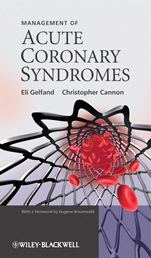
Management of Acute Coronary Syndromes
ISBN 9780470725573
Autor: Eli Gelfand, Christopher Cannon
Wydawca: Wiley
Dostępność: 3-6 tygodni
Cena: 483,00 zł
Przed złożeniem zamówienia prosimy o kontakt mailowy celem potwierdzenia ceny.
ISBN13: |
9780470725573 |
ISBN10: |
0470725575 |
Autor: |
Eli Gelfand, Christopher Cannon |
Oprawa: |
Hardback |
Rok Wydania: |
2009-04-17 |
Ilość stron: |
238 |
Wymiary: |
221x142 |
Tematy: |
MJ |
Acute coronary syndromes cover the spectrum of clinical conditions ranging from unstable angina to non–ST elevation myocardial infarction and ST elevation myocardial infarction. These life–threatening disorders are a major cause of emergency medical care, hospitalization and mortality. Management of Acute Coronary Syndromes is designed to provide busy clinicians with a comprehensive guide to the investigation, diagnosis and treatment of these syndromes. It encompasses the latest technologies, including the use of biomarkers and non–invasive imaging procedures.
For each condition, the reader is taken through all of the therapeutic options available; in each case the indications and contraindications are evaluated in the light of the latest clinical trials. Potential complications are dealt with in a similar fashion, permitting the reader to anticipate and manage problems as they arise. The authors also present evidence–based recommendations for long–term care of at–risk patients, encompassing pharmacologic therapies and lifestyle management.
The book concludes with a comprehensive collection of appendices that include treatment algorithms, risk scores and a summary of the latest management guidelines.
• Comprehensive review of the evidence base for acute coronary syndrome
• Practical guidance on therapeutic strategies for principal clinical problems
• Clear description of potential complications and how best to manage them
Management of Acute Coronary Syndromes is the most up to date and comprehensive evidence–based guide to managing acute coronary syndromes, in a compact and usable format. It will be of interest to busy specialist physicians in cardiovascular medicine, cardiac and vascular surgery, and critical care, as well as primary care physicians and hospitalists who care for patients with these syndromes.
Spis tre"
7;ci:
List of contributors.
Foreword (Eugene Braunwald).
Chapter 1 Pathophysiology of acute coronary syndromes (Alisa B. Rosen and Eli V. Gelfand).
Introduction.
Formation of atherosclerotic plaque.
Plaque instability and the development of ACS.
Myocardial ischemia.
Thrombus formation.
Platelets.
Secondary hemostasis.
Dynamic obstruction.
Progressive mechanical obstruction.
Inflammation.
Secondary unstable angina.
References.
Chapter 2 Diagnosis of acute coronary syndrome (Eli V. Gelfand and Alisa B. Rosen).
Introduction.
Definition of myocardial infarction.
History.
Risk factors.
Physical examination.
Electrocardiography.
The pathophysiologic basis of ST segment changes during ischemia.
Electrocardiography in ST–elevation MI and identification of the infarct–related artery.
Electrocardiography in unstable angina and Cardiac biomarkers.
Noninvasive imaging.
Echocardiography.
Myocardial perfusion imaging.
Coronary computed tomography.
Cardiovascular magnetic resonance imaging.
Stress testing for diagnosis of ACS.
Overall diagnostic pathway for ACS.
References.
Chapter 3 Unstable angina and non–ST–elevation myocardial infarction(Eli V. Gelfand and Christopher P. Cannon).
Introduction.
Causes of UA/NSTEMI.
Presentation of UA/NSTEMI.
General strategies in management of UA/NSTEMI.
Risk stratification of patients with UA/NSTEMI.
Initial management of UA/NSTEMI in the emergency department.
Pharmacologic treatment of ischemia in UA/NSTEMI.
Beta–blockers.
Nitrates.
Calcium channel blockers.
Angiotensin–converting enzyme inhibitors.
Morphine.
Oxygen.
Invasive versus conservative strategy.
Antiplatelet therapy in UA/NSTEMI.
Aspirin.
Clopidogrel.
Prasugrel.
Glycoprotein IIb/IIIa inhibitors.
Antic
oagulant therapy in UA/NSTEMI.
Unfractionated heparin.
Enoxaparin.
Direct thrombin inhibitors.
Fondaparinux.
Oral anticoagulation in UA/NSTEMI.
Fibrinolysis in UA/NSTEMI.
Early lipid–lowering therapy in patients with UA/NSTEMI.
Predischarge noninvasive risk stratification after UA/NSTEMI.
Overall management of UA/NSTEMI.
References.
Chapter 4 ST–segment–elevation myocardial infarction (Eli V. Gelfand and Christopher P. Cannon).
Introduction.
Global treatment goals in STEMI.
Prehospital management and triage.
Transport decisions.
Management prior to reperfusion.
Primary reperfusion therapy for STEMI.
Fibrinolysis.
Combination fibrinolysis.
Markers of fibrinolysis effectiveness.
Complications of fibrinolysis.
Primary percutaneous coronary intervention.
Comparison of PCI with fibrinolysis.
Timing of primary PCI.
PCI following fibrinolytic therapy.
Rescue PCI.
Facilitated PCI.
Routine PCI after successful fibrinolysis.
Overall reperfusion strategy.
Coronary artery bypass grafting for treatment of STEMI.
Adjunctive pharmacologic treatment of STEMI.
Antiplatelet agents.
Anticoagulation therapy.
Other adjunctive therapy.
Hospital care following successful reperfusion.
References.
Chapter 5 Special considerations in acute coronary syndromes (Jason Ryan and Eli V. Gelfand).
Secondary unstable angina.
Acute coronary syndrome in patients with diabetes mellitus.
General considerations.
Primary ACS therapy in diabetics.
Glycemic control in diabetics with ACS.
Coronary revascularization in diabetics.
Metabolic syndrome and ACS.
Chronic kidney disease in ACS.
Young patients with ACS.
ACS in the setting of cocaine use.
ACS in patients with normal coronary arteries or mild CAD.
Myocarditis.
Acute transient apical ballooning syndrome.
Postoperative ACS.
ACS in a pregnant woman.
Hyperthyroidism and ACS.
ACS in patients exposed to radiation.
Trauma and ACS.
References.
Chapter 6 Complications of acute coronary syndrome (Jan M. Pattanayak and Eli V. Gelfand).
Introduction.
Pump failure.
General principle.
Clinical presentation.
Prognosis.
Treatment.
Right ventricular infarction.
Introduction.
Clinical presentation.
Diagnosis.
Management.
Prognosis.
Mechanical complications of ACS.
Introduction.
Left ventricular free wall rupture.
Ventricular septal rupture.
Acute mitral regurgitation.
Left ventricular aneurysm.
Left ventricular pseudoaneurysm.
Pericardial complications.
Arrhythmic complications of ACS.
Bradyarrhythmias.
Atrial fibrillation.
Ventricular tachycardia and fibrillation.
Complications involving bleeding.
Complications of percutaneous coronary intervention.
References.
Chapter 7 Post–hospitalization care of patients with acute coronary syndrome (Jersey Chen and Eli V. Gelfand).
Introduction.
Pharmacologic measures.
Aspirin.
Clopidogrel.
Beta adrenergic blockade.
Renin–angiotensin–aldosterone inhibitors.
Lipid–lowering therapy.
Warfarin.
Influenza vaccination.
Medications of limited benefit to patients following ACS.
Vitamins/antioxidants.
Estrogen replacement therapy.
Nonsteroidal anti–inflammatory agents and related compounds.
Nonpharmacologic measures.
Antiarrhythmic devices.
Therapy of comorbidities following ACS.
Diabetes mellitus.
Hypertension.
Depression.
Lifestyle recommendations following ACS.
General physical activity and structured cardiac rehabilitation.
Sexual activity after ACS.
Smoking cessation.
Diet/nutrition and weight loss.
References.
Appendix.
Index.
Okładka tylna:
Acute coronary syndromes cover the spectrum of clinical conditio
Koszyk
Książek w koszyku: 0 szt.
Wartość zakupów: 0,00 zł
Informacje


Kontakt
Gambit
Centrum Oprogramowania
i Szkoleń Sp. z o.o.
Al. Pokoju 29b/22-24
31-564 Kraków
Siedziba Księgarni
ul. Kordylewskiego 1
31-542 Kraków
+48 12 410 5991
+48 12 410 5987
+48 12 410 5989
Subskrypcje
Administratorem danych osobowych jest firma Gambit COiS Sp. z o.o. Na podany adres będzie wysyłany wyłącznie biuletyn informacyjny.
Autoryzacja płatności

Informacje na temat autoryzacji płatności poprzez PayU.

© Copyright 2012: GAMBIT COiS Sp. z o.o. Wszelkie prawa zastrzeżone.
Projekt i wykonanie: Alchemia Studio Reklamy