


Wydawcy
Katalog tematyczny
- Archeologia (109)
- Ekonomia, finanse, business (13704)
- Filozofia (1445)
- Historia (3040)
- Języki i językoznawstwo (2356)
- Lifestyle, hobby i rozrywka (475)
- Medycyna (9704)
- Nauki humanistyczne (4)
- Nauki o Ziemi i środowisku (2638)
- Nauki ścisłe (20412)
- Nauki społeczne (8486)
- Edukacja (229)
- Kryminologia, opieka spełeczna (284)
- Obronność (10)
- Polityka (1389)
- Psychologia (777)
- Socjologia (410)
- Społeczeństwo i kultura (187)
- Nauki techniczne (13450)
- Prawo (1696)
- Publikacje informacyjne i interdyscyplinarne (1288)
- Religia i wierzenia (917)
- Technika komputerowa (4067)
- Zdrowie, relacje międzyludzkie i rozwój osobisty (657)





Informacje szczegółowe o książce
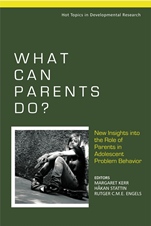
What Can Parents Do?: New Insights into the Role of Parents in Adolescent Problem Behavior
ISBN 9780470723630
Autor: Margaret Kerr, Håkan Stattin, Rutger C. M. E. Engels
Wydawca: Wiley
Dostępność: 3-6 tygodni
Cena: 928,20 zł
Przed złożeniem zamówienia prosimy o kontakt mailowy celem potwierdzenia ceny.
ISBN13: |
9780470723630 |
ISBN10: |
0470723637 |
Autor: |
Margaret Kerr, Håkan Stattin, Rutger C. M. E. Engels |
Oprawa: |
Hardback |
Rok Wydania: |
2008-01-18 |
Ilość stron: |
304 |
Wymiary: |
252x174 |
Tematy: |
JC |
Adolescence is a time of rapid cognitive development, and extensive emotional and attitudinal changes. During this time, adolescents typically attach more importance to their friends and peer groups than to their parents, which can often led to conflict within the family.
In this groundbreaking new book, international experts on adolescent problem behaviour examine the roles that parents can adopt to ensure that adolescent is a time of positive personality growth. Based on the latest research findings, What Can Parents Do? examines the role that adolescents play as active agents in their relationships with their parents, discusses approaches to conceptualising complex parenting models and applies research findings from the parenting of younger children to adolescence research.
An erudite and fascinating read, this book will be invaluable to researchers and academics in developmental psychology, social psychologists and clinical child psychologists.
Spis treści:
About the Editors.
List of Contributors.
Acknowledgements.
Introduction: What’s Changed in Research on Parenting and Adolescent Problem Behavior and What Needs to Change? (Margaret Kerr, Håkan Stattin and Rutger C. M. E. Engels).
PART 1: ADOLESCENTS AS ACTIVE AGENTS.
1. Adolescents’ Agency in Information Management (Lauree C. Tilton–Weaver and Sheila K. Marshall).
2. Relational Implications of Secrecy and Concealment in Parent–Adolescent Relationships (Catrin Finkenauer, Rutger C. M. E. Engels and Kaska E. Kubacka).
3. Don’t Ask, Don’t Tell (Your Mom and Dad): Disclosure and Nondisclosure in Adolescent–parent Relationships (Judith G. Smetana and Aaron Metzger).
PART 2: THE ROLES OF ADOLESCENT AGENCY AND PARENTING EFFORTS IN RELATIONSHIPS AND ADJUSTMENT 89
4. Parents React to Adolescent Problem Behaviors by Worrying More and Monitoring Less (Margar
et Kerr, Håkan Stattin and Vilmante Pakalniskiene).
5. Vicissitudes of Parenting Adolescents: Daily Variations in Parental Monitoring and the Early Emergence of Drug Use (Thomas J. Dishion, Bernadette Marie Bullock and Jeff Kiesner).
6. Reciprocal Development of Parent–adolescent Support and Adolescent Problem Behaviors (Susan J. T. Branje, William W. Hale III and Wim H. J. Meeus).
7. Linkages between Parenting and Peer Relationships: A Model for Parental Management of Adolescents’ Peer Relationships (Nina S. Mounts).
8. From Coercion to Positive Parenting: Putting Divorced Mothers in Charge of Change (Marion S. Forgatch, Zintars G. Beldavs, Gerald R. Patterson and David S. DeGarmo).
PART 3: LESSONS FROM PARENTING RESEARCH ON YOUNGER CHILDREN.
9. Stepping Up without Overstepping: Disentangling Parenting Dimensions and their Implications for Adolescent Adjustment (Wendy S. Grolnick, Krista L. Beiswenger and Carrie E. Price).
10. What is the Nature of Effective Parenting? It Depends (Joan E. Grusec).
11. Positive Parenting and Positive Characteristics and Values in Children (Marc H. Bornstein).
Index.
Nota biograficzna:
Margaret Kerr (Orebro, Sweden) is Professor of Psychology at Orebro University, Sweden.
Hakan Stattin (Orebro, Sweden) is Professor of Psychology at Uppsala and Orebro Universities, Sweden.
Rutger Engels (Nijmegen, The Netherlands) is Professor at the Behavioural Science Institute, Radboud University, the Netherlands. They are the co–editors of Friends, Lovers and Groups (Wiley, 2007).
Okładka tylna:
Adolescence is a time of rapid cognitive development, and extensive emotional and attitudinal changes. During this time, adolescents typically attach more importance to their friends and peer groups than to their parents, which can often led to conflict within the family.
In t
his groundbreaking new book, international experts on adolescent problem behaviour examine the roles that parents can adopt to ensure that adolescent is a time of positive personality growth. Based on the latest research findings, What Can Parents Do? examines the role that adolescents play as active agents in their relationships with their parents, discusses approaches to conceptualising complex parenting models and applies research findings from the parenting of younger children to adolescence research.
An erudite and fascinating read, this book will be invaluable to researchers and academics in developmental psychology, social psychologists and clinical child psychologists.
Koszyk
Książek w koszyku: 0 szt.
Wartość zakupów: 0,00 zł
Informacje


Kontakt
Gambit
Centrum Oprogramowania
i Szkoleń Sp. z o.o.
Al. Pokoju 29b/22-24
31-564 Kraków
Siedziba Księgarni
ul. Kordylewskiego 1
31-542 Kraków
+48 12 410 5991
+48 12 410 5987
+48 12 410 5989
Subskrypcje
Administratorem danych osobowych jest firma Gambit COiS Sp. z o.o. Na podany adres będzie wysyłany wyłącznie biuletyn informacyjny.
Autoryzacja płatności

Informacje na temat autoryzacji płatności poprzez PayU.

© Copyright 2012: GAMBIT COiS Sp. z o.o. Wszelkie prawa zastrzeżone.
Projekt i wykonanie: Alchemia Studio Reklamy