


Wydawcy
Katalog tematyczny
- Archeologia (109)
- Ekonomia, finanse, business (13704)
- Filozofia (1445)
- Historia (3040)
- Języki i językoznawstwo (2356)
- Lifestyle, hobby i rozrywka (475)
- Medycyna (9704)
- Nauki humanistyczne (4)
- Nauki o Ziemi i środowisku (2638)
- Nauki ścisłe (20412)
- Nauki społeczne (8486)
- Nauki techniczne (13450)
- Budownictwo lądowe (1045)
- Chemia przemysłowa (2258)
- Elektronika i telekomunikacja (3287)
- Energetyka (1122)
- Inne nauki stosowane (363)
- Inżynieria biochemiczna (507)
- Inżynieria transportu (232)
- Mechanika i materiały (3316)
- Nauka o środowisku (321)
- Rolnictwo (507)
- Technika, ogólnie (475)
- Prawo (1696)
- Publikacje informacyjne i interdyscyplinarne (1288)
- Religia i wierzenia (917)
- Technika komputerowa (4067)
- Zdrowie, relacje międzyludzkie i rozwój osobisty (657)





Informacje szczegółowe o książce
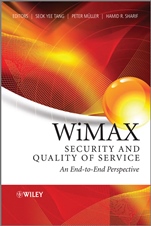
WiMAX Security and Quality of Service: An End–to–End Perspective
ISBN 9780470721971
Autor: Seok–Yee Tang, Peter Muller, Hamid Sharif
Wydawca: Wiley
Dostępność: 3-6 tygodni
Cena: 533,40 zł
Przed złożeniem zamówienia prosimy o kontakt mailowy celem potwierdzenia ceny.
ISBN13: |
9780470721971 |
ISBN10: |
0470721979 |
Autor: |
Seok–Yee Tang, Peter Muller, Hamid Sharif |
Oprawa: |
Hardback |
Rok Wydania: |
2010-07-09 |
Ilość stron: |
418 |
Wymiary: |
249x173 |
Tematy: |
TJ |
WiMAX is the first standard technology to deliver true broadband mobility at speeds that enable powerful multimedia applications such as Voice over Internet Protocol (VoIP), online gaming, mobile TV, and personalized infotainment. WiMAX Security and Quality of Service, focuses on the interdisciplinary subject of advanced Security and Quality of Service (QoS) in WiMAX wireless telecommunication systems including its models, standards, implementations, and applications. Split into 4 parts, Part A of the book is an end–to–end overview of the WiMAX architecture, protocol, and system requirements. Security is an essential element in the wireless world and Part B is fully dedicated to this topic. Part C provides an in depth analysis of QoS, including mobility management in WiMAX. Finally, Part D introduces the reader to advanced and future topics.
• One of the first texts to cover security, QoS and deployments of WiMAX in the same book.
• Introduces the primary concepts of the interdisciplinary nature of WiMAX security and QoS, and also includes discussion of hot topics in the field.
• Written for engineers and researchers, answering practical questions from industry and the experimental field in academia.
• Explains how WiMAX applications’ security and QoS are interconnected and interworked among the cross layers.
Spis treści:
I Content List
II Preface
III Contributors
IV Acronyms
V List of Figures
VII List of Tables
Part A: Introduction
1. Overview of End–to–End WiMAX Network Architecture
1.1 Wireless Primer
1.2 Introduction to WiMAX Technology
1.3 Mobile WiMAX
1.4 Overview of End–to–End WiMAX Network Architecture
1.5 Radio Interface Specifications for WiMAX
1.6 Interoperability Issues in WiMAX
1.7 Summary
Part B: Security
2. WiMMAX Security defined in 802.16 St
andard
2.1 Introduction
2.2 Overview of 802.16 WMAN network
2.3 Security requirements for broadband access in WMAN networks
2.4 Security mechanisms in initial 802.16 networks
2.5 Analysis of security vulnerabilities in initial versions of 802.16
2.6 Security amendment in recent versions if IEEE 802.16
2.7 Analysis of security vulnerabilities in 802.16e
2.8 Further Readings
3.9 Summary
4 Key Management in 802.16e
4.1 Introduction
4.2 Privacy Key Management
4.3 PKM Version 1
4.4 PKM Version 2
4.5 Vulnerabilities and Countermeasures
4.6 Comparisons with 802.11 / UMTS
4.7 Summary
5. WiMAX Network Security
5.1 Introduction
5.2 WiMAX Network Reference Model
5.3 The Radius Server
5.4 WiMAX Network Procedures and Security
5.5 Further Readings
5.6 Summary
Part C: Quality of Service
6. Cross–Layer End–toEnd QoS Architecture: The Milestone of WiMAX
6.1 Introduction
6.2 QoS Definitions
6.3 QoS Mechanisms offered by IEEE 806.16
6.4 What is Missing in the WiMAX Features
6.5 Future Challenges
6.6 Summary
7. QoS in Mobile WiMAX
7.1 Introduction
7.2 Architectural QoS Requirements
7.3 Mobile WiMAX Service Flow
7.4 Admission Control
7.5 Scheduling Service
7.6 Maintaining QoS During Handover
7.7 Enhancing WiMAX QoS Issues: Research Work
7.8 Further Readings
7.9 Summary
8. Mobility Management in WiMAX Networks
8.1 Introduction
8.2 Mobile WiMAX Architecture
8.3 Horizontal handover in 802.16e
8.4 Optimized 802.16e Handover Schemes
8.5 Vertical Handover
8.6 Roaming
8.7 Mobility Management in WiMESH Networks
8.8 Conclusion
8.9 Summary
Part D: Advanced Topics
9. QoS and Security Challenges in the Handover Process
9.1 Introduction
9.2 Handover in WiMAX
9.3 The IEEE 802.16 Handover Process
9.4 The Media Independent Initiative – IEEE 802.21
9.5 Enhancing the Handover Process
9.6 Handov
er Scheduling
9.7 Handover Performance Analysis
9.8 Summary
10. Resource Allocation in Mobile WiMAX Networks
10.1 Introduction
10.2 Background on IEEE 802.16e
10.3 System Model
10.4 Cross–Layer Resource Allocation in Mobile WiMAX
10.5 Channel Aware Class Based Queue (CACBQ)
10.6 Summary
11. QoS for Multimedia Over WiMAX
11.1 Introduction
11.2 Multimedia Traffic
11.3 Multimedia: WiFi versus WiMAX
11.4 QoS Scheduling in WiMAX Networks
11.5 Voice Traffic Scheduling in WiMAX
11.6 Video Traffic Scheduling in WiMAX
11.7 Summary
12. WiMAX MMR Networks
12.1 Scheduling in WiMAX MMR Networks
12.2 Basic Wireless Scheduling Algorithms
12.3 Scheduling Algorithms for WiMAX MMR Networks
12.4 Further Reading
12.5 Summary
13. On the Integration of WiFi and WiMAX Networks
13.1 Introduction
13.2 General Designing Principles of the Internetworking Architecture
13.3 WiFi / Mobile WiMAX Internetworking Architecture
13.4 Network Discovery and Selection
13.5 Authentication and Security Architecture
13.6 Security in WiFi and WiMAX Networks
13.7 Mobility Management
13.8 Quality of Service Architecture
13.9 Summary
14. QoS Simulation and An Enhanced Solution of Cell Selection for WiMAX Network
14.1 Introduction
14.2 WiMAX Simulation tools
14.3 QoS Simulation of WiMAX Network
14.4 Analysis of QoS Simulation Results
14.5 Enhancement: A new solution of Cell Selection
14.6 Summary
Appendix A
Standards
Index
Okładka tylna:
WiMAX is the first standard technology to deliver true broadband mobility at speeds that enable powerful multimedia applications such as Voice over Internet Protocol (VoIP), online gaming, mobile TV, and personalized infotainment. WiMAX Security and Quality of Service, focuses on the interdisciplinary subject of advanced Security and Quality of Service (QoS) in WiMAX wireless telecommunication systems i
ncluding its models, standards, implementations, and applications. Split into 4 parts, Part A of the book is an end–to–end overview of the WiMAX architecture, protocol, and system requirements. Security is an essential element in the wireless world and Part B is fully dedicated to this topic. Part C provides an in depth analysis of QoS, including mobility management in WiMAX. Finally, Part D introduces the reader to advanced and future topics.
• One of the first texts to cover security, QoS and deployments of WiMAX in the same book.
• Introduces the primary concepts of the interdisciplinary nature of WiMAX security and QoS, and also includes discussion of hot topics in the field.
• Written for engineers and researchers, answering practical questions from industry and the experimental field in academia.
• Explains how WiMAX applications’ security and QoS are interconnected and interworked among the cross layers.
Koszyk
Książek w koszyku: 0 szt.
Wartość zakupów: 0,00 zł
Informacje


Kontakt
Gambit
Centrum Oprogramowania
i Szkoleń Sp. z o.o.
Al. Pokoju 29b/22-24
31-564 Kraków
Siedziba Księgarni
ul. Kordylewskiego 1
31-542 Kraków
+48 12 410 5991
+48 12 410 5987
+48 12 410 5989
Subskrypcje
Administratorem danych osobowych jest firma Gambit COiS Sp. z o.o. Na podany adres będzie wysyłany wyłącznie biuletyn informacyjny.
Autoryzacja płatności

Informacje na temat autoryzacji płatności poprzez PayU.

© Copyright 2012: GAMBIT COiS Sp. z o.o. Wszelkie prawa zastrzeżone.
Projekt i wykonanie: Alchemia Studio Reklamy