


Wydawcy
Katalog tematyczny
- Archeologia (109)
- Ekonomia, finanse, business (13704)
- Filozofia (1445)
- Historia (3040)
- Języki i językoznawstwo (2356)
- Lifestyle, hobby i rozrywka (475)
- Medycyna (9704)
- Chirurgia (272)
- Inne gałęzie medycyny (1871)
- Medycyna kliniczna (4187)
- Choroby wewnętrzne (514)
- Dermatologia (51)
- Diagnostyka medyczna (3)
- Endokrynologia (144)
- Gastroenterologia (27)
- Geriatria (50)
- Ginekologia i położnictwo (134)
- Hematologia (46)
- Hepatologia (10)
- Kardiologia (71)
- Laryngologia (12)
- Nefrologia (10)
- Neurologia (500)
- Oftalmologia (50)
- Pediatria (33)
- Pulmunologia (32)
- Reumatologia (14)
- Terapia genowa (1)
- Układ mięśniowo-szkieletowy (1)
- Urologia (14)
- Medycyna niekonwencjonalna (14)
- Medycyna przedkliniczna (269)
- Medycyna, ogólnie (1740)
- Medyczne służby pomocnicze (745)
- Studia medyczne (16)
- Weterynaria (548)
- Nauki humanistyczne (4)
- Nauki o Ziemi i środowisku (2638)
- Nauki ścisłe (20412)
- Nauki społeczne (8486)
- Nauki techniczne (13450)
- Prawo (1696)
- Publikacje informacyjne i interdyscyplinarne (1288)
- Religia i wierzenia (917)
- Technika komputerowa (4067)
- Zdrowie, relacje międzyludzkie i rozwój osobisty (657)





Informacje szczegółowe o książce
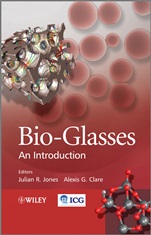
Bio–Glasses: An Introduction
ISBN 9780470711613
Autor: Julian Jones, Alexis Clare
Wydawca: Wiley
Dostępność: 3-6 tygodni
Cena: 496,65 zł
Przed złożeniem zamówienia prosimy o kontakt mailowy celem potwierdzenia ceny.
ISBN13: |
9780470711613 |
ISBN10: |
0470711612 |
Autor: |
Julian Jones, Alexis Clare |
Oprawa: |
Hardback |
Rok Wydania: |
2012-07-06 |
Ilość stron: |
254 |
Wymiary: |
235x157 |
Tematy: |
MJ |
"understanding the science, technology and applications of bioactive glasses is a very important educational need for the healthcare and glass community. This unique book provides the fundamental level of comprehension needed the contents are authoritative."
Professor Larry L. Hench, Department of Materials and Engineering at the University of Florida
Bio–glasses can be used to direct cells to carry out specific tasks and heal diseased and damaged tissues. They can be used in this capacity to mend bones, as drug delivery agents and in cancer therapy. This is the first book dedicated to glasses (and their variants) that can be used as biomaterials. Covering all types of glasses: traditional, sol–gel, phosphate, borate, glass ceramics, composites and hybrids, the book discusses how each are made, the reasons for their use and their properties. It then moves on to describe applications, including tissue engineering, orthopedics, dentistry, and radiotherapy.
Written in a style that is accessible to the non–expert, Bio–Glasses: An Introduction explains the science and engineering principles behind glasses and their properties and provides an overview of their clinical applications.
List of Contributors xi
Foreword xiii
Preface xvii
1 The Unique Nature of Glass 1
Alexis G. Clare
1.1 What is Glass? 1
1.2 Making Glass 5
1.3 Homogeneity and Phase Separation 8
1.4 Forming 9
1.5 Glasses that are not "Melted" 10
1.6 Exotic Glass 11
1.7 Summary 11
2 Melt–Derived Bioactive Glass 13
Matthew D. O′Donnell
2.1 Bioglass 13
2.2 Network Connectivity and Bioactivity 18
2.3 Alternative Bioactive Glass Compositions 19
2.4 In Vitro Studies 22
2.5 In Vivo Studies and Commercial Products 22
3 Sol Gel Derived Glasses for Medicine 29
Julian R. Jones
3.1 Introduction 29
3.2 Why Use the Sol Gel Process? 30
3.3 Sol Gel Process Principles 31
3.4 Steps in a Typical Sol Gel Process 32
3.5 Evolution of Nanoporosity 36
3.6 Making Sol Gel Monoliths 37
3.7 Making Particles 38
3.8 Sol Gel Derived Bioactive Glasses 40
3.9 Summary 42
4 Phosphate Glasses 45
Delia S. Brauer
4.1 Introduction 45
4.2 Making Phosphate Glasses 46
4.3 Phosphate Glass Structure 46
4.4 Temperature Behaviour and Crystallisation 50
4.5 Phosphate Glass Dissolution 56
4.6 Cell Compatibility of Glasses 59
4.7 Phosphate Glass Fibres and Composites 60
4.8 Applications 62
4.9 Summary 63
5 The Structure of Bioactive Glasses and Their Surfaces 67
Alastair N. Cormack
5.1 Structure of Glasses 67
5.2 Structure of Bioactive Glasses 70
5.3 Computer Modeling (Theoretical Simulation) of Bioactive Glasses 71
5.4 Glass Surfaces 74
5.5 Summary 76
6 Bioactive Borate Glasses 77
Steven B. Jung
6.1 Introduction 77
6.2 What Differentiates a Bioactive Borate Glass from Other Bioactive Glasses? 78
6.3 Evaluating Reactive Materials (
6.4 Multifunctional Bioactive Borate Glasses 83
6.5 Applications of Bioactive Borate Glasses in Orthopedics and Dental Regeneration 86
6.6 Soft Tissue Wound Healing 88
6.7 Tissue/Vessel Guidance 92
6.8 Drug Delivery 93
6.9 Commercial Product Design 94
6.10 Summary 96
7 Glass Ceramics 99
Wolfram Holand
7.1 Glass Ceramics and Their Uses 99
7.2 Methods Used for the Controlled Crystallization of Glasses 101
7.3 A Glass Ceramic that Hardly Expands When Heated 103
7.4 High–Strength, Moldable Glass Ceramics for Dental Restoration 104
7.5 Glass Ceramics that are Moldable and Machinable 106
7.6 Outlook 106
8 Bioactive Glass and Glass Ceramic Coatings 109
Enrica Verne
8.1 Introduction 109
8.2 Enameling 110
8.3 Glazing 114
8.4 Plasma Spraying 117
8.5 Radiofrequency Magnetron Sputtering Deposition 119
8.6 Pulsed Laser Deposition 119
8.7 Summary 120
9 Composites Containing Bioactive Glass 123
Aldo R. Boccaccini and Qi–Zhi Chen
9.1 Introduction 123
9.2 Biodegradable Polymers 127
9.3 Composite Scaffolds Containing Bioactive Glass 131
9.4 Processing Technologies for Porous Bioactive Composites 133
9.5 Case Study: the PDLLA Bioglass Composite Scaffold System 138
9.6 Final Remarks 139
10 Inorganic Organic Sol Gel Hybrids 141
Yuki Shirosaki, Akiyoshi Osaka, Kanji Tsuru, and Satoshi Hayakawa
10.1 Introduction 141
10.2 Hybrids in Medicine and Why They Should Be Silica–Based 142
10.3 Self–Assembled Hybrid Films and Layers of Grafted Silanes 145
10.4 Sol Gel Hybrids 146
10.5 Ormosils 148
10.6 Polymer Choice and Property Control in Hybrids 151
10.7 Maintaining Bioactivity in Sol Gel Hybrids 154
10.8 Summary and Outlook 158
11 Dental Applications of Glasses 161
Leena Hupa and Antti Yli–Urpo
11.1 Introduction 161
11.2 Structure of the Human Tooth 162
11.3 Glass Bioactivity and Teeth 163
11.4 Bioactive Glass in Dental Bone Regeneration 166
11.5 Treatment of Hypersensitive Teeth 168
11.6 Bioactive Glass Coating on Metal Implants 169
11.7 Antimicrobial Properties of Bioactive Glasses 172
11.8 Bioactive Glasses in Polymer Composites 173
11.9 Bioactive Glasses in Glass Ionomer Cements 174
11.10 Summary 175
12 Bioactive Glass as Synthetic Bone Grafts and Scaffolds for Tissue Engineering 179
Julian R. Jones
12.1 Introduction 179
12.2 Synthetic Bone Grafts and Regenerative Medicine 181
12.3 Design Criteria for an Ideal Synthetic Bone Graft 183
12.4 Bioglass and the Complication of Crystallisation During Sintering 184
12.5 Making Porous Glasses 185
12.6 The Future: Porous Hybrids 196
12.7 Bioactive Glasses and Tissue Engineering 200
12.8 Regulatory Issues 201
12.9 Summary 202
13 Glasses for Radiotherapy 205
Delbert E. Day
13.1 Introduction 205
13.2 Glass Design and Synthesis 208
13.3 Non–Degradable or Bio–inert Glasses: Rare Earth Aluminosilicate Glasses 208
13.4 Biodegradable Glasses: Rare Earth Borate/Borosilicate Glasses 211
13.5 Design of Radioactive Glass Microspheres for In Vivo Applications 213
13.6 Treatment of Liver Cancer: Hepatocellular Carcinoma 217
13.7 Treatment of Kidney Cancer: Renal Cellarcinoma 222
13.8 Treatment of Rheumatoid Arthritis: RadiationSynovectomy 223
13.9 Summary 227
References 228
Index 231
Dr Julian Jones is a Senior Lecturer and Royal Academy of Engineering and EPSRC Research Fellow at Imperial College, London. He has 40 peer reviewed publications in leading journals in the field of Biomaterials and has co–edited a leading textbook. His work has been recognised by award of a prestigious Philip Leverhulme Prize in 2007, for excellence in Engineering; the Tissue and Cell Engineering Society (TCES) Early Investigator Award in 2008; and the Institute of Materials, Mining and Minerals (IOM 3) Silver Medal, for outstanding achievement in Materials Science and international promotion of the subject. His work has featured in the media with articles in the Daily Mail and Daily Telegraph and an interview on Radio 5 Live.
Dr Alexis Clare is Professor of Glass Science at the Inamori School of Engineering, Alfred University, NY, USA.
Koszyk
Książek w koszyku: 0 szt.
Wartość zakupów: 0,00 zł
Informacje


Kontakt
Gambit
Centrum Oprogramowania
i Szkoleń Sp. z o.o.
Al. Pokoju 29b/22-24
31-564 Kraków
Siedziba Księgarni
ul. Kordylewskiego 1
31-542 Kraków
+48 12 410 5991
+48 12 410 5987
+48 12 410 5989
Subskrypcje
Administratorem danych osobowych jest firma Gambit COiS Sp. z o.o. Na podany adres będzie wysyłany wyłącznie biuletyn informacyjny.
Autoryzacja płatności

Informacje na temat autoryzacji płatności poprzez PayU.

© Copyright 2012: GAMBIT COiS Sp. z o.o. Wszelkie prawa zastrzeżone.
Projekt i wykonanie: Alchemia Studio Reklamy