


Wydawcy
Katalog tematyczny
- Archeologia (109)
- Ekonomia, finanse, business (13704)
- Filozofia (1445)
- Historia (3040)
- Języki i językoznawstwo (2356)
- Lifestyle, hobby i rozrywka (475)
- Medycyna (9704)
- Nauki humanistyczne (4)
- Nauki o Ziemi i środowisku (2638)
- Nauki ścisłe (20412)
- Nauki społeczne (8486)
- Nauki techniczne (13450)
- Prawo (1696)
- Publikacje informacyjne i interdyscyplinarne (1288)
- Religia i wierzenia (917)
- Technika komputerowa (4067)
- Zdrowie, relacje międzyludzkie i rozwój osobisty (657)





Informacje szczegółowe o książce
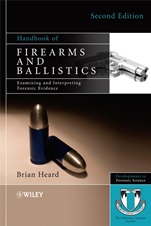
Handbook of Firearms and Ballistics: Examining and Interpreting Forensic Evidence
ISBN 9780470694602
Autor: Brian J. Heard
Wydawca: Wiley
Dostępność: 3-6 tygodni
Cena: 426,30 zł
Przed złożeniem zamówienia prosimy o kontakt mailowy celem potwierdzenia ceny.
ISBN13: |
9780470694602 |
ISBN10: |
0470694602 |
Autor: |
Brian J. Heard |
Oprawa: |
Hardback |
Rok Wydania: |
2008-10-30 |
Numer Wydania: |
2nd Edition |
Ilość stron: |
416 |
Wymiary: |
244x168 |
Tematy: |
LA |
Does the gunshot residue reveal how far from the target a weapon was fired? Is there any trace evidence to prove the accused handled a specific firearm? What is the likely behaviour of a ricocheting bullet? Do the marks on a bullet prove categorically that it was fired from a particular weapon? These are all issues (amongst others) that the fully revised and updated Second Edition of Handbook of Firearms and Ballistics: Examining and Interpreting Forensic Evidence covers in a clear and accessible manner. The book will be essential reading for all forensic scientists specializing in this subject, firearms examiners, defence and prosecution practitioners, the judiciary, police forces and all those involved in this field.
The Second Edition takes into account the most important new analytical techniques and methodologies that have now been implemented in the field. Fully revised and updated throughout, the book now includes a more comprehensive glossary, new case study material –including the Jill Dando murder enquiry – and a new chapter on the determination of bullet calibre via X–ray photography
• Completely revised and updated Second Edition of this successful book.
• Updated material on proof marks, muzzle attachments, non toxic bullets, GSR particles and SEM sampling.
• New case study material including the Jill Dando murder enquiry as a key example for reporting on GSR cases.
• New chapter on the determination of bullet calibre via X–ray photography.
• Now includes an updated and more comprehensive glossary to enhance understanding of the subject.
Spis treści:
Developments in Forensic Science.
Acknowledgements.
Foreword.
1 Firearms.
1.1 A Brief History of Firearms.
1.2 Weapon Types and Their Operation.
1.3 Proof Marks.
Further Reading.
2 Ammunition.
2.1 A Brief Hi
story of Ammunition.
2.2 Ammunition Components.
2.3 Non–toxic Shot.
2.4 A Brief History of Propellants.
2.5 Priming Compounds and Primers.
2.6 Headstamp Markings on Ammunition.
3 Ballistics.
3.1 Internal, External and Terminal Ballistics.
3.2 Internal Ballistics.
3.3 External Ballistics.
3.4 Terminal Ballistics.
4 Forensic Firearms Examination.
4.1 A Brief History of Forensic Firearms Identification.
4.2 Rifling Types and Their Identification.
4.3 Fluted, Annular Ringed, Helical, Perforated and Oversized Chambers.
4.4 Basic Concepts of Striation Matching.
4.5 Basic Methodology Used in Comparison Microscopy.
4.6 Mathematical Proof of Striation Matches.
4.7 Accidental Discharge.
4.8 Identification of Calibre from the Bullet Entry Hole.
4.9 Ricochet Analysis.
4.10 Bullet Penetration and Trajectory through Glass.
5 Range of Firing Estimations and Bullet Hole Examinations.
5.1 Introduction.
5.2 The Use of X–ray Photography.
5.3 Range of Firing Estimations for Pistols and Rifles.
5.4 Chemical Tests for Range of Firing Estimations and Bullet Entry/Exit Hole Identification.
5.5 Range of Firing Estimations for Shotguns.
6 Gunshot Residue Examination.
6.1 Introduction.
6.2 Formation of Discharge Residue.
6.3 Distribution of GSR Particles.
6.4 Identification of GSR Particles.
6.5 The Use of the SEM for GSR Detection.
6.6 Sample Collection.
6.7 GSR Retention.
6.8 Conservation of GSR Particles on the Hands.
6.9 GSR Distribution on the Hands.
6.10 Identification of Type of Ammunition, Country of Origin from GSR Analysis.
6.11 Environmental Contaminants.
6.12 Sources of Elements Commonly Found in Lead–Based GSRs.
6.13 Extending the Recovery Period for GSR.
7 Gun–Handling Tests.
7.1 Introduction.
7.2 Methodology for Ferrozine Use.
7.3 Case Notes.
8 Restoration of Erased Numbers.
8.1 Introduction.
8.2 Methods Used for Removal of Serial Numbers.
8.3 Theory behind Number Restoration.
8.4 Non–recoverable Methods of Number Removal.
8.5 Practice of Number Restoration.
8.6 Chemical Methods of Restoration.
8.7 Reagents Used for Various Metals.
8.8 Electrolytic Methods of Restoration.
8.9 Reagents Used.
8.10 Ultrasonic Cavitation for Restoration.
8.11 Magnetic Particle Method for Restoration.
8.12 Other Methods of Restoration.
8.13 Laser–Etched Serial Numbers and Bar Codes and Their Restoration.
9 Qualifying the Expert and Cross–Examination Questions.
9.1 Introduction.
9.2 General Background Questions.
9.3 Comparison Microscopy.
9.4 GSRs.
9.5 Ferrozine Test.
9.6 Standard of Review: ‘Daubert Trilogy’.
10 Classification of Firearm–Related Death.
10.1 Multiple–Shot Suicides.
11 Glossary.
Appendix 1 Important dates in the History of Firearms from 1247.
Appendix 2 GSR results for Chinese and USSR ammunition.
Appendix 3 Primer content of some cartridge–operated nail guns.
Appendix 4 Commercial and General Abbreviations for Bullet Configurations.
Appendix 5 Trade Names.
Appendix 6 Gun Marks.
Appendix 7 Powder Burn Rate.
Appendix 8 Hearing Loss.
Appendix 9 General Firearms Values Conversion Table.
Index.
Okładka tylna:
Does the gunshot residue reveal how far from the target a weapon was fired? Is there any trace evidence to prove the accused handled a specific firearm? What is the likely behaviour of a ricocheting bullet? Do the marks on a bullet prove categorically that it was fired from a particular weapon? These are all issues (amongst others) that the fully revised and updated Second Edition of Handbook of Firearms and Ballistics: Examining and Interpreting Forensic Evidence covers in a
clear and accessible manner. The book will be essential reading for all forensic scientists specializing in this subject, firearms examiners, defence and prosecution practitioners, the judiciary, police forces and all those involved in this field.
The Second Edition takes into account the most important new analytical techniques and methodologies that have now been implemented in the field. Fully revised and updated throughout, the book now includes a more comprehensive glossary, new case study material –including the Jill Dando murder enquiry – and a new chapter on the determination of bullet calibre via X–ray photography
• Completely revised and updated Second Edition of this successful book.
• Updated material on proof marks, muzzle attachments, non toxic bullets, GSR particles and SEM sampling.
• New case study material including the Jill Dando murder enquiry as a key example for reporting on GSR cases.
• New chapter on the determination of bullet calibre via X–ray photography.
• Now includes an updated and more comprehensive glossary to enhance understanding of the subject.
Koszyk
Książek w koszyku: 0 szt.
Wartość zakupów: 0,00 zł
Informacje


Kontakt
Gambit
Centrum Oprogramowania
i Szkoleń Sp. z o.o.
Al. Pokoju 29b/22-24
31-564 Kraków
Siedziba Księgarni
ul. Kordylewskiego 1
31-542 Kraków
+48 12 410 5991
+48 12 410 5987
+48 12 410 5989
Subskrypcje
Administratorem danych osobowych jest firma Gambit COiS Sp. z o.o. Na podany adres będzie wysyłany wyłącznie biuletyn informacyjny.
Autoryzacja płatności

Informacje na temat autoryzacji płatności poprzez PayU.

© Copyright 2012: GAMBIT COiS Sp. z o.o. Wszelkie prawa zastrzeżone.
Projekt i wykonanie: Alchemia Studio Reklamy