


Wydawcy
Katalog tematyczny
- Archeologia (109)
- Ekonomia, finanse, business (13704)
- Filozofia (1445)
- Historia (3040)
- Języki i językoznawstwo (2356)
- Lifestyle, hobby i rozrywka (475)
- Medycyna (9704)
- Nauki humanistyczne (4)
- Nauki o Ziemi i środowisku (2638)
- Nauki ścisłe (20412)
- Nauki społeczne (8486)
- Nauki techniczne (13450)
- Budownictwo lądowe (1045)
- Chemia przemysłowa (2258)
- Elektronika i telekomunikacja (3287)
- Energetyka (1122)
- Inne nauki stosowane (363)
- Inżynieria biochemiczna (507)
- Inżynieria transportu (232)
- Mechanika i materiały (3316)
- Nauka o środowisku (321)
- Rolnictwo (507)
- Technika, ogólnie (475)
- Prawo (1696)
- Publikacje informacyjne i interdyscyplinarne (1288)
- Religia i wierzenia (917)
- Technika komputerowa (4067)
- Zdrowie, relacje międzyludzkie i rozwój osobisty (657)





Informacje szczegółowe o książce
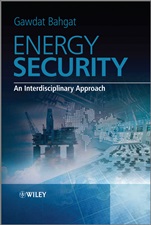
Energy Security: An Interdisciplinary Approach
ISBN 9780470689042
Autor: Gawdat Bahgat
Wydawca: Wiley
Dostępność: 3-6 tygodni
Cena: 483,00 zł
Przed złożeniem zamówienia prosimy o kontakt mailowy celem potwierdzenia ceny.
ISBN13: |
9780470689042 |
ISBN10: |
0470689048 |
Autor: |
Gawdat Bahgat |
Oprawa: |
Hardback |
Rok Wydania: |
2011-03-04 |
Ilość stron: |
254 |
Wymiary: |
252x173 |
Tematy: |
TJ |
Security of energy supply is a major concern for all modern societies, intensified by skyrocketing demand in India and China and increasing international competition over fossil fuel deposits, Energy Security: An Interdisciplinary Approach gives a comparative analysis from both consumers and producers perspectives. It uniquely combines economics, geology, international relations, business, history, public management and political science in one comprehensive volume, highlighting the vulnerabilities and need to move to more sustainable energy sources.
The author provides a number of useful case studies to demonstrate the theory, including perspectives from consuming regions such as the United States, the European Union, and China, and from exporting regions; the Middle East, Africa, Russia and the Caspian Sea.
Key features include:
Coverage on theoretical and empirical frameworks so that readers are able to analyse concepts relevant to new laws and policies in energy security Up–to–date coverage on green energy , outlining research on the balance between meeting energy needs and avoiding environmental pollution An examination of the three most prominent international energy organizations; International Energy Agency, International Energy Forum, and Organization of Petroleum Exporting Countries A full Glossary listing all the important terms used in the energy fieldThis study holds important information for policymakers, politicians, energy specialists, scientists and post–graduate and final year students of energy and international relations. With its clear written style, it will also appeal to professionals interested in international political economy and the future of global energy.
About the Author.
Preface.
Acknowledgements.
List of Abbreviations.
Glossary.
1 Introduction.
1.1 Energy Security.
1.2 Diversification of Energy Mix.
1.3 Conclusion.
2 United States.
2.1 Oil.
2.2 Natural Gas.
2.3 Coal.
2.4 Nuclear Power.
2.5 Ethanol.
2.6 The Quest for an Energy Strategy.
2.7 Conclusion: the Way Forward.
3 European Union.
3.1 The EU Energy Outlook.
3.2 Russia.
3.3 Central Asia/Caspian Sea Region.
3.4 Mediterranean Sea.
3.5 Gulf Cooperation Council.
3.6 Turkey.
3.7 Conclusion: the Way Ahead.
4 China.
4.1 Regulatory Authority.
4.2 Oil.
4.3 Coal.
4.4 Natural Gas.
4.5 Nuclear Power.
4.6 Renewable Energy.
4.7 Overseas Exploration and Production.
4.8 Conclusion.
5 Persian Gulf.
5.1 Socio–economic and Political Challenges.
5.2 Saudi Arabia.
5.3 Iran.
5.4 Iraq.
5.5 Conclusion: the Way Forward.
6 Africa.
6.1 Algeria.
6.2 Libya.
6.3 Egypt.
6.4 Sudan.
6.5 Angola.
6.6 Nigeria.
6.7 United States and Africa.
6.8 Europe and Africa.
6.9 Conclusion: the Way Ahead.
7 Caspian Sea.
7.1 Hydrocarbon Resources – An Assessment.
7.2 The Legal Status of the Caspian Sea.
7.3 Geopolitical Rivalry and Pipeline Diplomacy.
7.4 Conclusion: the Way Forward.
8 Russia.
8.1 Oil Sector.
8.2 Natural Gas.
8.3 The Energy Strategy – 2030.
8.4 The Arctic Hydrocarbons.
8.5 Russia–EU Energy Partnership.
8.6 Russia, the Middle East, and OPEC.
8.7 Energy Sector Organization.
8.8 Conclusion: the Way Forward.
9 OPEC and Gas–OPEC.
9.1 OPEC: History and Evolution.
9.2 OPEC: Objectives, Membership, and Organization.
9.3 OPEC Summits.
9.4 OPEC Long–Term Strategy.
9.5 Gas OPEC.
9.6 GECF and OPEC.
9.7 Oil vs. Gas.
9.8 Conclusion.
10 International Energy Agency.
10.1 The Founding of the IEA.
10.2 The International Energy Program.
10.3 Structure of the IEA.
10.4 Energy Security.
10.5 How Did the System Work?.
10.6 Conclusion.
11 Conclusion.
11.1 Energy Security.
11.2 The International Energy Forum (IEF).
11.3 Joint Oil Data Initiative.
11.4 Conclusion: the Way Forward.
Index.
Professor Gawdat Bahgat, Indiana University of Pennsylvania, USA
Professor Bahgat has been working on energy issues for the last fifteen years. He is currently Professor of Political Science and Director of the Center for Middle Eastern Studies at Indiana University of Pennsylania. In 2006 he served as a consultant to the United States government on counter–terrorism. Professor Bahgat has published six books, with a seventh to follow in 2010, and has written more than 140 articles for scholarly jounals. His work has been translated into several languages and has been used as required reading in a number of universities in the United States, Europe and Japan. His main areas of expertise include energy security, proliferation of weapons of mass destruction, and terrorism.
Koszyk
Książek w koszyku: 0 szt.
Wartość zakupów: 0,00 zł
Informacje


Kontakt
Gambit
Centrum Oprogramowania
i Szkoleń Sp. z o.o.
Al. Pokoju 29b/22-24
31-564 Kraków
Siedziba Księgarni
ul. Kordylewskiego 1
31-542 Kraków
+48 12 410 5991
+48 12 410 5987
+48 12 410 5989
Subskrypcje
Administratorem danych osobowych jest firma Gambit COiS Sp. z o.o. Na podany adres będzie wysyłany wyłącznie biuletyn informacyjny.
Autoryzacja płatności

Informacje na temat autoryzacji płatności poprzez PayU.

© Copyright 2012: GAMBIT COiS Sp. z o.o. Wszelkie prawa zastrzeżone.
Projekt i wykonanie: Alchemia Studio Reklamy