


Wydawcy
Katalog tematyczny
- Archeologia (109)
- Ekonomia, finanse, business (13704)
- Filozofia (1445)
- Historia (3040)
- Języki i językoznawstwo (2356)
- Lifestyle, hobby i rozrywka (475)
- Medycyna (9704)
- Nauki humanistyczne (4)
- Nauki o Ziemi i środowisku (2638)
- Nauki ścisłe (20412)
- Nauki społeczne (8486)
- Nauki techniczne (13450)
- Budownictwo lądowe (1045)
- Chemia przemysłowa (2258)
- Elektronika i telekomunikacja (3287)
- Energetyka (1122)
- Inne nauki stosowane (363)
- Inżynieria biochemiczna (507)
- Inżynieria transportu (232)
- Mechanika i materiały (3316)
- Nauka o środowisku (321)
- Rolnictwo (507)
- Technika, ogólnie (475)
- Prawo (1696)
- Publikacje informacyjne i interdyscyplinarne (1288)
- Religia i wierzenia (917)
- Technika komputerowa (4067)
- Zdrowie, relacje międzyludzkie i rozwój osobisty (657)





Informacje szczegółowe o książce
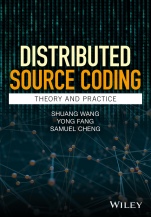
Distributed Source Coding: Theory and Practice
ISBN 9780470688991
Autor: Shuang Wang, Yong Fang, Samuel Cheng
Wydawca: Wiley
Dostępność: 3-6 tygodni
Cena: 476,70 zł
Przed złożeniem zamówienia prosimy o kontakt mailowy celem potwierdzenia ceny.
ISBN13: |
9780470688991 |
ISBN10: |
0470688998 |
Autor: |
Shuang Wang, Yong Fang, Samuel Cheng |
Oprawa: |
Hardback |
Rok Wydania: |
2017-03-03 |
Ilość stron: |
384 |
Wymiary: |
239x161 |
Tematy: |
TJ |
Distributed Source Coding: Theory and Practice
Shuang Wang, University of CaliforniaSan Diego, USA
Yong Fang, Northwest A&F University, China
Samuel Cheng, University of Oklahoma, USA
Understanding distributed source coding from theory to practice
Distributed source coding is one of the key enablers for efficient cooperative communication. The potential applications range from wireless sensor networks, ad–hoc networks, and surveillance networks, to robust low–complexity video coding, stereo/Multiview video coding, HDTV, hyper–spectral and multispectral imaging, and biometrics.
The book is divided into three sections: theory, algorithms, and applications. Part one covers the background of information theory with an emphasis on DSC; part two discusses designs of algorithmic solutions for DSC problems, covering the three most important DSC problems: Slepian–Wolf, Wyner–Ziv, and MT source coding; and part three is dedicated to a variety of potential DSC applications.
Key features:
Clear explanation of distributed source coding theory and algorithms including both lossless and lossy designs. Rich applications of distributed source coding, which covers multimedia communication and data security applications. Self–contained content for beginners from basic information theory to practical code implementation.
The book provides fundamental knowledge for engineers and computer scientists to access the topic of distributed source coding. It is also suitable for senior undergraduate and first year graduate students in electrical engineering; computer engineering; signal processing; image/video processing; and information theory and communications.
Shuang Wang, Department of Biomedical Informatics, University of California San Diego, CA, USA Shuang Wang received the B.S. degree in applied physics and the M.S. degree in biomedical engineering from the Dalian University of Technology, China, and the Ph.D. degree in electrical and computer engineering from the University of Oklahoma, OK, USA, in 2012. He was worked as a postdoc researcher with the Department of Biomedical Informatics (DBMI), University of California, San Diego (UCSD), CA, USA, 2012 – 2015. Currently, he is an assistant professor at the DBMI, UCSD. His research interests include source/channel coding, machine learning, and healthcare data privacy/security. He has published more than 50 journal/conference papers and 2 book chapters. He was awarded a National Human Genome Research Institute (NGHRI) K99/R00 career grant. Dr. Wang is a senior member of Institute of Electrical and Electronics Engineers (IEEE) and a member of American Medical Informatics Association (AMIA). Yong Fang, Northwest A&F University, Shaanxi, China Yong Fang received his BEng, MEng, and PhD from Xidian University, Xi′an China, in 2000, 2003, and 2005, respectively, all in signal processing. Then, he was a post–doctoral fellow for one year with Northwestern Polytechnical University, Xi′an China. From 2007 to 2008, he joined Hanyang University, Seoul Korea, as a research professor. He is currently a full professor with Northwest A&F University, Shaanxi Yangling, China. He had long experiences in hardware system development, e.g., FPGA–based (Xilinx Vertex series) video codec design, DSP–based (TI C64 series) video surveilliance system, etc. His research interests include distributed source coding, joint source–channel coding, network information theory, and image/video coding, processing, and transmission. Samuel Cheng, University of Oklahoma, USA Samuel Cheng is an Assistant Professor in the Department of Electrical and Computer Engineering at the University of Oklahoma. He is a co–recipient of the 2006 IEEE Signal Processing Magazine Best Paper Award, for his paper on distributed source coding. He has several patent submissions and has been awarded 4 US patents. Dr Cheng teaches teaching graduate–level courses in the area of signal processing and communications. This book would be used for his Information Theory classes.
Koszyk
Książek w koszyku: 0 szt.
Wartość zakupów: 0,00 zł
Informacje


Kontakt
Gambit
Centrum Oprogramowania
i Szkoleń Sp. z o.o.
Al. Pokoju 29b/22-24
31-564 Kraków
Siedziba Księgarni
ul. Kordylewskiego 1
31-542 Kraków
+48 12 410 5991
+48 12 410 5987
+48 12 410 5989
Subskrypcje
Administratorem danych osobowych jest firma Gambit COiS Sp. z o.o. Na podany adres będzie wysyłany wyłącznie biuletyn informacyjny.
Autoryzacja płatności

Informacje na temat autoryzacji płatności poprzez PayU.

© Copyright 2012: GAMBIT COiS Sp. z o.o. Wszelkie prawa zastrzeżone.
Projekt i wykonanie: Alchemia Studio Reklamy