


Wydawcy
Katalog tematyczny
- Archeologia (109)
- Ekonomia, finanse, business (13704)
- Filozofia (1445)
- Historia (3040)
- Języki i językoznawstwo (2356)
- Lifestyle, hobby i rozrywka (475)
- Medycyna (9704)
- Nauki humanistyczne (4)
- Nauki o Ziemi i środowisku (2638)
- Nauki ścisłe (20412)
- Nauki społeczne (8486)
- Nauki techniczne (13450)
- Prawo (1696)
- Publikacje informacyjne i interdyscyplinarne (1288)
- Religia i wierzenia (917)
- Technika komputerowa (4067)
- Zdrowie, relacje międzyludzkie i rozwój osobisty (657)





Informacje szczegółowe o książce
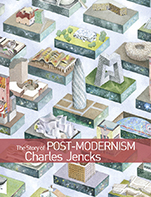
The Story of Post–Modernism: Five Decades of the Ironic, Iconic and Critical in Architecture
ISBN 9780470688953
Autor: Charles Jencks
Wydawca: Wiley
Dostępność: 3-6 tygodni
Cena: 205,80 zł
Przed złożeniem zamówienia prosimy o kontakt mailowy celem potwierdzenia ceny.
ISBN13: |
9780470688953 |
ISBN10: |
0470688955 |
Autor: |
Charles Jencks |
Oprawa: |
Paperback |
Rok Wydania: |
2011-09-23 |
Ilość stron: |
272 |
Wymiary: |
245x190 |
Tematy: |
AM |
In the late 20 th century, Post–Modernism was the leading global movement in architecture. It questioned the assumption of a single style and cultural totality and effectively stopped the Modern Movement in its tracks. In 1972, this was symbolised by the demolition of Pruitt–Igoe Housing in St Louis, Missouri, the first large–scale modernist housing scheme to be blown up by public demand. Following further detonations, a positive set of traditions flowed into the growing Post–Modern stream, and the pluralist philosophy so active today. Notable were Contextualism and Radical Eclecticism, Post–Modern Classicism and Regionalism, the Heteropolis and the new level of public engagement in city development. After twenty years of success, and then the inevitable commercial rips–offs, Post–Modern architecture succumbed to ersatz, debased by fashion as other leading movements before it. Yet, in another historical turn at the Millennium, plural cultures sought a richer identity than the Minimalism on offer and the result was the second great flowering of Post–Modernism. Now, much aided by the computer and the worldwide web this tradition re–emerged in an outburst of iconic architecture, a patterned ornament driven by digitisation and the complexity paradigm, which has provided the larger ecological and cosmic picture. Ironically, subtracted of its Post–Modern label, this richer architecture again flourishes as the alternative to a mechanistic modernism.
In The Story of Post–Modernism, Charles Jencks, an authority on the subject, provides a lively and accessible account of Post–Modern architecture from its roots in the early 60s to the present day. In an evolutionary diagram, Jencks charts the variety of streams that now make up the river delta and discusses the main characters from James Stirling to Frank Gehry and Herzog & de Meuron.
PREFACE Post–Modernism Resurgent?
The Back Story
Some Debts Acknowledged
And Especially Madelon
PART I The Perfect Storm of Post–Modernism
The Moral Failures of Modernism
The Recurrent Deaths of Modernism
The Triumph of Nothingness
Revisionists and Le Corbusier Lead the Revolt
Complexity and Double–Coding – the First Post–Modern Synthesis
The Shape of History – Big, Medium and Small Waves
PART II Searching for Difference, Finding Commonality
Global Pluralism
Radical Eclecticism, the First Response to Homogeneity
Contextual Counterpoint
Post–Modern Classicism – the Ironic International Style
Media Events and Money
A Diversion on Cost and Taste
James Stirling Synthesises Contextualism and Pluralism
The Complexity Paradigm Extended
Modernists Becoming Post–Modern
Time–Binding Opposites
PART III Towards a Critical Modernism
What is a City? – a Complex Adaptive System
Heterotopias and the Heteropolis
Expressively Green and Inexpensive
Rem Koolhaas, Steven Holl, Toyo Ito and the Porous Route Building
Peter Eisenman, the Landform and the Critical–Creative
PART IV Complexity and Nature’s Ornament
The Complexity Paradigm
Fractal Architecture and the Metaphysics of Seamless Continuity
Opening up the White Cube
Four Degrees of Ornament
PART V The Coming of the Cosmic Icons
The Iconic Building and its Discontents
The Bilbao Effect
Multiple Meaning and Enigmatic Signifiers
Worthy Icons?
Paranoia, Veiled Themes and Cosmic Iconology
Premature Conclusion: the Iconology of Post–Modernism?
Notes
A Post–Modern Bibliography
Charles Jencks is an American architectural theorist, author and landscape architect. He has written widely on Post–Modern and Modern architecture. His bestselling book The Language of Post–Modern Architecture (1977) popularised Post–Modernism in architecture and made him the leading author on the subject in the 70s and 80s. He is the founder of the Maggie Centres with his late wife Maggie Keswick, a charity that has become influential for its enlightened provision of uplifting environments for cancer care, designed by some of the world′s most renowned architects. Jencks writes and lectures internationally on architecture and landscape design.
Koszyk
Książek w koszyku: 0 szt.
Wartość zakupów: 0,00 zł
Informacje


Kontakt
Gambit
Centrum Oprogramowania
i Szkoleń Sp. z o.o.
Al. Pokoju 29b/22-24
31-564 Kraków
Siedziba Księgarni
ul. Kordylewskiego 1
31-542 Kraków
+48 12 410 5991
+48 12 410 5987
+48 12 410 5989
Subskrypcje
Administratorem danych osobowych jest firma Gambit COiS Sp. z o.o. Na podany adres będzie wysyłany wyłącznie biuletyn informacyjny.
Autoryzacja płatności

Informacje na temat autoryzacji płatności poprzez PayU.

© Copyright 2012: GAMBIT COiS Sp. z o.o. Wszelkie prawa zastrzeżone.
Projekt i wykonanie: Alchemia Studio Reklamy