


Wydawcy
Katalog tematyczny
- Archeologia (109)
- Ekonomia, finanse, business (13704)
- Filozofia (1445)
- Historia (3040)
- Języki i językoznawstwo (2356)
- Lifestyle, hobby i rozrywka (475)
- Medycyna (9704)
- Nauki humanistyczne (4)
- Nauki o Ziemi i środowisku (2638)
- Nauki ścisłe (20412)
- Nauki społeczne (8486)
- Nauki techniczne (13450)
- Prawo (1696)
- Publikacje informacyjne i interdyscyplinarne (1288)
- Religia i wierzenia (917)
- Technika komputerowa (4067)
- Zdrowie, relacje międzyludzkie i rozwój osobisty (657)





Informacje szczegółowe o książce
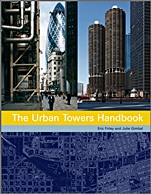
The Urban Towers Handbook
ISBN 9780470684740
Autor: Eric Firley, Julie Gimbal
Wydawca: Wiley
Dostępność: 3-6 tygodni
Cena: 313,95 zł
Przed złożeniem zamówienia prosimy o kontakt mailowy celem potwierdzenia ceny.
ISBN13: |
9780470684740 |
ISBN10: |
0470684747 |
Autor: |
Eric Firley, Julie Gimbal |
Oprawa: |
Hardback |
Rok Wydania: |
2011-05-20 |
Ilość stron: |
264 |
Wymiary: |
287x224 |
Tematy: |
AM |
The Urban Towers Handbook
Eric Firley and Julie Gimbal with Philippe Honnorat
For well over a century, the modern skyscraper has provided an ingenious solution to high–density living and working – accommodating the greatest number of people in a building with a minimal footprint. In the contemporary context of drastic urban growth, its role can only gain in importance. The question is how to avoid past mistakes and how to conceive the tower as a positive component of an existing or newly created urban fabric. In a thoroughly analytical and comparative way The Urban Towers Handbook provides answers to these questions and serves as a reference book and design tool for architects, planners and developers alike. Its comprehensive graphic documentation includes not only aerials and to–scale plans and sections, but also purpose–made photography, drawings and diagrams.
The core of the book is made up of over fifty case studies which have been classified according to three major typological groups and their respective sub–groups: solitaires, clusters and vertical cities. Twenty–one of these examples feature detailed documentation, including classics such as the Rockefeller Center in Manhattan and Torre Velasca in Milan, as well as contemporary milestones such as Roppongi Hills in Tokyo and the making of Sheikh Zayed Road in Dubai. Among others, several districts in Hong Kong, Shanghai and São Paulo have been analysed as existing examples of vertical cities. The case studies section of the book is consolidated by a second section that outlines high–rise regulations in seven cities around the world, and highlights how planning authorities use tall buildings for the realisation of their urban goals and visions. The third and final section of the book addresses the uneasy relationship between high–rise structures and sustainability, placing the emphasis on the urban implications.
Preface
Acknowledgements
Introduction
Section A: A visual dictionary of high–rise buildings
1st Group: Solitaires and Twin Towers
1 Monument
Main example: Kingdom Centre, Riyadh
Secondary 1: Moscow State University
Secondary 2: Burj Khalifa, Dubai
2 Monument in block
Main example: 30 St Mary Axe, London
Secondary 1: Torre Agbar, Barcelona
Secondary 2: Seagram Building, New York City
3 Tower as block
Main example: Commerzbank Tower, Frankfurt
Secondary 1: Transamerica Pyramid, San Francisco
Seconday 2: Hotel Ukraina, Moscow
4 Tower in block
Main example: Torre Velasca, Milan
Secondary 1: Kudamm–Karree, Berlin
Secondary 2: Norddeutsche Landesbank, Hanover
5 Twin towers
Main example: Kungstornen, Stockholm
Secondary 1: Marina City Towers, Chicago
Secondary 2: Puerta de Europa, Madrid
6 Tower as team player
Main example: Tokyo Metropolitan Government Building
Secondary 1: Thyssen–Haus, Düsseldorf
Secondary 2: United Nations Headquarters, New York City
7 Tower on infrastructure
Main example: The Standard Hotel, New York City
Secondary 1: Shard London Bridge, London
Secondary 2: Tour Dexia (CBX), La Défense
8 Tower as module / business as usual
Main example: Tour Ar Men, Paris
Secondary 1: DUOC Corporate Building, Santiago de Chile
Secondary 2: Banco Atlántico, Barcelona
2nd Group: Clusters
1 Integrated in existing city fabric
Main example: Rockefeller Center, New York City
Secondary 1: Villeurbanne Town Hall and new centre
Secondary 2: Riverside Center, New York City
2 Towers as urban pattern
Main example: Quartier du Palais ( Immeubles Choux ), Créteil
Secondary 1: Jianwai SOHO, Beijing
Secondary 2: Stuyvesant Town, New York City
3 Linear cluster
Main example: Sheikh Zayed Road, Dubai
Secondary 1: Playa de Levante extension, Benidorm
Secondary 2: Rue de la Loi masterplan, Brussels
4 High–rise compound
Main example: Moma and Pop Moma, Beijing
Secondary 1: Marina Baie des Anges, Villeneuve–Loubet
Secondary 2: Icon Brickell, Miami
5 High–rise megastructure
Main example: Roppongi Hills Mori Tower, Tokyo
Secondary 1: Parque Central, Caracas
Secondary 2: Pinnacle@Duxton, Singapore
6 Towers in nature
Main example: Hansaviertel, Berlin
Secondary 1: Unité d Habitation, Marseille
Secondary 2: Newton Suites, Singapore
7 Towers on podium
Main example: Front de Seine, Paris
Secondary 1: Jumeirah Beach Residences, Dubai
Secondary 2: Tour 9, Montreuil
3rd Group: Vertical Cities
1 US–American downtown:
Main example: Downtown Houston
2 High–rise as norm:
Main example: Higienópolis, São Paulo
3 High–rise as geographical obligation:
Main example: Monaco
4 City of monuments:
Main example: Lujiazui, Shanghai
5 European CBD:
Main example: La Défense
Secondary: La Défense extension (Tour AIR2)
6 City of megastructures:
Main example: Hong Kong
Section B: High–rise building regulations in seven cities worldwide
London
Frankfurt
Vienna
Paris
New York
Hong Kong
Singapore
Section C: High–rise and sustainability
Comparative table
Bibliography
Index
Picture credits
Eric Firley is a French–German architect and urban designer. The author of The Urban Housing Handbook (John Wiley & Sons Ltd, 2009), he is Assistant Professor at the University of Miami School of Architecture and heads an international research consultancy.
Julie Gimbal is a French art historian with a special interest in high–rise architecture. She holds a doctorate from the University of Rennes on the subject of high–rise architecture in France and is responsible for the second section of the book on high–rise regulations. She also helped to inform the choice of case studies in the first part of the book.
Philippe Honnorat, a French Engineer, heads the Paris office of WSP Flack + Kurtz. An expert in Mechanical and Electrical systems, he has worked in the UK and USA, and has extensive international experience in high–rise structures. Honnorat wrote the third section of the book covering sustainability issues.
Koszyk
Książek w koszyku: 0 szt.
Wartość zakupów: 0,00 zł
Informacje


Kontakt
Gambit
Centrum Oprogramowania
i Szkoleń Sp. z o.o.
Al. Pokoju 29b/22-24
31-564 Kraków
Siedziba Księgarni
ul. Kordylewskiego 1
31-542 Kraków
+48 12 410 5991
+48 12 410 5987
+48 12 410 5989
Subskrypcje
Administratorem danych osobowych jest firma Gambit COiS Sp. z o.o. Na podany adres będzie wysyłany wyłącznie biuletyn informacyjny.
Autoryzacja płatności

Informacje na temat autoryzacji płatności poprzez PayU.

© Copyright 2012: GAMBIT COiS Sp. z o.o. Wszelkie prawa zastrzeżone.
Projekt i wykonanie: Alchemia Studio Reklamy