


Wydawcy
Katalog tematyczny
- Archeologia (109)
- Ekonomia, finanse, business (13704)
- Filozofia (1445)
- Historia (3040)
- Języki i językoznawstwo (2356)
- Lifestyle, hobby i rozrywka (475)
- Medycyna (9704)
- Nauki humanistyczne (4)
- Nauki o Ziemi i środowisku (2638)
- Nauki ścisłe (20412)
- Nauki społeczne (8486)
- Nauki techniczne (13450)
- Prawo (1696)
- Publikacje informacyjne i interdyscyplinarne (1288)
- Religia i wierzenia (917)
- Technika komputerowa (4067)
- Zdrowie, relacje międzyludzkie i rozwój osobisty (657)





Informacje szczegółowe o książce
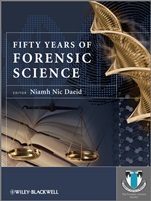
Fifty Years of Forensic Science: A Commentary
ISBN 9780470684009
Autor: Dr. Niamh Nic Daeid
Wydawca: Wiley
Dostępność: 3-6 tygodni
Cena: 434,70 zł
Przed złożeniem zamówienia prosimy o kontakt mailowy celem potwierdzenia ceny.
ISBN13: |
9780470684009 |
ISBN10: |
0470684003 |
Autor: |
Dr. Niamh Nic Daeid |
Oprawa: |
Hardback |
Rok Wydania: |
2010-03-16 |
Ilość stron: |
320 |
Wymiary: |
267x202 |
Tematy: |
LA |
Over the last half century, the science and practice of forensic science has undergone dramatic changes. Since the early 1960s the technological developments and their application to forensic science have been immense. Not only that, the application of science within a legal context and framework has developed enormously, as has the evaluation of the analytical results obtained. This unique text will look at the changes and challenges within forensic science over the last fifty years through a continuous diary of development witnessed by the editorials and relevant correspondence delivered through the UK Forensic Science Societies’ journal Science and Justice (formally the Journal of the Forensic Science Society).
The editorials are divided into sections relating to the developments of forensic practice, the advancement of science, education, legal aspects, forensic science and medicine, the international dimension of forensic science and the interpretation and evaluation of evidence. The text and first two sections are set in context by an introductory chapter written by Professor Brian Caddy examining the future of forensic science.
• A key text that traces the historical development of forensic science through reflective editorials published in the journal Science and Justice, and the Journal of the Forensic
Science Society
• Includes introductory chapter by Professor Brian Caddy
• Divided into themed sections to reflect current commentary and debate
Spis treści:
Preface
Introduction
SECTION I: THE PROFESSIONAL DEVELOPMENT OF FORENSIC SCIENCE
1 (1) – 1960 Criminal aspects of forensic science in Great Britain
4 (2) – 1964 Forensic science or sciences?
4 (4) – 1964 Shriving a science
5 (1) – 1965 A public image
5 (2) – 1965 Do
n’t forget them in Swahililand
6 (2) – 1966 The vacant headquarters
9 (2a) – 1969 Six just men
9 (2b) – 1969 “A forensic scientist?”
13 (3) – 1973 I hold every man a debtor to his profession
14 (2) – 1974 Police perimeters – politics or planning
17 (4) – 1977 Theory and practice
20 (3) – 1980 Forensic Science – a broader basis
21 (1) – 1981 General practice in forensic science
24 (6) – 1984 Does forensic science have a future?
24 (6) – 1985 Does forensic science have a future? – correspondence
25 (1) – 1985 But is it anything?
25 (1) – 1985 But is it anything? – correspondence
25 (5) – 1985 Towards expert experts
26 (2) – 1986 Doctrine, Science, Belief, Evidence
26 (4) – 1986 The Forensic Science Society – a way forward?
26 (5) – 1986 All systems go?
27 (2) – 1987 Police productivity
29 (1) – 1989 Professional qualifications – a milestone
30 (5) – 1990 Brave New World
31 (2) – 1991 “Come forth into the light of things, let nature be your teacher”
31 (4) – 1991 Forensic science on the quality track
32 (2) – 1992 But is this being professional?
32 (4) – 1992 Can we help you, sir?
33 (3) – 1993 Is this where the buck stops?
34 (1) – 1994 An expert what?
34 (2) – 1994 Quo vadis?
35 (1) – 1995 Does forensic science give value for money?
35 (3) – 1995 Rensacor
35 (4) – 1995 Lest we forget
36 (3) – 1996 Forensic futurology
36 (4) – 1996 Ambivalence – a problem for forensic science
37 (1) – 1997 Private or public
37 (3) – 1997 Jobs for the boys
38 (1) – 1998 Proactive forensic science
38 (4) – 1998 SOP or CPD, place your bets
39 (1) – 1999 Forensic apartheid?
39 (2) – 1999 Le
t me through, I’m a ummmm . . .
39 (3) – 1999 Something nasty hiding . . .
39 (4) – 1999 From Bach to Schoenberg
42 (2) – 2002 A professional body for forensic scientists
45 (1) – 2005 Professionalism – duties and privileges
45 (3) – 2005 Who guards the guards?
45 (4) – 2005 Everything changes and nothing is constant
47 (2) – 2007 Eight years on
47 (2) – 2007 Eight years on – Regulation of Forensic Physicians and the CRFP
47 (3) – 2007 CPD, an effective means of professional development. . .or is it?
48 (1) – 2008 President of the Forensic Science Society
48 (3) – 2008 The forensic science regulator
SECTION II: SCIENTIFIC DEVELOPMENTS AND RESEARCH
2 (2) – 1961 The individuality of human bloodstaining
3 (1) – 1962 A breakthrough in forensic science
4 (1) – 1963 Driving over the level
4 (1) – 1963 Science before the fact
5 (4b) – 1964 The price of road safety
6 (1) – 1965 Progress in research
7 (4) – 1966 Demanding scientific evidence
9 (4) – 1968 Computer control
11 (2) – 1971 The defeat of the tail–gater
11 (3) – 1971 The New Zealand approach
14 (1) – 1974 Back to basics
16 (3b) – 1976 An independent witness required
19 (4) – 1979 Publish or perish
22 (2) – 1982 But is it science . . .
22 (3) – 1982 Hair today . . .
25 (2) – 1985 On body fluid frequencies
26 (1) – 1986 Publish or perish revisited
27 (1) – 1987 Through the looking glass
29 (6) – 1989 The highest order common sense
30 (1) – 1990 Profile of the Nineties
30 (6) – 1990 Official publications
33 (4) – 1993 DNA or Abracadabra
36 (1) – 1996 To research or capitulate?
36 (2) – 1996 Fireproof DNA?
37 (4) – 1997 Where will a
ll the forensic scientists go?
40 (1) – 2000 Wizards and gatekeepers at the roadside?
40 (3) – 2000 The consent of the governed
41 (1) – 2001 The use of material from the dead in forensic science research: is it lawful and is it ethical?
43 (1) – 2003 Hunting truffles
44 (1) – 2004 Reiterative justice?
45 (2) – 2005 Science & Justice – DNA and the courts
47 (4) – 2007 DNA – what’s next?
48 (4) – 2008 Do we value research?
49 (1) – 2009 Lessons from the past
49 (2) – 2009 IRMS
SECTION III: EVALUATION AND INTERPRETATION OF EVIDENCE
19 (3) – 1979 Away with the fuzz
23 (1) – 1983 Patience
23 (1a) – 1983 Statistics and forensic science – a fruitful partnership
23 (1b) – 1983 The probability of exclusion or likelihood of guilt of an accused: Paternity
23 (1c) – 1983 The probability of non–discrimination or likelihood of guilt of an accused: Criminal Identification
23 (1d) – 1983 What is the probability that this blood came from that person? A meaningful question?
23 (1e) – 1983 A frame of reference or Garbage in, Garbage out
23 (4) – 1983 On circumstantial evidence
26 (3) – 1986 Evaluation of associative physical evidence
26 (3a) – 1987 The use of statistics in forensic science – correspondence
26 (3b) – 1987 The use of statistics in forensic science – correspondence
28 (3) – 1988 Heads we win
37 (2) – 1997 Does justice require less precision than chemistry?
43 (2) – 2003 Sally Clark – a lesson for us all
44 (2) – 2004 Context–free forensic science
46 (1) – 2006 Lies, damn lies and statistics
SECTION IV: EDUCATION IN FORENSIC SCIENCES
2 (1) – 1961 Research and teaching in forensic science
2 (1) – 1961 A preliminary survey of education and rese
Koszyk
Książek w koszyku: 0 szt.
Wartość zakupów: 0,00 zł
Informacje


Kontakt
Gambit
Centrum Oprogramowania
i Szkoleń Sp. z o.o.
Al. Pokoju 29b/22-24
31-564 Kraków
Siedziba Księgarni
ul. Kordylewskiego 1
31-542 Kraków
+48 12 410 5991
+48 12 410 5987
+48 12 410 5989
Subskrypcje
Administratorem danych osobowych jest firma Gambit COiS Sp. z o.o. Na podany adres będzie wysyłany wyłącznie biuletyn informacyjny.
Autoryzacja płatności

Informacje na temat autoryzacji płatności poprzez PayU.

© Copyright 2012: GAMBIT COiS Sp. z o.o. Wszelkie prawa zastrzeżone.
Projekt i wykonanie: Alchemia Studio Reklamy