


Wydawcy
Katalog tematyczny
- Archeologia (109)
- Ekonomia, finanse, business (13704)
- Filozofia (1445)
- Historia (3040)
- Języki i językoznawstwo (2356)
- Lifestyle, hobby i rozrywka (475)
- Medycyna (9704)
- Nauki humanistyczne (4)
- Nauki o Ziemi i środowisku (2638)
- Nauki ścisłe (20412)
- Astronomia (294)
- Biologia (5119)
- Chemia (6540)
- Chemia analityczna (361)
- Chemia fizyczna (346)
- Chemia nieorganiczna (137)
- Chemia organiczna (535)
- Krystalografia (27)
- Minerologia (46)
- Fizyka (3309)
- Matematyka (4574)
- Nauki ścisłe, ogólnie (503)
- Nauki społeczne (8486)
- Nauki techniczne (13450)
- Prawo (1696)
- Publikacje informacyjne i interdyscyplinarne (1288)
- Religia i wierzenia (917)
- Technika komputerowa (4067)
- Zdrowie, relacje międzyludzkie i rozwój osobisty (657)





Informacje szczegółowe o książce
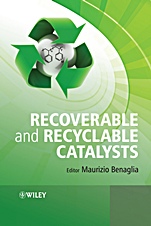
Recoverable and Recyclable Catalysts
ISBN 9780470681954
Autor: Maurizio Benaglia
Wydawca: Wiley
Dostępność: 3-6 tygodni
Cena: 736,05 zł
Przed złożeniem zamówienia prosimy o kontakt mailowy celem potwierdzenia ceny.
ISBN13: |
9780470681954 |
ISBN10: |
0470681950 |
Autor: |
Maurizio Benaglia |
Oprawa: |
Hardback |
Rok Wydania: |
2009-09-18 |
Ilość stron: |
490 |
Wymiary: |
249x173 |
Tematy: |
PN |
Recoverable and Recyclable Catalysts
There is continued pressure on chemical and pharmaceutical industries to reduce chemical waste and improve the selectivity and efficiency of synthetic processes. The need to implement green chemistry principles is a driving force towards the development of recoverable and recyclable catalysts.
The design and synthesis of recoverable catalysts is a highly challenging interdisciplinary field combining chemistry, materials science engineering with economic and environmental objectives. Drawing on international research and highlighting recent developments, this book serves as a practical guide for both experts and newcomers to the field.
Topics covered include:An introduction to the principles of catalyst recovery and recyclingCatalysts on insoluble and soluble support materialsThermomorphic catalysts, self–supported catalysts and perfluorous catalytic systemsThe development of reusable organic catalystsContinuous flow and membrane reactors
Each chapter combines principles with practical information on the synthesis of catalysts and strategies for catalyst recovery. The book concludes with a comparison of different catalytic systems, using case studies to illustrate the key features of each approach.
Recoverable and Recyclable Catalysts is a valuable reference source for academic researchers and professionals from a range of pharmaceutical and chemical industries, particularly those working in catalysis, organic synthesis and sustainable chemistry.
Spis treści:
Preface.
Acknowledgements.
Contributors.
1 The Experimental Assay of Catalyst Recovery: General Concepts (John A. Gladysz).
1.1 Introduction.
1.2 Catalyst Precursor vs Catalyst.
1.3 Catalyst vs Catalyst Resting State.
1.4 Catalyst Inventory: Loss Mechanisms.
1.5 Evaluation of Catalyst Recovery.
1.6 Prospective.
References.
2 Surface–functionalized Nanoporous Catalysts for Renewable Chemistry (Brian G. Trewyn, Hung–Ting Chen and Victor S.–Y. Lin).
2.1 Introduction.
2.2 Immobilization Strategies of Heterogeneous Catalysts.
2.3 Efficient Heterogeneous Catalysts with Enhanced Reactivity and Selectivity with Functionality.
2.4 Other Heterogeneous Catalyst Systems on Nonsilica Supports.
2.5 Conclusion.
References.
3 Insoluble Resin–supported Catalysts (Gang Zhao and Zhuo Chai).
3.1 Introduction.
3.2 Transition Metal Catalyzed C—C Bond Formation Reactions.
3.3 Oxidation.
3.4 Reduction.
3.5 Organocatalyzed Reactions.
3.6 Annulation Reactions.
3.7 Miscellaneous.
3.8 Conclusion.
References.
4 Catalysts Bound to Soluble Polymers (Tamilselvi Chinnusamy, Petra Hilgers and Oliver Reiser).
4.1 Introduction.
4.2 Soluble Supports – General Considerations.
4.3 Recent Developments of Soluble Polymer–supported Catalysts.
4.4 Recent Examples for Reactions Promoted by Catalysts Bound to Soluble Polymers.
4.5 Conclusion.
List of Abbreviations.
References.
5 Polymeric, Recoverable Catalytic Systems (Qiao–Sheng Hu).
5.1 Introduction.
5.2 Polymeric Catalyst Systems.
5.3 Summary.
Acknowledgements.
References.
6 Thermomorphic Catalysts (David E. Bergbreiter).
6.1 Introduction.
6.2 Thermomorphic Catalyst Separation Strategies.
6.3 Hydrogenation Reactions Under Thermomorphic Conditions.
6.4 Hydroformylation Reactions Under Thermomorphic Conditions.
6.5 Hydroaminations Under Thermomorphic Conditions.
6.6 Pd–catalyzed Reactions Under Thermomorphic Conditions.
6.7 Polymerization Reactions Under Thermomorphic Conditions.
6.8 Organocatalysis Under Thermomorphic Conditions.
6.9 Cu(I)–catalyzed 1,3–Dipolar Cycloadditions Under Thermomorphic Conditions.
6.10 Ther
momorphic Hydrosilylation Catalysts.
6.11 Thermomorphic Catalytic Oxidations.
6.12 Conclusions.
References.
7 Self–supported Asymmetric Catalysts (Wenbin Lin and David J. Mihalcik).
7.1 Introduction.
7.2 Self–supported Asymmetric Catalysts Formed by Linking Catalytically Active Subunits via Metal–Ligand Coordination.
7.3 Self–supported Asymmetric Catalysts Formed by Post–synthetic Modifications of Coordination Polymers.
7.4 Self–supported Asymmetric Catalysts Formed by Linking Multitopic Chiral Ligands with Catalytic Metal Centers.
7.5 Conclusions and Outlook.
Acknowledgments.
References.
8 Fluorous Chiral Catalyst Immobilization (Tibor Soós).
8.1 Introduction.
8.2 Fluorous Chemistry and its Basic Recovery Concepts.
8.3 Application of Fluorous Chiral Catalysts.
8.4 Summary.
References.
9 Biphasic Catalysis: Catalysis in Supercritical CO2 and in Water (Simon L. Desset and David J. Cole–Hamilton).
9.1 Introduction.
9.2 Biphasic Catalysis.
9.3 Aqueous Biphasic Catalysis.
9.4 Supercritical Carbon Dioxide.
9.5 Conclusion.
References.
10 Asymmetric Catalysis in Ionic Liquids (Lijin Xu and Jianliang Xiao).
10.1 Introduction.
10.2 Metal–catalyzed Asymmetric Reactions in ILs.
10.3 Asymmetric Organocatalytic Reactions in ILs.
10.4 Concluding Remarks.
References.
11 Recoverable Organic Catalysts (Maurizio Benaglia).
11.1 Introduction.
11.2 Achiral Organic Catalysts.
11.3 Chiral Organic Catalysts.
11.4 Catalysts Derived from Amino Acids.
11.5 General Considerations on Recyclable Organocatalysts.
11.6 Outlook and Perspectives.
References.
12 Organic Polymer–microencapsulated Metal Catalysts (Jun Ou and Patrick H. Toy).
12.1 Introduction.
12.2 Non–cross–linked Polymer–microencapsulated Catalysts.
12.3 Cross–linked Polymer–microencapsulated Catalysts.
12.4 Summary Table.
12.5 Conclusions.
References.
13 Organic Synthesis with Mini Flow Reactors Using Immobilised Catalysts (Sascha Ceylan and Andreas Kirschning).
13.1 Introduction.
13.2 Catalysis in Mini Flow Reactors with Immobilised Catalysts.
13.3 Miscellaneous Enabling Techniques for Mini Flow Systems.
13.4 Perspectives and Outlook.
References.
14 Homogeneous Catalysis Using Microreactor Technology (Johan C. Brandt and Thomas Wirth).
14.1 Introduction.
14.2 Acid–catalysed Reactions.
14.3 Liquid–liquid Biphasic Systems.
14.4 Photocatalysis.
14.5 Asymmetric Catalytic Reactions.
14.6 Unusual Reaction Conditions.
References.
15 Catalyst Immobilization Strategy: Some General Considerations and a Comparison of the Main Features of Different Supports (Franco Cozzi).
15.1 Introduction.
15.2 General Considerations on Catalyst Immobilization.
15.3 Comparison of Different Supports Employed for the Immobilization of Proline.
15.4 Comparison of Different Supports Employed for the Immobilization of Bis(oxazolines).
15.5 Conclusions.
References.
Index.
Okładka tylna:
Recoverable and Recyclable Catalysts
There is continued pressure on chemical and pharmaceutical industries to reduce chemical waste and improve the selectivity and efficiency of synthetic processes. The need to implement green chemistry principles is a driving force towards the development of recoverable and recyclable catalysts.
The design and synthesis of recoverable catalysts is a highly challenging interdisciplinary field combining chemistry, materials science engineering with economic and environmental objectives. Drawing on international research and highlighting recent developments, this book serves as a practical guide for both experts and newcomers to the field.
Topics covered inc
lude:An introduction to the principles of catalyst recovery and recyclingCatalysts on insoluble and soluble support materialsThermomorphic catalysts, self–supported catalysts and perfluorous catalytic systemsThe development of reusable organic catalystsContinuous flow and membrane reactors
Each chapter combines principles with practical information on the synthesis of catalysts and strategies for catalyst recovery. The book concludes with a comparison of different catalytic systems, using case studies to illustrate the key features of each approach.
Recoverable and Recyclable Catalysts is a valuable reference source for academic researchers and professionals from a range of pharmaceutical and chemical industries, particularly those working in catalysis, organic synthesis and sustainable chemistry.
Koszyk
Książek w koszyku: 0 szt.
Wartość zakupów: 0,00 zł
Informacje


Kontakt
Gambit
Centrum Oprogramowania
i Szkoleń Sp. z o.o.
Al. Pokoju 29b/22-24
31-564 Kraków
Siedziba Księgarni
ul. Kordylewskiego 1
31-542 Kraków
+48 12 410 5991
+48 12 410 5987
+48 12 410 5989
Subskrypcje
Administratorem danych osobowych jest firma Gambit COiS Sp. z o.o. Na podany adres będzie wysyłany wyłącznie biuletyn informacyjny.
Autoryzacja płatności

Informacje na temat autoryzacji płatności poprzez PayU.

© Copyright 2012: GAMBIT COiS Sp. z o.o. Wszelkie prawa zastrzeżone.
Projekt i wykonanie: Alchemia Studio Reklamy