


Wydawcy
Katalog tematyczny
- Archeologia (109)
- Ekonomia, finanse, business (13704)
- Filozofia (1445)
- Historia (3040)
- Języki i językoznawstwo (2356)
- Lifestyle, hobby i rozrywka (475)
- Medycyna (9704)
- Nauki humanistyczne (4)
- Nauki o Ziemi i środowisku (2638)
- Nauki ścisłe (20412)
- Nauki społeczne (8486)
- Nauki techniczne (13450)
- Prawo (1696)
- Publikacje informacyjne i interdyscyplinarne (1288)
- Bibliotekoznawstwo, informacja naukowa i muzealnictwo (433)
- Encyklopedie i leksykony (181)
- Informacja naukowa (88)
- Zagadnienia interdyscyplinarne (391)
- Religia i wierzenia (917)
- Technika komputerowa (4067)
- Zdrowie, relacje międzyludzkie i rozwój osobisty (657)





Informacje szczegółowe o książce
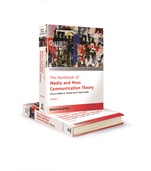
The Handbook of Media and Mass Communication Theory: 2 Volume Set
ISBN 9780470675052
Autor: Robert S. Fortner, P. Mark Fackler
Wydawca: Wiley
Dostępność: 3-6 tygodni
Cena: 1 833,30 zł
Przed złożeniem zamówienia prosimy o kontakt mailowy celem potwierdzenia ceny.
ISBN13: |
9780470675052 |
ISBN10: |
0470675055 |
Autor: |
Robert S. Fortner, P. Mark Fackler |
Oprawa: |
Hardback |
Rok Wydania: |
2014-04-25 |
Ilość stron: |
1008 |
Wymiary: |
258x182 |
Tematy: |
GTS |
The Handbook of Media and Mass Communication Theory presents a comprehensive series of original essays that focus on all aspects of current and classic theories and practices relating to media and mass communication. While tracing the development of hundreds of media theories or their variants over the past century, this two–volume collection delves deeply into the most prominent and influential theories while providing enlightening case studies of their application in various regional and national contexts. Both empirically–based theories and those developing from critical and normative perspectives are included, and international authorship ensures a global perspective of theoretical development. A wide range of topics are explored, including classical theories of media and the press, social construction and control, feminist media theory, globalization and cultural identity, theories of social media and new technologies, future directions in media theory, and many more. Authoritative and comprehensive, the The Handbook of Media and Mass Communication Theory sets a new standard in its compilation of the evolution and current state of our knowledge of theories in mass communication.
Volume I Introduction Section 1: Classical Theories of Media and the Press 1. Classical Liberal Theory in a Digital World Stephen J. A. Ward 2. A Brief History of Early Media Theory Robert S. Fortner 3. Political Economic Theory and Research: Conceptual Foundations and Current Trends Vincent Mosco 4. Semiotics and the Media Bronwen Martin 5. Symbolic Interactionism and the Media Norman K. Denzin 6. The Use of Theory in Media Effects Research W. James Potter 7. Cultivation Theory: Its History, Current Status and Future Directions Daniel Romer, Patrick Jamieson, Amy Bleakley & Kathleen Hall Jamieson 8. Media Ecology: Contexts, Concepts, and Currents Casey Man Kong Lum 9. Dramatistic Theory: A Burkeian Approach to the 2004 Madrid Terrorist Attacks Cristina Zurutuza Muñoz 10. Ritual Theory and the Media John J. Pauly 11. Jacques Ellul and the Nature of Propaganda in the Media Randal Marlin 12. Technics and Communication: Cities, Technology, Culture and Ecology in the Digital Age Robert S. Fortner 13. The Impact of Ethics on Media and Press Theory Clifford G. Christians Section 2: Audiences, Social Construction & Social Control 14. Media Setting the Agenda for the Public Sphere Maxwell E. McCombs and Lei Guo 15. Uses and Gratifications (U&G) Approach as a Lens for Studying Social Media Practice Anabel Quan–Haase and Alyson L. Young 16. The Media’s Impact on Perceptions of Political Polarization Jeffrey Crouch and Mark J. Rozell 17. The Cultural Construction of News: From Doing Work to Making Meanings Daniel A. Berkowitz and Zhengjia Liu 18. Media, Civil Society and the Public Sphere: History and Current Thinking Robert S. Fortner, Ann Snesareva and Ksenia Tsitovich 19. The Genesis of Social Responsibility Theory: William Hocking and Positive Freedom Clifford G. Christians and Mark Fackler Section 3: New Approaches and Reconsiderations 20. Feminist Media Theory Linda Steiner 21. Media, Communication and Post–colonial Theory Shanti Kumar 22. Reconceptualizing ‘Cultural Imperialism’ in the Current Era of Globalization Mel van Elteren 23. Al–Jazeera Remaps Global News Flow Catherine Cassara 24. Non–violence as a Communication Strategy: An Introduction to the Rhetoric of Peacebuilding Ellen W. Gorsevski 25. Globalization and Cultural Identities: A Contradiction in Terms? Ana Christina Correia Gil 26. Cultivation Theory in the Twenty–first Century Nancy Signorielli, Michael Morgan, and James Shanahan 27. Media Theory and Media Policy: Worlds Apart Cees Hamelink Volume II Section 4: Media Theory and New Technologies 28. The Philosophy of Technology and Communication Systems Clifford G. Christians 29. Theoretical Perspectives on the Social Construction of Technologies Robert S. Fortner and Darya V. Yanitskaya 30. Dangerous Liaisons: Media Gaming and Violence Ran Wei and Brett A. Borton 31. Personal and Political Empowerment through Social Networking Jarice Hanson 32. Global Communication Divides and Equal Rights to Communicate Carolyn A. Lin 33. Citizenship and Consumption: Media Theory in the Age of Twitter Kevin Cummings and Cynthia Gottshall 34. Round Pegs in Square Holes: Is Mass Communication Theory a Useful Tool in Conducting Internet Research? Christine Ogan 35. How Global is the Internet? Reflections on Economic, Cultural and Political Dimensions of the Networked “Global Village” Kai Hafez Section 5: Theory Case Studies 36. Nationalism and Imperialism Mingsheng Li 37. Media Control in China Zheng Li 38. The Construction of National Image in Media and the Management of Intercultural Conflicts Xiaodong Dai and Guo–Ming Chen 39. Play Theory and Public Media: A Case Study in Kenya Editorial Cartoons Mark Fackler and Levi Obonyo 40. Contemporary Chinese Communication Scholarship: An Emerging Alternative Paradigm Wenshan Jia, Hailong Liu, Runzi Wang & Xinchuan Liu 41. Al–Jazeera and Dr. Laura: Is a Global Islamic Reformist Media Ethics Theory Possible? Haydar Badawi Sadig 42. Media Ethics Theories in Africa Herman Wasserman 43. Censorship of the Media and Terrorism Kasun Ubayasiri 44. Blending East–West Philosophies to Metatheorize Mediatization and Revise the News Paradigm Shelton A. Gunaratne 45. Buddhist Understandings of Media Wimal Dissanayake 46. Jewish Communication Theory: Biblical Law and Contemporary Media Practice Yoel Cohen 47. A Theological Theory of Communication: God Still Speaks P. Mark Fackler 48. Theorizing about the Press in Post–Soviet Societies Igor E. Klyukanov and Galina V. Sinekopova 49. Internet and Political Activism in Post–revolutionary Iran Babak Rahimi Conclusion 50. Future Directions in Media Theory P. Mark Fackler and Robert S. Fortner
Robert S. Fortner is Professor of Journalism and Mass Communication at the American University in Bulgaria. He is the author or editor of seven books and almost 100 essays. P. Mark Fackler is Professor of Communication at Calvin College. He has written extensively on topics relating to communication and journalism ethics.
Koszyk
Książek w koszyku: 0 szt.
Wartość zakupów: 0,00 zł
Informacje


Kontakt
Gambit
Centrum Oprogramowania
i Szkoleń Sp. z o.o.
Al. Pokoju 29b/22-24
31-564 Kraków
Siedziba Księgarni
ul. Kordylewskiego 1
31-542 Kraków
+48 12 410 5991
+48 12 410 5987
+48 12 410 5989
Subskrypcje
Administratorem danych osobowych jest firma Gambit COiS Sp. z o.o. Na podany adres będzie wysyłany wyłącznie biuletyn informacyjny.
Autoryzacja płatności

Informacje na temat autoryzacji płatności poprzez PayU.

© Copyright 2012: GAMBIT COiS Sp. z o.o. Wszelkie prawa zastrzeżone.
Projekt i wykonanie: Alchemia Studio Reklamy