


Wydawcy
Katalog tematyczny
- Archeologia (109)
- Ekonomia, finanse, business (13704)
- Filozofia (1445)
- Historia (3040)
- Języki i językoznawstwo (2356)
- Lifestyle, hobby i rozrywka (475)
- Medycyna (9704)
- Nauki humanistyczne (4)
- Nauki o Ziemi i środowisku (2638)
- Nauki ścisłe (20412)
- Nauki społeczne (8486)
- Nauki techniczne (13450)
- Prawo (1696)
- Publikacje informacyjne i interdyscyplinarne (1288)
- Religia i wierzenia (917)
- Technika komputerowa (4067)
- Zdrowie, relacje międzyludzkie i rozwój osobisty (657)





Informacje szczegółowe o książce
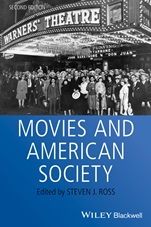
Movies and American Society
ISBN 9780470673645
Autor: Steven J. Ross
Wydawca: Wiley
Dostępność: 3-6 tygodni
Cena: 289,80 zł
Przed złożeniem zamówienia prosimy o kontakt mailowy celem potwierdzenia ceny.
ISBN13: |
9780470673645 |
ISBN10: |
0470673648 |
Autor: |
Steven J. Ross |
Oprawa: |
Paperback |
Rok Wydania: |
2014-01-31 |
Numer Wydania: |
2nd Edition |
Ilość stron: |
416 |
Wymiary: |
235x154 |
Tematy: |
HB |
Movies are more than just an evening’s entertainment. As historical documents, they reflect how Americans see and think about their world. Movies and American Society is a comprehensive collection of thirteen essays and supporting primary documents that explore how films have changed—and been changed by—American society from 1905 to the present. Each chapter contains an introduction by the editor, an essay that explores how movies made during a specific period dealt with problems of the time, discussion questions, primary documents, and suggestions for further reading and film screenings. The second edition includes a new chapter on “American Film in the Age of Terror,” as well as new essays for the chapters on “Race, Violence, and Film” and “Hollywood Goes Global” and fully updated “Readings and Screenings” sections. The book provides sustained discussion and insight into each period while examining a broad range of topics, from ideology, politics, and gender to class, war, and race relations. The jargon–free essays are engaging and accessible for students and the documents explore not only social practices and controversies but also the fun and cultural influence of movies and movie–going. Bringing together the best scholarship and many never–before–collected documents, this is an essential resource for those wishing to understand the social and cultural impact of film on 20 th – and 21 st –century American life.
Preface ix Preface to the First Edition x Source Acknowledgments xiii Introduction: Why Movies Matter 1 1 Going to the Movies: Early Audiences 14 Introduction to Article 14 “The Celluloid Stage: Nickelodeon Audiences” by Richard Butsch 15 Documents 32 Introduction to Documents 32 “The Nickel Madness” by Barton W. Carrie 32 Report of Censorship of Motion Pictures and of Investigation of Motion Picture Theatres of Cleveland by Robert O. Bartholomew 38 “House Fly Panics Pittsburgh Movie Audience” 40 Readings and Screenings 41 2 Heroes and Heroines of Their Own Entertainment: Progressive–Era Cinema 43 Introduction to Article 43 “Front Page Movies” by Kay Sloan 44 Documents 58 Introduction to Documents 58 “The Social Uses of the Moving Picture” by W. Stephen Bush 59 “Los Angeles Socialist Movie Theater” 62 Readings and Screenings 64 3 The Rise of Hollywood: Movies, Ideology, and Audiences in the Roaring Twenties 66 Introduction to Article 66 “Fantasy and Politics: Moviegoing and Movies in the 1920s” by Steven J. Ross 67 Documents 91 Introduction to Documents 91 “The Deluxe Picture Palace” by Lloyd Lewis 92 “Petting at the Movies” by E. J. Mitchell 94 “The Actor’s Part” by Milton Sills 95 Readings and Screenings 98 4 Who Controls What We See? Censorship and the Attack on Hollywood “Immorality” 100 Introduction to Article 100 “Hollywood Censored: The Production Code Administration and the Hollywood Film Industry, 1930–1940” by Gregory D. Black 101 Documents 123 Introduction to Documents 123 Quotes from Censorship of the Theater and Moving Pictures edited by Lamar T. Beman 123 Readings and Screenings 129 5 Confronting the Great Depression: Renewing Democracy in Hard Times 130 Introduction to Article 130 “The Recreation of America: Hybrid Moviemakers and the Multicultural Republic” by Lary May 131 Documents 160 Introduction to Documents 160 Responses to Edward G. Robinson’s “Declaration of Democratic Independence” 161 Readings and Screenings 163 6 Alternatives Cinemas: Movies on the Margins 165 Introduction to Article 165 “Others’ Movies” by Thomas Cripps 166 Documents 185 Introduction to Documents 185 “The Negro and the Photo–Play” by Oscar Micheaux 185 “‘The Symbol of the Unconquered,’ New Play” 187 “Some New American Documentaries: In Defense of Liberty” by John H. Winge 188 Readings and Screenings 191 7 Seeing Red: Cold War Hollywood 193 Introduction to Article 193 “Hollywood and the Cold War” by John Belton 194 Documents 214 Introduction to Documents 214 FBI Report, “Communist Political Influence and Activities in the Motion Picture Business in Hollywood, California” 215 “The Waldorf Statement,” Issued by the Association of Motion Picture Producers 219 Readings and Screenings 220 8 Eisenhower’s America: Prosperity and Problems in the 1950s 222 Introduction to Article 222 “The Fifties” by Leonard Quart and Albert Auster 223 Documents 242 Introduction to Documents 242 “Teen Idol: Hedda Hopper Interviews James Dean” 243 Reviews of Rebel Without a Cause 246 Readings and Screenings 249 9 Race, Violence, and Film: From the Blaxploitation Era of the 1960s to the “Hood–Homeboy” Movies of the 1990s 252 Introduction to Article 252 “Black Violence as Cinema: From Cheap Thrills to Historical Agonies” by Ed Guerrero 253 Documents 269 Introduction to Documents 269 Variety Reports Reactions to Guess Who’s Coming to Dinner? 269 “Blaxploitation Movies: Cheap Thrills That Degrade Blacks” by Alvin F. Poussaint 271 Readings and Screenings 274 10 Vietnam and the Crisis of American Power: Movies, War, and Militarism 277 Introduction to Article 277 “Vietnam and the New Militarism” by Michael Ryan and Douglas Kellner 278 Documents 300 Introduction to Documents 300 Correspondence Regarding the Making of The Green Berets 300 “Platoon Marks ‘End of a Cycle’ for Oliver Stone” by Sean Mitchell 302 “Reunion: Men of a Real Platoon” by Jay Sharbutt 306 Readings and Screenings 308 11 Reagan’s America: The Backlash Against Women and Men 310 Introduction to Article 310 “Fatal and Fetal Visions: The Backlash in the Movies” by Susan Faludi 311 Documents 333 Introduction to Documents 333 Equal Rights Amendment, 1972 334 “A Backlash Manifesto” by Phyllis Schlafly 334 “A New Stereotype: The Crazy Career Woman” by Richard Cohen 338 Readings and Screenings 339 12 American Film in the Age of Terror: The Wars in Afghanistan and Iraq 342 Introduction to Article 342 “Limited Engagement: The Iraq War on Film” by Susan L. Carruthers 343 Documents 358 Introduction to Documents 358 “Why Iraq War Films Fail” by Tom Streithorst 359 “Total Receipts and Production Costs for Films About Afghanistan and Iraq” by John Markert 362 Readings and Screenings 363 13 Hollywood Goes Global: The Internationalization of American Cinema 365 Introduction to Article 365 “Why Hollywood Rules the World, and Whether We Should Care” by Tyler Cowen 366 Documents 382 Introduction to Documents 382 Testimony Before Congressional Hearings on Television Broadcasting and the European Community 383 “Global Box Office Climb Continues in 2011” 385 Readings and Screenings 386 Index 389
Steven J. Ross is Professor of History at the University of Southern California. He is co–director of the Los Angeles Institute for the Humanities and author of Workers On the Edge: Work, Leisure, and Politics in Industrializing Cincinnati, 1788–1890 (1985), Working–Class Hollywood: Silent Film and the Shaping of Class in America (1998), and Hollywood Left and Right: How Movie Stars Shaped American Politics (2011). Ross is the recipient of the Theater Library Association Book Award and a Film Scholars Award from the Academy of Motion Picture Arts and Sciences.
Koszyk
Książek w koszyku: 0 szt.
Wartość zakupów: 0,00 zł
Informacje


Kontakt
Gambit
Centrum Oprogramowania
i Szkoleń Sp. z o.o.
Al. Pokoju 29b/22-24
31-564 Kraków
Siedziba Księgarni
ul. Kordylewskiego 1
31-542 Kraków
+48 12 410 5991
+48 12 410 5987
+48 12 410 5989
Subskrypcje
Administratorem danych osobowych jest firma Gambit COiS Sp. z o.o. Na podany adres będzie wysyłany wyłącznie biuletyn informacyjny.
Autoryzacja płatności

Informacje na temat autoryzacji płatności poprzez PayU.

© Copyright 2012: GAMBIT COiS Sp. z o.o. Wszelkie prawa zastrzeżone.
Projekt i wykonanie: Alchemia Studio Reklamy