


Wydawcy
Katalog tematyczny
- Archeologia (109)
- Ekonomia, finanse, business (13704)
- Filozofia (1445)
- Historia (3040)
- Języki i językoznawstwo (2356)
- Lifestyle, hobby i rozrywka (475)
- Medycyna (9704)
- Nauki humanistyczne (4)
- Nauki o Ziemi i środowisku (2638)
- Nauki ścisłe (20412)
- Nauki społeczne (8486)
- Nauki techniczne (13450)
- Budownictwo lądowe (1045)
- Chemia przemysłowa (2258)
- Elektronika i telekomunikacja (3287)
- Energetyka (1122)
- Inne nauki stosowane (363)
- Inżynieria dźwięku (22)
- Materiały wybuchowe (3)
- Optyka stosowana (106)
- Przestrzeń kosmiczna (22)
- Technika morska (44)
- Technologia górnicza (9)
- Inżynieria biochemiczna (507)
- Inżynieria transportu (232)
- Mechanika i materiały (3316)
- Nauka o środowisku (321)
- Rolnictwo (507)
- Technika, ogólnie (475)
- Prawo (1696)
- Publikacje informacyjne i interdyscyplinarne (1288)
- Religia i wierzenia (917)
- Technika komputerowa (4067)
- Zdrowie, relacje międzyludzkie i rozwój osobisty (657)





Informacje szczegółowe o książce
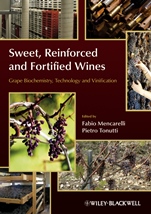
Sweet, Reinforced and Fortified Wines: Grape Biochemistry, Technology and Vinification
ISBN 9780470672242
Autor: Fabio Mencarelli, Pietro Tonutti
Wydawca: Wiley
Dostępność: 3-6 tygodni
Cena: 848,40 zł
Przed złożeniem zamówienia prosimy o kontakt mailowy celem potwierdzenia ceny.
ISBN13: |
9780470672242 |
ISBN10: |
0470672242 |
Autor: |
Fabio Mencarelli, Pietro Tonutti |
Oprawa: |
Hardback |
Rok Wydania: |
2013-05-17 |
Ilość stron: |
372 |
Wymiary: |
243x177 |
Tematy: |
TT |
The history of wine is the history of sweet wine. In the Mediterranean basin, climate conditions encouraged growers to leave the grapes on vine to become overripe, or to pick the bunches and let them dry in the sun, before pressing them into wine. Until a few years ago, it was thought that these wines – such as Pedro Ximenez, Tokaj, Passito, and Vin Santo – were the result of simple grape drying, because the grapes were left in the sun, or inside greenhouses that had no controls over temperature, relative humidity or ventilation. But Amarone wine, one of the most prized wines of the world, is the first wine in which the drying is a controlled process. This controlled process – better defined as a grape dehydration – changes the grape at the biochemical level and involves specialist vine management, postharvest technology and production processes, which are different from the typical wine–making procedure. Sweet, Reinforced and Fortified Wines: Grape Biochemistry, Technology and Vinification is the most comprehensive book available on the technical issues, scientific topics and characteristics of these important special wines. After an introductory chapter dealing with historical overview and the description of the cultural impact of sweet wines throughout the centuries in the Mediterranean area, the book is organized into three sections. The first section covers different technical and scientific aspects of the whole production chain, from the field to the cellar. The variety of options for managing the vineyard and different solutions for operating the dehydration process are outlined. The changes which occur at physiological and physico–chemical levels, characterizing the berries during on–vine and postharvest dehydration, and in relation to noble rot infection, are then described. The first section also extensively reports issues, methods and technical solutions to optimize vinification for the best possible quality of sweet wines. The second section of the book is dedicated to well–known reinforced, fortified or sweet wines produced in different areas of the world. These chapters, describing the specific characteristics and quality traits of wines, highlight the cultural diversity and variety of protocols applied in this segment of the wine industry. The third and final section deals with the market for sweet, reinforced and fortified wines, and not only includes statistics and data regarding the current marketing situation, but also posits some opportunities and strategies for the future. Sweet, Reinforced and Fortified Wines: Grape Biochemistry, Technology and Vinification will be a valuable resource for wineries, wine makers and wine operators, as well as postharvest specialists, vineyard managers, and grape growers. Enology students will prize it as the first in–depth study of these wines, while agriculture and viticulture facilities and course leaders will find it detailed and comprehensive.
List of Contributors ix Glossary xiii Introduction 1 Fabio Mencarelli and Pietro Tonutti PART 1 HISTORY 1 Sweet Wines: The Essence of European Civilization 5 Attilio Scienza PART 2 VINEYARD MANAGEMENT, ON–VINE AND POSTHARVEST GRAPE DEHYDRATION, VINIFICATION 2 Management of the Vineyard 29 Osvaldo Failla, Laura Rustioni and Giancarlo Scalabrelli 3 Technology and Management of Postharvest Dehydration 51 Fabio Mencarelli and Andrea Bellincontro 4 Biochemistry and Physiology of Dehydrating Berries 77 Pietro Tonutti and Claudio Bonghi 5 Changes in Volatile Compounds 91 Claudio D’Onofrio 6 Changes in Phenolic Compounds 105 Danilo Corradini and Isabella Nicoletti 7 Changes in Physical and Mechanical Properties of Dehydrating Berries 119 Luca Rolle and Vincenzo Gerbi 8 Management of Vinification and Stabilization to Preserve the Aroma Characteristic of Dehydrated Grape 131 Luigi Moio and Paola Piombino 9 Methods of Vinification to Preserve the Colour in Red Grape PassitiWines. Aleatico: a Case Study 145 Riccardo Cotarella 10 Role of Yeasts in Sweet Wines 153 Juan C. Garc´ýa–Mauricio and Teresa Garc´ýa–Mart´ýnez 11 Botrytis Infection: Grey Mould and Noble Rot 159 Andrea Vannini and Gabriele Chilosi 12 Vinification and Aroma Characteristic of Botrytized Grape 171 Pierre Louis Teissedre and Bernard Don`eche PART 3 THE WINES 13 Amarone 189 Daniele Accordini 14 Moscato Passito 205 Daniele Eberle 15 Italian PassitoWines 215 Attilio Scienza 16 Pedro Xim´enez and Malaga 251 Juan J. Moreno–Vigara and Juan C. Garc´ýa–Mauricio 17 Tokaj 269 Zolt´an Ker´enyi 18 Vin de Paille 277 Pierre Louis Teissedre, Bernard Don`eche and Kleopatra Chira 19 Botrytized Wines: Sauternes, German Wines 285 Pierre Louis Teissedre and Bernard Don`eche 20 IceWine 301 Nikolin Musabelliu 21 Port 305 Tim Hogg 22 Marsala 319 Andrea Zanfi and Silvia Mencarelli 23 Notes on Other Sweet Wines 327 Fabio Mencarelli PART 4 MARKET AND MARKETING 24 Sweet Wine Market 333 Renzo Cotarella 25 A Strategic Framework for Marketing Sweet, Reinforced and Fortified Wines 337 Alberto Mattiacci and Costanza Nosi Analytical Index 351 Grapes and Wine Index 355
Professor Fabio Mencarelli is based atthe University of Tuscia, Italy,in the Postharvest Labof the Department for the Innovation of Biological, AgriFood and Forestry Systems. Professor Pietro Tonutti is based at the Scuola Superiore Sant’Anna in Pisa, Italy, where he leads a research project on fruit ripening and post–harvest physiology.
“With a title like this and a price tag like that, this book is going to appeal to the seriously nerdy, and indeed, the winemakers, vineyard managers, oenology students etc., at whom the briefing document says it is targeted. Keen MW students might be in that list too.” ( Wine Wisdom , 16 July 2013)
Koszyk
Książek w koszyku: 0 szt.
Wartość zakupów: 0,00 zł
Informacje


Kontakt
Gambit
Centrum Oprogramowania
i Szkoleń Sp. z o.o.
Al. Pokoju 29b/22-24
31-564 Kraków
Siedziba Księgarni
ul. Kordylewskiego 1
31-542 Kraków
+48 12 410 5991
+48 12 410 5987
+48 12 410 5989
Subskrypcje
Administratorem danych osobowych jest firma Gambit COiS Sp. z o.o. Na podany adres będzie wysyłany wyłącznie biuletyn informacyjny.
Autoryzacja płatności

Informacje na temat autoryzacji płatności poprzez PayU.

© Copyright 2012: GAMBIT COiS Sp. z o.o. Wszelkie prawa zastrzeżone.
Projekt i wykonanie: Alchemia Studio Reklamy