


Wydawcy
Katalog tematyczny
- Archeologia (109)
- Ekonomia, finanse, business (13704)
- Filozofia (1445)
- Historia (3040)
- Języki i językoznawstwo (2356)
- Lifestyle, hobby i rozrywka (475)
- Medycyna (9704)
- Nauki humanistyczne (4)
- Nauki o Ziemi i środowisku (2638)
- Nauki ścisłe (20412)
- Astronomia (294)
- Biologia (5119)
- Biochemia (575)
- Biologia człowieka (14)
- Biologia komórkowa (377)
- Biologia molekularna (398)
- Biologia rozwoju (130)
- Biologia, ogólnie (1277)
- Botanika (280)
- Hydrobiologia (92)
- Mikrobiologia (363)
- Mykologia (22)
- Zoologia (303)
- Chemia (6540)
- Fizyka (3309)
- Matematyka (4574)
- Nauki ścisłe, ogólnie (503)
- Nauki społeczne (8486)
- Nauki techniczne (13450)
- Prawo (1696)
- Publikacje informacyjne i interdyscyplinarne (1288)
- Religia i wierzenia (917)
- Technika komputerowa (4067)
- Zdrowie, relacje międzyludzkie i rozwój osobisty (657)





Informacje szczegółowe o książce
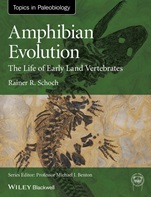
Amphibian Evolution: The Life of Early Land Vertebrates
ISBN 9780470671771
Autor: Rainer R. Schoch
Wydawca: Wiley
Dostępność: 3-6 tygodni
Cena: 549,15 zł
Przed złożeniem zamówienia prosimy o kontakt mailowy celem potwierdzenia ceny.
ISBN13: |
9780470671771 |
ISBN10: |
0470671777 |
Autor: |
Rainer R. Schoch |
Oprawa: |
Hardback |
Rok Wydania: |
2014-04-18 |
Ilość stron: |
276 |
Wymiary: |
264x185 |
Tematy: |
PS |
This book focuses on the first vertebrates to conquer land and their long journey to become fully independent from the water. It traces the origin of tetrapod features and tries to explain how and why they transformed into organs that permit life on land. Although the major frame of the topic lies in the past 370 million years and necessarily deals with many fossils, it is far from restricted to paleontology. The aim is to achieve a comprehensive picture of amphibian evolution. It focuses on major questions in current paleobiology: how diverse were the early tetrapods? In which environments did they live, and how did they come to be preserved? What do we know about the soft body of extinct amphibians, and what does that tell us about the evolution of crucial organs during the transition to land? How did early amphibians develop and grow, and which were the major factors of their evolution? The Topics in Paleobiology Series is published in collaboration with the Palaeontological Association, and is edited by Professor Mike Benton, University of Bristol.
Preface viii Acknowledgments x 1 Introduction 1 1.1 Changing paradigms in amphibian evolution 3 1.2 Paleobiology: data, methods, and time scales 5 1.3 Concepts and metaphors: how scientists “figure out” problems 7 1.4 Characters and phylogenies 8 1.5 What’s in a name? 8 References 11 2 The Amphibian World: Now and Then 13 2.1 Tetrapoda 14 2.1.1 The tetrapod skeleton 14 2.1.2 Tetrapod characters 23 2.1.3 Stem–tetrapods (Tetrapodomorpha) 25 2.1.4 Carboniferous tetrapods or tetrapodomorphs? 31 2.2 The amniote stem–group 32 2.2.1 Anthracosauria 33 2.2.2 Seymouriamorpha 37 2.2.3 Chroniosuchia 38 2.2.4 Lepospondyli 40 2.2.4.1 Lepospondyl characters 42 2.2.4.2 Microsauria 42 2.2.4.3 Lysorophia 44 2.2.4.4 Nectridea 44 2.2.4.5 Aïstopoda 45 2.2.4.6 Adelospondyli 46 2.2.4.7 Acherontiscidae 46 2.2.5 Gephyrostegida 46 2.2.6 Amniota 47 2.2.6.1 Stem–amniotes and early crown amniotes 48 2.3 The lissamphibian stem–group (Temnospondyli) 48 2.3.1 Edopoidea 51 2.3.2 Dendrerpeton and Balanerpeton 53 2.3.3 Dvinosauria 54 2.3.4 Dissorophoidea and Zatracheidae 54 2.3.5 Eryopoidea 56 2.3.6 Stereospondyli 57 2.4 Albanerpetontidae 58 2.5 Lissamphibia 59 2.5.1 Lissamphibian characters 61 2.5.2 Batrachia 62 2.5.2.1 Anura (frogs and toads) 62 2.5.2.2 Caudata (salamanders) 67 2.5.2.3 Gymnophiona (caecilians) 68 References 70 3 Amphibian Life Through Time 81 3.1 Aquatic predators prepare for land 83 3.2 Hot springs, scorpions, and little creepers 83 3.3 Life in the tropical coal forest 85 3.4 Neotenes explore unfavorable waters 89 3.5 Lowlands, uplands, and a cave 90 3.6 Hide and protect: extreme life in the hothouse 94 3.7 Predators in deltas, lakes, and brackish swamps 97 3.8 Stereospondyls in refugia, lissamphibians on the rise 97 3.9 Batrachians diversify, stereospondyls disappear 100 3.10 Lissamphibians expand into diverse habitats 101 References 102 4 The Amphibian Soft Body 106 4.1 How to infer soft tissues in extinct taxa 107 4.2 Fossil evidence: soft tissue preservation 109 4.3 Head and visceral skeleton 110 4.4 Respiratory organs 113 4.5 Lateral lines, electroreception, and ears 118 References 122 5 Evolution of Functional Systems 126 5.1 How paradigms and brackets give a functional scenario 127 5.2 Feeding and breathing under water 131 5.3 Decoupling breathing and feeding 134 5.4 Hearing: exapting the spiracle and hyomandibula 136 5.5 Respiration in early tetrapods 141 5.6 The evolution of terrestrial feeding 143 5.7 Transforming fins into limbs 144 5.8 Locomotion in paleozoic tetrapods 146 References 148 6 Development and Evolution 152 6.1 Ontogeny in modern amphibians 153 6.2 Fossil ontogenies 158 6.3 Ontogeny as a sequence: developmental trajectories 163 6.4 Histology: the skeleton as archive 167 6.5 Changing shape: allometry 171 6.6 Heterochrony: the evolution of development 174 6.7 Body plans: gene regulation and morphogenesis 179 References 184 7 Paleoecology 191 7.1 Lissamphibian ecology 192 7.2 Paleoecology: problems and perspectives 193 7.3 Paleozoic and Mesozoic amphibians 196 7.4 Amphibian evolution as a walk through trophic levels 203 References 205 8 Life History Evolution 208 8.1 Plasticity, reaction norm, and canalization 209 8.2 Reaction norms in extant amphibians 210 8.3 The biphasic life cycle in lissamphibians 211 8.4 Seymouriamorphs: biphasic life cycles without metamorphosis 213 8.5 Temnospondyls: flexible uni– and biphasic ontogenies 213 8.6 Lepospondyls: dwarfism and uniphasic life cycles 215 8.7 The evolution of metamorphosis 216 8.8 The evolution of neoteny 216 8.9 General features of life history evolution 217 References 219 9 Phylogeny 222 9.1 Phylogeny of amphibians 223 9.2 The big picture: tetrapod diversification 223 9.3 The origin of lissamphibians 224 References 231 10 Macroevolution 234 10.1 What is macroevolution? 235 10.2 Patterns of early tetrapod evolution 235 10.3 Major factors of amphibian evolution 240 10.4 Clades, space, and time 248 10.5 Diversity, disparity, and extinction 249 10.6 The evolution of terrestriality 252 References 254 Index 260 Plate section between pp. 124 and 125
Rainer Schoch , born 1970 in Ludwigshafen, Germany. He graduated at the University of Tübingen, undertook field work in Argentina and the USA, and worked as a curator and assistant professor at Humboldt University Berlin. Since 2003 he has been the curator of amphibians and reptiles at the Natural History Museum of Stuttgart, Germany.
Koszyk
Książek w koszyku: 0 szt.
Wartość zakupów: 0,00 zł
Informacje


Kontakt
Gambit
Centrum Oprogramowania
i Szkoleń Sp. z o.o.
Al. Pokoju 29b/22-24
31-564 Kraków
Siedziba Księgarni
ul. Kordylewskiego 1
31-542 Kraków
+48 12 410 5991
+48 12 410 5987
+48 12 410 5989
Subskrypcje
Administratorem danych osobowych jest firma Gambit COiS Sp. z o.o. Na podany adres będzie wysyłany wyłącznie biuletyn informacyjny.
Autoryzacja płatności

Informacje na temat autoryzacji płatności poprzez PayU.

© Copyright 2012: GAMBIT COiS Sp. z o.o. Wszelkie prawa zastrzeżone.
Projekt i wykonanie: Alchemia Studio Reklamy