


Wydawcy
Katalog tematyczny
- Archeologia (109)
- Ekonomia, finanse, business (13704)
- Filozofia (1445)
- Historia (3040)
- Języki i językoznawstwo (2356)
- Lifestyle, hobby i rozrywka (475)
- Medycyna (9704)
- Chirurgia (272)
- Inne gałęzie medycyny (1871)
- Medycyna kliniczna (4187)
- Medycyna niekonwencjonalna (14)
- Medycyna przedkliniczna (269)
- Medycyna, ogólnie (1740)
- Medyczne służby pomocnicze (745)
- Studia medyczne (16)
- Weterynaria (548)
- Nauki humanistyczne (4)
- Nauki o Ziemi i środowisku (2638)
- Nauki ścisłe (20412)
- Nauki społeczne (8486)
- Nauki techniczne (13450)
- Prawo (1696)
- Publikacje informacyjne i interdyscyplinarne (1288)
- Religia i wierzenia (917)
- Technika komputerowa (4067)
- Zdrowie, relacje międzyludzkie i rozwój osobisty (657)





Informacje szczegółowe o książce
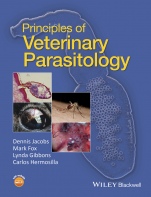
Principles of Veterinary Parasitology
ISBN 9780470670422
Autor: Dennis Jacobs, Mark Fox, Lynda Gibbons, Carlos Hermosilla
Wydawca: Wiley
Dostępność: 3-6 tygodni
Cena: 267,75 zł
Przed złożeniem zamówienia prosimy o kontakt mailowy celem potwierdzenia ceny.
ISBN13: |
9780470670422 |
ISBN10: |
0470670428 |
Autor: |
Dennis Jacobs, Mark Fox, Lynda Gibbons, Carlos Hermosilla |
Oprawa: |
Paperback |
Rok Wydania: |
2015-11-13 |
Ilość stron: |
312 |
Wymiary: |
246x189 |
Tematy: |
MZ |
Principles of Veterinary Parasitology is a student–friendly introduction to veterinary parasitology. Written primarily to meet the immediate needs of veterinary students, this textbook outlines the essential parasitological knowledge needed to underpin clinical practice. Conceptual relationships between parasitic organisms, their biology and the diseases they cause are clearly illustrated. Help boxes and practical tips are included throughout alongside a wealth of colour photographs, drawings and life–cycle diagrams. Organised taxonomically with additional host–orientated chapters and focussing on parasites that commonly cause animal or zoonotic disease, welfare problems or economic losses, students worldwide will benefit from this straightforward and easy to comprehend introduction to veterinary parasitology.
Key features include:
An easy to navigate textbook, providing information essential for clinical studies Full colour throughout, with photographs, diagrams, life–cycles and help boxes for visual learners A companion website including a pronunciation guide, self–assessment questions and further reading lists can be found at www.wiley.com/go/jacobs/principles–veterinary–parasitologyAbout the Authors
Foreword
Preface
Acknowledgments
List of Abbreviations
About the Companion Website
Chapter 1. Veterinary Parasitology: Basic Concepts
1.1 Introduction
1.1.1 What is Veterinary Parasitology?
1.2 Parasitism and parasites
1.2.1 Parasitism
1.2.2 Classification
1.2.3 Host–parasite relationships
1.3 Host–parasite interactions
1.3.1 Host defences
1.3.2 Parasite evasion of immunity
1.4 Parasitic disease
1.4.1 The host–parasite balance
1.4.2 Why parasites are important
1.4.3 Pathogenic mechanisms
1.5 Diagnostic techniques
1.5.1 Direct detection methods
1.5.2 Indirect detection methods
1.5.3 Limitations
1.6 Treatment and control
1.6.1 Key concepts
1.6.2 Chemotherapy
1.6.3 Resistance to parasiticides
1.6.4 Integrated parasite management
1.6.5 Vaccination
1.6.6 Alternative technologies
1.6.7 Concluding remarks
Chapter 2. Arthropods Part 1: Introduction and Insects
2.1 Introduction
2.2 Insects
2.2.1 Key concepts
2.2.2 Fleas (Siphonaptera)
2.2.3 Lice (Phthiraptera)
2.2.4 Bugs (Hemiptera)
2.2.5 Biting and Nuisance Flies (Diptera)
2.2.6 Myiasis–producing dipterans
Chapter 3. Arthropods Part 2: Ticks, Mites and Ectoparasiticides
3.1 Introduction
3.2 Ticks
3.2.1 Key concepts
3.2.2 Hard ticks (Ixodidae)
3.2.3 Soft ticks (Argasidae)
3.3 Mange mites
3.3.1 Key concepts
3.3.2 Sub–surface mites
3.3.3 Surface mites
3.4 Other arthropods
3.5 Ectoparasiticides
3.5.1 Key concepts
3.5.2 Some important ectoparasiticides
3.5.3 Insect growth regulators
3.5.4 Problems with ectoparasiticides
Chapter 4. Protozoa (Single–celled Parasites)
4.1 Introduction
4.2 Key concepts
4.2.1 Classification
4.2.2 Locomotion
4.2.3 Nutrition
4.2.4 Transmission
4.2.5 Reproduction
4.3 Ciliates
4.4 Amoebae
4.5 Flagellates
4.5.1 Haemoflagellates
4.5.2 Other flagellates
4.6 Coccidia
4.6.1 General Characteristics
4.6.2 Eimeria
4.6.3 Coccidiosis
4.7 Tissue cyst–forming coccidia
4.7.1 Sarcocystis
4.7.2 Besnoitia
4.7.3 Toxoplasma
4.7.4 Neospora
4.8 Blood–borne apicomplexans
4.8.1 Babesia
4.8.2 Theileria
4.9 Cryptosporidia
4.9.1 Cryptosporidium parva
4.9.2 Avian cryptosporidiosis
4.10 Antiprotozoal drugs
4.10.1 Key concepts
4.10.2 Anticoccidial drugs
Chapter 5. Platyhelminthes ( Flatworms )
5.1 Introduction
5.2 Cestodes
5.2.1 Key concepts
5.3 Cyclophyllidean tapeworms
5.3.1 Cyclophyllidean life–cycle
5.3.2 Metacestodes
5.3.3 Taenia
5.3.4 Echinococcus
5.3.5 Other cyclophyllidean tapeworms
5.4 Pseudophyllidean tapeworms
5.4.1 Pseudophyllidean life–cycle
5.4.2 Important pseudophyllideans
5.5 Cestocidal drugs
5.5.1 Praziquantel
5.6 Trematodes
5.6.1 Digenean trematodes
5.6.2 Fasciola
5.6.3 Other digenean trematodes
5.7 Flukicidal drugs
Chapter 6. Nematoda ( Roundworms ): Part 1 Concepts and Bursate Nematodes
6.1 Introduction
6.2 Key concepts
6.2.1 Recognition features
6.2.2 General biology
6.3 Bursate nematodes
6.3.1 Bursate superfamilies
6.3.2 Trichostrongyloidea
6.3.3 Strongyloidea
6.3.4 Ancylostomatoidea (hookworms)
6.3.5 Metastrongyloidea (lungworms)
Chapter 7. Nematoda ( Roundworms ): Part 2 Non–bursate Nematodes and Anthelmintics
7.1 Non–bursate nematodes
7.1.1 Non–bursate superfamilies
7.1.2 Rhabditoidea
7.1.3 Ascaridoidea (ascarids)
7.1.4 Oxyuroidea (pinworms)
7.1.5 Spiruroidea and Filarioidea
7.1.6 Trichinelloidea
7.2 Other parasitic worms
7.2.1 Acanthocephala
7.2.2 Leeches
7.3 Anthelmintics
7.3.1 Levamisole group
7.3.2 Macrocyclic lactones
7.3.3 Benzimidazoles
7.3.4 Newer chemical groups
Chapter 8. Clinical Parasitology: Farm Animals
8.1 Introduction
8.2 Ruminants
8.2.1 Digestive system
8.2.2 Respiratory system
8.2.3 Cardiovascular system
8.2.4 Integument
8.2.5 Other body systems
8.3 Pigs (Swine)
8.3.1 Internal organs
8.3.2 Integument
8.4 Poultry
8.4.1 Internal organs
8.4.2 Integument
Chapter 9. Clinical Parasitology: Companion Animals and Veterinary Public Health
9.1 Equine parasitology
9.1.1 Digestive system
9.1.2 Respiratory and circulatory systems
9.1.3 Integument
9.1.4 Other body systems
9.2 Small animal parasitology
9.2.1 Digestive system
9.2.2 Respiratory and circulatory systems
9.2.3 Integument
9.2.4 Other body systems
9.3 Veterinary public health
9.3.1 Food–borne zoonoses
9.3.2 Environmental zoonoses
References
Index
Dennis Jacobs, BVMS, PhD, FHEA, DipEVPC, FRCPath, FRVCS, Emeritus Professor, The Royal Veterinary College, London
After graduating from the Glasgow Veterinary School and a short period in the pharmaceutical industry, he devoted his professional career to teaching and research. He has served as Vice–President of the World Association for the Advancement of Veterinary Parasitology and Secretary of the European Veterinary Parasitology College.
Mark Fox, BVetMed, PhD, FHEA, DipEVPC, MRCVS, Professor of Veterinary Parasitology, The Royal Veterinary College, London
He has over thirty years experience of teaching and research in the veterinary parasitology field, having graduated from The Royal Veterinary College and spent a period in small animal practice. His current research interests focus on the epidemiology of parasite infections in both domestic and wild animals. He was awarded the William Hunting medal in recognition of avian coccidiosis research.
Lynda Gibbons, BSc, PhD, CBiol, FSB, Attached Senior Scientist, The Royal Veterinary College, London
Having studied at Leicester University and the London School of Hygiene and Tropical Medicine, she became Head of Animal Helminthology Biosystematics at the CABI Institute of Parasitology. She is a recipient of the Elsdon–Dew medal (Parasitological Society of Southern Africa) and the Betts Prize (The Royal Veterinary College).
Carlos Hermosilla, DrMedVet, DipEVPC, DrHabil, DVM, Professor, Justus–Liebig–Universität Gießen
Having gained a veterinary degree from the University Austral of Chile, where he is now visiting professor, and doctorates from Justus–Liebig–Universität in Germany, he worked as Senior Lecturer in Veterinary Parasitology at The Royal Veterinary College before returning to the Institute of Parasitology in Gießen to continue his enthusiasm for teaching and research.
Koszyk
Książek w koszyku: 0 szt.
Wartość zakupów: 0,00 zł
Informacje


Kontakt
Gambit
Centrum Oprogramowania
i Szkoleń Sp. z o.o.
Al. Pokoju 29b/22-24
31-564 Kraków
Siedziba Księgarni
ul. Kordylewskiego 1
31-542 Kraków
+48 12 410 5991
+48 12 410 5987
+48 12 410 5989
Subskrypcje
Administratorem danych osobowych jest firma Gambit COiS Sp. z o.o. Na podany adres będzie wysyłany wyłącznie biuletyn informacyjny.
Autoryzacja płatności

Informacje na temat autoryzacji płatności poprzez PayU.

© Copyright 2012: GAMBIT COiS Sp. z o.o. Wszelkie prawa zastrzeżone.
Projekt i wykonanie: Alchemia Studio Reklamy