


Wydawcy
Katalog tematyczny
- Archeologia (109)
- Ekonomia, finanse, business (13704)
- Filozofia (1445)
- Historia (3040)
- Języki i językoznawstwo (2356)
- Lifestyle, hobby i rozrywka (475)
- Medycyna (9704)
- Nauki humanistyczne (4)
- Nauki o Ziemi i środowisku (2638)
- Nauki ścisłe (20412)
- Nauki społeczne (8486)
- Nauki techniczne (13450)
- Prawo (1696)
- Publikacje informacyjne i interdyscyplinarne (1288)
- Religia i wierzenia (917)
- Technika komputerowa (4067)
- Zdrowie, relacje międzyludzkie i rozwój osobisty (657)





Informacje szczegółowe o książce
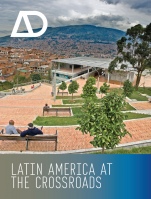
Latin America at the Crossroads
ISBN 9780470664926
Autor: Mariana Leguía
Wydawca: Wiley
Dostępność: 3-6 tygodni
Cena: 190,05 zł
Przed złożeniem zamówienia prosimy o kontakt mailowy celem potwierdzenia ceny.
ISBN13: |
9780470664926 |
ISBN10: |
0470664924 |
Autor: |
Mariana Leguía |
Oprawa: |
Paperback |
Rok Wydania: |
2011-04-18 |
Ilość stron: |
152 |
Wymiary: |
272x209 |
Tematy: |
AM |
The announcement of Rio de Janeiro as the 2016 Olympic host city has placed Latin America on the world′s stage. Now, for the first time since the mid–20th century when Modernist urban design was undertaken on an epic scale, Latin America is the centre of international attention and architectural pilgrimage. The mass migrations from the countryside and the erection of informal settlements in the late 20th century left cities socially and spatially divided. As a response, in recent decades resourceful governments and practices have developed innovative approaches to urban design and development that are less to do with utopian and totalitarian schemes and more to do with urban acupuncture, working within, rather than opposing, informality to stitch together disparate parts of the city. Once a blind spot in cities′ representation, informality is now considered an asset to be understood and incorporated. Today, more than 50 per cent of the world´s population live in cities for the first time in human history, and an increasing amount in slums. As a result of globalisation, Latin America is now once again set to go through major change. The solutions presented in this issue represent the vanguard in mitigating strong social and spatial divisions in cities across the globe.
Contributors include: Saskia Sassen, Hernando de Soto, Ricky Burdett and the former mayor of Bogotá, Enrique Peñalosa.
Featured architects: Teddy Cruz, Urban–Think Tank, Jorge Jáuregui, Alejandro Echeverri, MMBB and Alejandro Aravena.
Covers large–scale urban case studies, such as the revitalisation of Bogotá and Medellín.
Editorial (
Helen Castle).
About the Guest–Editor (Mariana Leguía).
Introduction: Latin America at the Crossroads (Mariana Leguía).
Simultaneous Territories: Unveiling the Geographies of Latin American Cities (Patricio del Real).
PREVI–Lima s Time: Positioning Proyecto Experimental de Vivienda in Peru s Modern Project (Sharif S. Kahatt).
PREVI–Lima led the way in the 1960s at the seminal informal housing project low–rise and high–density with flexibility integral to the design.
The Experimental Housing Project (PREVI), Lima: The Making of a Neighbourhood (Fernando García–Huidobro), Diego Torres Torriti and Nicolás Tugas).
Elemental: A Do Tank (Alejandro Aravena).
Tlacolula Social Housing, Oaxaca, Mexico (Dellekamp Arquitectos).
Governing Change: The Metropolitan Revolution in Latin America (Ricky Burdett and Adam Kaasa).
The Olympic Games and the Production of the Public Realm: Mexico City 1968 and Rio de Janeiro 2016 (Fernanda Canales).
Articulating the Broken City and Society (Jorge Mario Jáuregui).
Formalisation: An Interview with Hernando de Soto (Angus Laurie).
Playgrounds: Radical Failure in the Amazon (Gary Leggett).
Urban Responses to Climate Change in Latin America: Reasons, Challenges and Opportunities (Patricia Romero–Lankao).
As the main emitters of greenhouse gases in Latin America, cities will determine climate change in the region.
Filling the Voids with Popular Imaginaries (Fernando de Mello Franco).
Civic Buildings: Forte, Gimenes & Marcondes Ferraz Arquitetos (FGMF), São Arquitetos FGMF.
A City Talks: Learning from Bogota s Revitalisation (Enrique Peñalosa).
Bogotá and Medellin: Architecture and Politics (Lorenzo Castro and Alejandro Echeverri).
From Product to Process: Building on Urban–Think Tank s Approach to the Informal City Interview with Alfredo Brillembourg by Adriana Navarro–Sertich.
Latin American Meander: In Search of a New Civic Imagination (Teddy Cruz).
Supersudaca s Asia Stories (AKA at Home in the First, Second, Third, Fourth and Fifth Worlds) (Supersudaca).
When Cities Become Strategic (Saskia Sassen).
Organising Communities for Interdependent Growth (Enrique Martin–Moreno).
Universities as Mediators: The Cases of Buenos Aires, Lima, Mexico and São Paulo (Mariana Leguía).
Counterpoint: Looking Beyond Informality (Daniela Fabricius).
Koszyk
Książek w koszyku: 0 szt.
Wartość zakupów: 0,00 zł
Informacje


Kontakt
Gambit
Centrum Oprogramowania
i Szkoleń Sp. z o.o.
Al. Pokoju 29b/22-24
31-564 Kraków
Siedziba Księgarni
ul. Kordylewskiego 1
31-542 Kraków
+48 12 410 5991
+48 12 410 5987
+48 12 410 5989
Subskrypcje
Administratorem danych osobowych jest firma Gambit COiS Sp. z o.o. Na podany adres będzie wysyłany wyłącznie biuletyn informacyjny.
Autoryzacja płatności

Informacje na temat autoryzacji płatności poprzez PayU.

© Copyright 2012: GAMBIT COiS Sp. z o.o. Wszelkie prawa zastrzeżone.
Projekt i wykonanie: Alchemia Studio Reklamy