


Wydawcy
Katalog tematyczny
- Archeologia (109)
- Ekonomia, finanse, business (13704)
- Filozofia (1445)
- Historia (3040)
- Języki i językoznawstwo (2356)
- Lifestyle, hobby i rozrywka (475)
- Medycyna (9704)
- Nauki humanistyczne (4)
- Nauki o Ziemi i środowisku (2638)
- Nauki ścisłe (20412)
- Nauki społeczne (8486)
- Nauki techniczne (13450)
- Prawo (1696)
- Publikacje informacyjne i interdyscyplinarne (1288)
- Religia i wierzenia (917)
- Technika komputerowa (4067)
- Zdrowie, relacje międzyludzkie i rozwój osobisty (657)





Informacje szczegółowe o książce
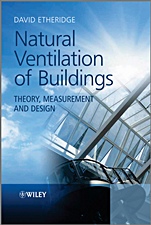
Natural Ventilation of Buildings: Theory, Measurement and Design
ISBN 9780470660355
Autor: David Etheridge
Wydawca: Wiley
Dostępność: 3-6 tygodni
Cena: 572,25 zł
Przed złożeniem zamówienia prosimy o kontakt mailowy celem potwierdzenia ceny.
ISBN13: |
9780470660355 |
ISBN10: |
047066035X |
Autor: |
David Etheridge |
Oprawa: |
Hardback |
Rok Wydania: |
2011-11-04 |
Ilość stron: |
454 |
Wymiary: |
244x172 |
Tematy: |
AM |
Natural ventilation is increasingly considered a prerequisite for sustainable buildings and is therefore in line with current trends in architecture and the construction industry. The design of naturally ventilated buildings is more difficult and carries greater technical risk than the design of mechanically ventilated buildings. A successful result relies on a good understanding of the abilities and limitations of the theoretical and experimental techniques that form the basis of design. The underlying difficulties with design arise from the driving forces: wind and buoyancy. Equal prominence is given to these and to their combination. Their importance in relation to achieving the required ventilation strategies is one of the important issues that is covered in some detail. Natural Ventilation of Buildings: Theory, Measurement and Design comprehensively explains the fundamentals of the theory and measurement of natural ventilation, as well as the current state of knowledge and how this can be applied to design. The book also relates theoretical and experimental techniques to problems faced by designers. Particular attention is given to the limitations of the various techniques and the associated uncertainties. Key features: Comprehensive coverage of the theory and measurement of natural ventilation Detailed coverage of the relevance and application of theoretical and experimental techniques to design Highlights the strengths and weaknesses of techniques and their errors and uncertainties Comprehensive coverage of mathematical models, including CFD Two chapters dedicated to design procedures and another devoted to the basic principles of fluid mechanics that are relevant to ventilation This comprehensive account of the fundamentals for natural ventilation design will be invaluable to undergraduates and postgraduates who wish to gain an understanding of the topic for the purpose of research or design. The book should also provide a useful source of reference for more experienced practitioners in industry and architecture.
Chapter 1. INTRODUCTION AND OVERVIEW OF NATURAL VENTILATION DESIGN. 1.1 Aims and scope of the book. 1.2 Natural ventilation in context. 2.2 Advantages and disadvantages of natural ventilation. 1.3 Overview of design. 1.4 Notes on references. Chapter 2. PHYSICAL PROCESSES IN NATURAL VENTILATION. 2.1 Introduction. 2.2 The effect of gravity on ventilation flows. 2.3 Types of flow encountered in ventilation. 2.4 Fluid mechanics – other important concepts and equations. 2.5 Steady and unsteady ventilation. 2.6 Flow through a sudden expansion. 2.7 Dimensional analysis. 2.8 Heat transfer between air and envelope. 2.9 Definitions relating to ventilation rate. 2.10 Errors and uncertainties. 2.11 Mathematical models. 2.12 Boundary conditions. Bibliography. References. Chapter 3. STEADY FLOW CHARACTERISTICS OF OPENINGS. 3.1 Introduction. 3.2 Classification of openings. 3.3 Still–air discharge coefficient. 3.4 Installation effects on C d . 3.5 Openings in combination. 3.6 Determination of C d . 3.7 Uncertainties in design calculations. 3.8 Other definitions of discharge coefficient. 3.9 Large (and very large) openings. 3.10 Relevance to design. References. CHAPTER 4. STEADY ENVELOPE FLOW MODELS. 4.1 Introduction. 4.2 Basic theory 4.3 Single– and multi–cell models. 4.4 Simple analytic solutions. 4.5 Non–uniform density. 4.6 Turbulent diffusion. 4.7 Large openings. 4.8 Adventitious openings. 4.9 Explicit method of solution. 4.10 Uncertainties in envelope flow models. 4.11 Combined envelope and thermal models. 4.12 Models for very large openings. 4.13 Relevance to design. References. CHAPTER 5. UNSTEADY ENVELOPE FLOW MODELS. 5.1 Introduction. 5.2 Flow equation. 5.3 Pressure difference across openings. 5.4 Mass conservation equation. 5.5 Envelope flow models. 5.6 Comparisons with measurement. 5.7 Mean flow rates. 5.8 Instantaneous flow rates. 5.9 Unsteady flow models in design. 5.10 Relevance to design. References. Chapter 6. INTERNAL AIR MOTION, ZONAL MODELS AND STRATIFICATION. 6.1 Introduction. 6.2 Governing equations. 6.3 Primary and secondary flows. 6.4 Zonal models. 6.5 Coarse–grid CFD. 6.6 Integrated zonal and envelope models. 6.7 Stratification. 6.8 Relevance to design References. Chapter 7. CONTAMINANT TRANSPORT AND INDOOR AIR QUALITY. 7.1 Introduction. 7.2 Concentration at a point. 7.3 Conservation equations for bounded spaces, envelope models. 7.4 Conservation equations for large unbounded volumes as used in zonal models. 7.5 Analytic relations for concentration at a point. 7.6 Analytic relations for uniform concentration. 7.7 Analytic relations for non–uniform concentration. 7.8 Calculations with CFD, coarse–grid CFD and zonal models. 7.9 Definitions relating to contaminant removal. 7.10 Relevance to design. References. Chapter 8. AGE OF AIR AND VENTILATION EFFICIENCY. 8.1 Introduction. 8.2 Theoretical modelling of age properties at a point. 8.3 Zonal models. 8.4 Ventilation efficiency. 8.5 Analytic relationships. 8.6 Experimental determination of age (using a tracer). 8.7 Unsteady age distributions. 8.8 Relevance to design. References. CHAPTER 9. COMPUTATIONAL FLUID DYNAMICS AND ITS APPLICATIONS. 9.1 Introduction. 9.2 Basics of CFD. 9.3 Important modelling issues. 9.4 Calculation of external wind flow. 9.5 Calculation of internal flows 9.6 Whole–field calculations. 9.7 Other applications. 9.8 Relevance to design. References. Chapter 10. SCALE MODELLING. 10.1 Introduction. 10.2 Requirements for similarity. 10.3 Wind alone. 10.4 Buoyancy alone. 10.5 Wind and buoyancy combined. 10.6 Use of water as the modelling fluid. 10.7 Relevance to design. References. Chapter 11. FULL–SCALE MEASUREMENTS. 11.1 Introduction. 11.2 Laboratory measurements of C d and effective area. 11.3 Measurement of adventitious leakage using steady pressurisation. 11.4 Unsteady techniques for measurement of low–pressure leakage. 11.5 Field measurements of ventilation rates. 11.6 Other measurements. 11.7 Relevance to design. References. Chapter 12. DESIGN PROCEDURES. 12.1 Introduction. 12.2 Feasibility of natural ventilation (Stage 1). 12.3 Ventilation strategies (Stage 2). 12.4 Envelope design (Stage 3). 12.5 Internal environment (Stage 4). 12.6 Data specification. 12.7 Low–energy cooling systems. 12.8 Control systems. 12.9 Commissioning (Stage 5). 12.10 Concluding remarks. References.
"In conclusion this is a substantially numerical book which is very much aimed at the student of building services engineering. However, in addition to the extensive use of equations, a good descriptive account of the theory is presented. Hence this book should also have wider appeal to anyone requiring a good background knowledge of the theory and application of natural ventilation." (International Journal of Ventilation, 1 March 2012)
Koszyk
Książek w koszyku: 0 szt.
Wartość zakupów: 0,00 zł
Informacje


Kontakt
Gambit
Centrum Oprogramowania
i Szkoleń Sp. z o.o.
Al. Pokoju 29b/22-24
31-564 Kraków
Siedziba Księgarni
ul. Kordylewskiego 1
31-542 Kraków
+48 12 410 5991
+48 12 410 5987
+48 12 410 5989
Subskrypcje
Administratorem danych osobowych jest firma Gambit COiS Sp. z o.o. Na podany adres będzie wysyłany wyłącznie biuletyn informacyjny.
Autoryzacja płatności

Informacje na temat autoryzacji płatności poprzez PayU.

© Copyright 2012: GAMBIT COiS Sp. z o.o. Wszelkie prawa zastrzeżone.
Projekt i wykonanie: Alchemia Studio Reklamy