


Wydawcy
Katalog tematyczny
- Archeologia (109)
- Ekonomia, finanse, business (13704)
- Filozofia (1445)
- Historia (3040)
- Języki i językoznawstwo (2356)
- Lifestyle, hobby i rozrywka (475)
- Medycyna (9704)
- Nauki humanistyczne (4)
- Nauki o Ziemi i środowisku (2638)
- Nauki ścisłe (20412)
- Nauki społeczne (8486)
- Nauki techniczne (13450)
- Prawo (1696)
- Publikacje informacyjne i interdyscyplinarne (1288)
- Religia i wierzenia (917)
- Technika komputerowa (4067)
- Zdrowie, relacje międzyludzkie i rozwój osobisty (657)





Informacje szczegółowe o książce
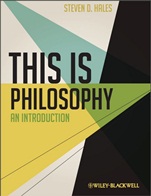
This Is Philosophy: An Introduction
ISBN 9780470658826
Autor: Steven D. Hales
Wydawca: Wiley
Dostępność: 3-6 tygodni
Cena: 468,30 zł
Przed złożeniem zamówienia prosimy o kontakt mailowy celem potwierdzenia ceny.
ISBN13: |
9780470658826 |
ISBN10: |
0470658827 |
Autor: |
Steven D. Hales |
Oprawa: |
Hardback |
Rok Wydania: |
2013-01-04 |
Ilość stron: |
296 |
Wymiary: |
230x160 |
Tematy: |
HP |
Understanding philosophical ideas and arguments can be a daunting undertaking—but it doesn’t have to be. This Is Philosophy: An Introduction offers an engaging introduction to the subject that brings difficult, abstract concepts down to earth in straightforward language. Topics covered include ethics, the existence of God, free will, personal identity, philosophy of mind, epistemology, and more. While covering traditional topics, the discussion is also connected to relevant developments in nearby disciplines, such as how empirical psychology is related to virtue ethics, and neuroscience to philosophy of mind. The book is enhanced by a wealth of supplementary online materials—links to free online primary sources and reference materials, witty takes on philosophical puzzles, and a host of extras on the companion website, including notes on philosophical method, a glossary of terms, an extensive test bank, and more. With examples that are more Dave Matthews Band than Verdi, more beer than Brunello di Montalcino, the great debates of philosophy are made accessible, yet never watered down. This Is Philosophy: An Introduction not only brings philosophy to life—it will leave beginning students wanting more.
How to Use This Book xiii Preface xv Acknowledgments xvii 1 Ethics: Preliminary Theories 1 The Normative Universe 1 Is Morality Just Acting on Principles? 3 Divine Command Theory (Is Morality Just What God Tells Me to Do?) 6 Egoism (Is Morality Just My Own Personal Code?) 10 Psychological and ethical egoism 11 Objections to ethical egoism 16 Moral Relativism (Is Morality Just How Society Says We Should Act?) 19 Descriptive and moral relativism 19 Criticism objection 22 Annotated Bibliography 24 Online Resources 25 2 Ethics: The Big Three Theories 27 Utilitarianism (Is Morality Doing What I Can to Make This the Best World Possible?) 27 Consequentialism and hedonism 28 Measuring pains and pleasures 31 Quality and quantity 33 Objections to utilitarianism 37 Deontology, or Kantianism (Is There an Absolute Moral Law?) 42 Imperatives and good motives 43 Categorical imperative (version 1) 44 Categorical imperative (version 2) 47 Objections to deontology 49 Virtue Ethics (Is Morality All about Having a Virtuous Character?) 52 What is virtue? 53 What is character? 54 Objections to virtue ethics 54 Conclusion 60 Annotated Bibliography 60 Online Resources 61 3 God 63 Faith 64 Faith as confi dence 64 Faith as belief without reason 64 The Attributes of God 66 Why There Is a God 67 The argument from scripture 67 The ontological argument 71 The cosmological argument 75 The teleological argument or the argument from design 80 Pascal′s wager 88 Why There Is No God 95 Proving a negative 96 The argument from religious pluralism 97 The problem of evil 99 Conclusion 107 Annotated Bibliography 108 Online Resources 110 4 Freedom 115 Why There Is No Free Will, Part 1: Divine Foreknowledge 116 Presentation of the argument 117 Objection 1: Atheism and agnosticism 117 Objection 2: Aristotle’s answer 118 Why There Is No Free Will, Part 2: A Regress of Reasons for Acting 119 Previous decisions vs. outside forces 120 The regress of reasons argument against free will 123 The digger wasp 125 Why There Is No Free Will, Part 3: The Dilemma Argument 126 The threat of determinism 127 Will randomness make us free? 130 The dilemma argument against free will 131 Free will and moral responsibility 132 Agent causation 136 Compatibilism 138 The Feeling of Freedom 141 Conclusion 143 Annotated Bibliography 144 Online Resources 145 5 Self 149 The Problem of Difference and the Problem of Sameness 149 The problem of difference 149 The problem of sameness 150 Preliminary Positions 151 The luz bone 151 Fingerprints 152 DNA 153 The Soul Criterion 153 Conceptions of the soul 153 Objections to the supernatural soul criterion 155 The Physicalist Criterion 160 Abigail—the case of ordinary aging 161 Closest physical continuer relation 161 Kenny—the case of loss 164 Brain transplants 166 The Psychological Criterion 168 Closest psychological continuer relation 169 The Bundle Theory 178 Split–brain surgery 178 Buddha and Hume 180 The Sex Pistols 182 Conclusion 183 Annotated Bibliography 184 Online Resources 185 6 Mind 189 The Rare and Mysterious Mind 189 First Theory of the Mind: Substance Dualism 190 Physical and mental substances 191 Descartes′s conceivability argument for dualism 191 Objections to substance dualism 193 Second Theory of the Mind: Behaviorism 198 Explanation of the theory 198 Objection: Mental states without behavior 200 Third Theory of the Mind: Mind–Brain Identity Theory 202 Explanation of the theory 202 Objections to the mind–brain identity theory 203 Fourth Theory of the Mind: Functionalism 209 Explanation of the theory 209 Objections to functionalism 211 Conclusion 216 Annotated Bibliography 217 Online Resources 219 7 Knowledge 223 The Value of Truth 223 The rational principle 224 The hedonist’s challenge 225 The Value of Evidence 228 Fraud and quackery 229 Ways we can go wrong 231 How Much Evidence Do We Need? 231 Part 1: We need a lot 231 Part 2: Go on, take a chance 234 Sources of Evidence 240 Perception, testimony, memory, reason 240 Empiricism 241 The Nature of Knowledge 243 Analysis of knowledge, first attempt 244 Analysis of knowledge, second attempt 245 The Skeptic′s Challenge 246 Modest skepticism and radical skepticism 246 Dreamers, demons, and movies 247 The theater of the mind 250 The Counterfeit Detector 256 Genuine and counterfeit money 256 Particularism and methodism 257 The wheel 258 Annotated Bibliography 261 Online Resources 263 Index 265
Steven D. Hales is Professor of Philosophy at Bloomsburg University of Pennsylvania. He has been a Visiting Professorial Fellow at the Institute of Philosophy, School of Advanced Study, University of London, and is a past winner of Bloomsburg University’s Outstanding Teaching Award. Dr. Hales’s books include Relativism and the Foundations of Philosophy , A Companion to Relativism , and Beer & Philosophy .
Koszyk
Książek w koszyku: 0 szt.
Wartość zakupów: 0,00 zł
Informacje


Kontakt
Gambit
Centrum Oprogramowania
i Szkoleń Sp. z o.o.
Al. Pokoju 29b/22-24
31-564 Kraków
Siedziba Księgarni
ul. Kordylewskiego 1
31-542 Kraków
+48 12 410 5991
+48 12 410 5987
+48 12 410 5989
Subskrypcje
Administratorem danych osobowych jest firma Gambit COiS Sp. z o.o. Na podany adres będzie wysyłany wyłącznie biuletyn informacyjny.
Autoryzacja płatności

Informacje na temat autoryzacji płatności poprzez PayU.

© Copyright 2012: GAMBIT COiS Sp. z o.o. Wszelkie prawa zastrzeżone.
Projekt i wykonanie: Alchemia Studio Reklamy