


Wydawcy
Katalog tematyczny
- Archeologia (109)
- Ekonomia, finanse, business (13704)
- Filozofia (1445)
- Historia (3040)
- Języki i językoznawstwo (2356)
- Lifestyle, hobby i rozrywka (475)
- Medycyna (9704)
- Nauki humanistyczne (4)
- Nauki o Ziemi i środowisku (2638)
- Nauki ścisłe (20412)
- Nauki społeczne (8486)
- Nauki techniczne (13450)
- Prawo (1696)
- Publikacje informacyjne i interdyscyplinarne (1288)
- Religia i wierzenia (917)
- Technika komputerowa (4067)
- Zdrowie, relacje międzyludzkie i rozwój osobisty (657)





Informacje szczegółowe o książce
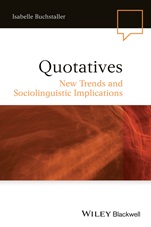
Quotatives: New Trends and Sociolinguistic Implications
ISBN 9780470657188
Autor: Isabelle Buchstaller
Wydawca: Wiley
Dostępność: 3-6 tygodni
Cena: 568,05 zł
Przed złożeniem zamówienia prosimy o kontakt mailowy celem potwierdzenia ceny.
ISBN13: |
9780470657188 |
ISBN10: |
0470657189 |
Autor: |
Isabelle Buchstaller |
Oprawa: |
Hardback |
Rok Wydania: |
2013-11-22 |
Ilość stron: |
328 |
Wymiary: |
237x158 |
Tematy: |
CFB |
The system of speech and thought reporting of English, as well as a number of related and unrelated languages, has been the site of vast and rapid changes. This book gives an overview of the changes in the area of quotative strategies, with a particular focus on the diffusion of innovative variants and the systemic developments which result from the incursion of newcomer forms. The volume considers the phenomenon “quotation” from a wealth of perspectives. It consolidates findings from different strands of research, combining formal and functional approaches for the definition of reported discourse and situating the phenomenon in a broader typological and sociolinguistic perspective. While the primary focus of the empirical research is on English, the book also investigates cross–linguistic similarities and differences within this linguistic domain. The volume examines the development of quotation, both from a pan–English perspective as well providing a historical overview over the competition of forms between the 1960s to the 2000s. Corpus–based research on innovative quotative forms is combined with an investigation into the ideologies attached to their users as well as regarding the linguistic acceptability of globalising linguistic forms.
Acknowledgements vii List of Figures xi List of Tables xiii 1 Introduction: What’s New about the New Quotatives? 1 The History of Innovative Quotatives 4 Why? 12 2 You Can Quote Me On That: Defining Quotation 34 Defining Quotation 37 Direct versus Indirect Quotes 55 Why Does itMatter? The Ramifications of Variable Definition 64 3 Variation and Change in the Quotative System: The Global versus the Local 89 Tracing the Global Attestation of Innovative Quotatives 90 Investigating Models of Diffusion 93 Investigating the Global Reality of Innovative Quotatives 97 Putting It All Together 134 4 Quotation across the Generations: A Short History of Speech and Thought Reporting 148 Tracing Quotation in Tyneside English across the Past 60 Years 150 Quotations across the Decades: Tracing the Changes in the Variable Grammar 166 How to Create Variability in a Low Entropy System? 183 5 Ideologies and Attitudes to Newcomer Quotatives 198 Don’t Sound Stupid, Stop Saying like 198 Language Ideologies: Facts and Fiction 202 Testing Attitudes towards the Innovative Quotatives 207 What Type of Person would use such a Form? Testing Associations with Personality Traits 210 Where do be like and go come from? Investigating the Perceptual Geographies of Innovative Quotatives 221 Social Perceptions Associated with be like and go 227 Youth Inarticulateness and the Pedagogical Debate 234 6 Lessons Learned from Research on Quotation 245 The Innovative Quotatives: A New, Uniform and Unique Phenomenon? 245 The Elephant in the Room: Situating Quotation in Linguistic Modularity 251 Tackling Some Illusions 256 Tracing the Present and Future of Quotative Forms 258 Conclusion 270 Appendix 1 Linear Regression Analysis Investigating the Conditioning Factors on the Quotative System in the US and the UK 278 Appendix 2 Alternative Cross–Tabulations 279 Appendix 3 Social Attitudes Survey 284 Index 295
Isabelle Buchstaller is professor for English at Leipzig University. Her research focuses on (morpho–) syntactic and discourse phenomena, including quotation, intensification and Northern English features, such as the Northern subject rule. Among her publications is Quotatives: Cross–linguistic and Cross–disciplinary Perspectives (2012, with Ingrid van Alphen), which investigates quotation cross–linguistically from a wealth of disciplines.
Koszyk
Książek w koszyku: 0 szt.
Wartość zakupów: 0,00 zł
Informacje


Kontakt
Gambit
Centrum Oprogramowania
i Szkoleń Sp. z o.o.
Al. Pokoju 29b/22-24
31-564 Kraków
Siedziba Księgarni
ul. Kordylewskiego 1
31-542 Kraków
+48 12 410 5991
+48 12 410 5987
+48 12 410 5989
Subskrypcje
Administratorem danych osobowych jest firma Gambit COiS Sp. z o.o. Na podany adres będzie wysyłany wyłącznie biuletyn informacyjny.
Autoryzacja płatności

Informacje na temat autoryzacji płatności poprzez PayU.

© Copyright 2012: GAMBIT COiS Sp. z o.o. Wszelkie prawa zastrzeżone.
Projekt i wykonanie: Alchemia Studio Reklamy