


Wydawcy
Katalog tematyczny
- Archeologia (109)
- Ekonomia, finanse, business (13704)
- Filozofia (1445)
- Historia (3040)
- Języki i językoznawstwo (2356)
- Lifestyle, hobby i rozrywka (475)
- Medycyna (9704)
- Nauki humanistyczne (4)
- Nauki o Ziemi i środowisku (2638)
- Nauki ścisłe (20412)
- Nauki społeczne (8486)
- Nauki techniczne (13450)
- Budownictwo lądowe (1045)
- Budownictwo komunikacyjne (9)
- Hydraulika (33)
- Konstrukcje budowlane (95)
- Mechanika konstrukcji (182)
- Przemysł budowlany (7)
- Chemia przemysłowa (2258)
- Elektronika i telekomunikacja (3287)
- Energetyka (1122)
- Inne nauki stosowane (363)
- Inżynieria biochemiczna (507)
- Inżynieria transportu (232)
- Mechanika i materiały (3316)
- Nauka o środowisku (321)
- Rolnictwo (507)
- Technika, ogólnie (475)
- Prawo (1696)
- Publikacje informacyjne i interdyscyplinarne (1288)
- Religia i wierzenia (917)
- Technika komputerowa (4067)
- Zdrowie, relacje międzyludzkie i rozwój osobisty (657)





Informacje szczegółowe o książce
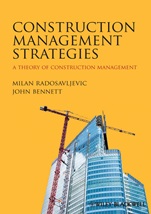
Construction Management Strategies: A Theory of Construction Management
ISBN 9780470656099
Autor: Milan Radosavljevic, John Bennett
Wydawca: Wiley
Dostępność: 3-6 tygodni
Cena: 290,85 zł
Przed złożeniem zamówienia prosimy o kontakt mailowy celem potwierdzenia ceny.
ISBN13: |
9780470656099 |
ISBN10: |
0470656093 |
Autor: |
Milan Radosavljevic, John Bennett |
Oprawa: |
Paperback |
Rok Wydania: |
2012-03-30 |
Ilość stron: |
314 |
Wymiary: |
242x182 |
Tematy: |
TN |
This authoritative textbook explains in fundamental terms the challenges faced by managers responsible for construction companies and projects. It defines the complexity and uncertainty faced by construction teams as they interact to construct buildings and infrastructure. This basic material establishes a robust basis for the first ever comprehensive theory of construction management. The theory provides 26 propositions which detail in clear terms the actions which construction managers can take to make construction more efficient. This deep understanding of construction is essential reading for final year students worldwide in all construction–related disciplines. Construction Management Strategies: a theory of construction management describes the strengths and limitations of the major construction management strategies currently found in leading practice worldwide: traditional construction, design build, construction management, partnering and the highly efficient total construction service. The descriptions are supported by worked examples which use mathematically–based Inherent Difficulty Indicators to measure the nature of individual construction projects and the effects of alternative strategies. The book gives students the basic toolkit needed to think through the situations they will face in practice; and it gives construction managers responsible for companies and projects a robust methodology for checking their own approach in terms of construction efficiency. The book’s companion website at www.wiley.com/go/constructionmanagementstrategies offers invaluable resources for students and lecturers as well as for practising construction managers: · end–of–chapter exercises + outline answers · Gantt charts to accompany examples in the book · PowerPoint slides for each chapter · ideas for discussion topics · links to useful websites
The Authors Acknowledgements Preface 1 Introduction and Background 1 Construction viewed from space 2 What is construction? 9 Why a theory of construction management is needed 11 Who can manage construction? 12 Construction managed by designers 13 Construction managed by customers 15 Construction managed by contractors 16 Construction managed by facilities managers 17 Construction managed by independent project managers 18 Construction managed by independent construction managers 20 How the construction industry works 21 Designer–led practice 22 Manager–led practice 23 Contractor–led practice 25 Conclusions 28 2 The Built Environment 31 Introduction 31 Forces which shape the built environment 34 Climate and geology 35 Economy 35 Government 36 Culture and fashion 37 Technology 39 Customers 40 Buildings and infrastructure 48 Architecture 49 Civil engineering 49 Thinking about the forces which shape the built environment 50 3 Construction Concepts 53 Introduction 53 Construction products 53 Customers 53 Construction actions 54 Construction 59 Construction organizations 60 Common characteristics of construction organizations 62 Interactions and relationships 64 Double–loop learning in construction networks 66 Categories of relationship 67 Factors influencing construction performance 69 Construction management 71 Construction efficiency 71 4 Theory of Construction Management 75 Introduction 75 A worst case construction project 77 A straightforward and certain construction project 80 Barriers to effective relationships 82 Inherent difficulty caused by design 83 Inherent difficulty caused by construction teams 84 Inherent difficulty caused by construction environments 85 Inherent difficulty 85 Construction management 86 Construction management strategies 86 Basic theorems 87 Basic propositions about construction management decisions 88 Construction teams efficiency conditions 89 Propositions about construction management decisions relating to construction teams 90 Construction team relationships efficiency conditions 90 Propositions about construction management decisions relating to construction team relationships 91 Construction companies’ efficiency conditions 91 Propositions about construction management decisions relating to construction companies 92 Common organizational characteristics efficiency conditions 92 Propositions about construction management decisions relating to common characteristics of construction organizations 93 Double–loop learning condition 94 Propositions about construction management decisions relating to double–loop learning 94 Construction efficiency 95 Inherent difficulty indicators 95 IDIs in Practice 102 Size of construction projects 106 Using the theory of construction management 107 5 Traditional Construction 111 Introduction 111 Fundamental traditional construction 111 Project organization 112 Strengths and weaknesses 112 Construction management propositions and fundamental traditional construction 114 New technologies 114 Demanding customers 116 Developed traditional construction 117 Internal and boundary relationships 118 Strengths of developed traditional construction 120 Weaknesses of developed traditional construction 120 Construction management propositions and developed traditional construction 122 Scenarios to rescue developed traditional construction 127 Projects led by design consultants 127 Specialist contractor design 130 Architects and engineers design 132 Conclusions 133 6 Design Build 137 Introduction 137 Design build customers 138 Design build companies 140 Design build process 143 Design build performance 145 Design build efficiency 148 Construction management propositions 149 The theory of construction management 150 7 Management Approaches 157 Introduction 157 Customers 159 Designers 159 Construction managers 161 Works contractors 162 Construction management process 162 Construction management propositions 165 Construction management performance 166 Other management approaches 169 The theory of construction management 170 8 Partnering 177 Introduction 177 Project partnering 178 Strategic partnering 182 Strategic collaborative working 189 Partnering efficiency 191 Construction management propositions 193 Partnering performance 194 The theory of construction management 195 9 Total Construction Service 201 Introduction 201 Total construction service providers 201 Industrialised housing 203 General construction 206 Other total construction service companies 212 Total construction service efficiency 215 Construction management propositions 220 Total construction service performance 221 The theory of construction management 222 10 Implications for Industry 229 Introduction 229 Implications for customers 229 Implications for construction companies 239 Construction company strategies 241 Implications for construction companies providing a total construction service 241 Implications for project management companies 248 Implications for construction management companies 248 Implications for design companies 252 Implications for specialist contractors 253 Implications for other construction companies 255 11 The Future for Construction Management 257 Introduction 257 The theory of construction management and practice 259 The theory of construction management and research 262 Testing the theory of construction management 267 Research data 267 Research proposals 268 A basis for future practice and research 275 Appendix: Theory of Construction Management Propositions Glossary Index
Milan Radosavljevic , Lecturer in the University of Reading′s School of Construction Management and Engineering following several years as a Demonstration Projects Coordinator for Scotland and as a Production Director within an off–site construction company in Central Europe. His award winning PhD research used chaos theory in the development of the novel Process Planning Methodology. He is Director of the prestigious Reading MSc in Project Management and his interests are focused on the role of Building Information Modelling in production management within the Total Construction Service strategy. John Bennett , Professor in the University of Reading′s Department of Construction Management & Engineering for 25 years following 20 years of successful practice in the UK and internationally, founding editor of the leading journal, Construction Management and Economics , and Director of the University′s Centre for Strategic Studies in Construction throughout its 12 years of influential research and publishing. The hallmarks of his academic career are researching international best practice and describing the essential messages in clear practical terms. This has established his reputation as one of the founding fathers of the construction management discipline.
Koszyk
Książek w koszyku: 0 szt.
Wartość zakupów: 0,00 zł
Informacje


Kontakt
Gambit
Centrum Oprogramowania
i Szkoleń Sp. z o.o.
Al. Pokoju 29b/22-24
31-564 Kraków
Siedziba Księgarni
ul. Kordylewskiego 1
31-542 Kraków
+48 12 410 5991
+48 12 410 5987
+48 12 410 5989
Subskrypcje
Administratorem danych osobowych jest firma Gambit COiS Sp. z o.o. Na podany adres będzie wysyłany wyłącznie biuletyn informacyjny.
Autoryzacja płatności

Informacje na temat autoryzacji płatności poprzez PayU.

© Copyright 2012: GAMBIT COiS Sp. z o.o. Wszelkie prawa zastrzeżone.
Projekt i wykonanie: Alchemia Studio Reklamy