


Wydawcy
Katalog tematyczny
- Archeologia (109)
- Ekonomia, finanse, business (13704)
- Filozofia (1445)
- Historia (3040)
- Języki i językoznawstwo (2356)
- Lifestyle, hobby i rozrywka (475)
- Medycyna (9704)
- Nauki humanistyczne (4)
- Nauki o Ziemi i środowisku (2638)
- Nauki ścisłe (20412)
- Nauki społeczne (8486)
- Edukacja (229)
- Kryminologia, opieka spełeczna (284)
- Obronność (10)
- Polityka (1389)
- Psychologia (777)
- Socjologia (410)
- Społeczeństwo i kultura (187)
- Nauki techniczne (13450)
- Prawo (1696)
- Publikacje informacyjne i interdyscyplinarne (1288)
- Religia i wierzenia (917)
- Technika komputerowa (4067)
- Zdrowie, relacje międzyludzkie i rozwój osobisty (657)





Informacje szczegółowe o książce
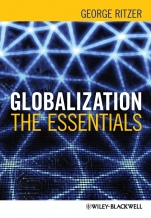
Globalization: The Essentials
ISBN 9780470655603
Autor: George Ritzer
Wydawca: Wiley
Dostępność: 3-6 tygodni
Cena: 449,40 zł
Przed złożeniem zamówienia prosimy o kontakt mailowy celem potwierdzenia ceny.
ISBN13: |
9780470655603 |
ISBN10: |
0470655607 |
Autor: |
George Ritzer |
Oprawa: |
Hardback |
Rok Wydania: |
2011-01-21 |
Ilość stron: |
368 |
Wymiary: |
253x175 |
Tematy: |
JB |
This compact alternative to Ritzer′s Globalization: A Basic Text (Wiley–Blackwell, 2010) draws on material from the larger volume and presents a pared down, yet comprehensive, introduction to the major topics in globalization studies. Making use of both academic and popular sources, the book examines the key events in the history of globalization, and the principle flows and structures it has produced. It pinpoints the big questions and maps out alternative futures, whilst covering a range of theories from imperialism and Americanization, to neo–liberalism and the neo–Marxian alternatives.
This wide–ranging and engaging introduction provides an indispensable textbook for undergraduate courses and can be used independently or alongside a reader, such as Ritzer & Atalay, Readings in Globalization.
Spis treści:
Preface.
1 Globalization.
Conceptualization, Origins, and History Conceptualizing Globalization.
From "Solids" to "Liquids".
"Flows".
"Heavy" and "Light".
"Heavy" Structures that Expedite "Flows".
"Heavy" Structures as Barriers to "Flows".
Subtler Structural Barriers.
Origins and History of Globalization.
Hardwired.
Cycles.
Epochs.
Events.
Broader, More Recent Changes.
Chapter Summary.
2 Theorizing Globalization.
Imperialism.
Colonialism.
Development.
Americanization.
Anti–Americanism as a Global Process.
Neo–Liberalism.
Neo–Liberalism: Basic Ideas.
The Neo–Liberal State.
Critiquing Neo–Liberalism: Karl Polanyi.
Contemporary Criticisms of Neo–Liberalism.
Neo–Marxian Theories.
Transnational Capitalism.
Empire.
Chapter Summary.
3 Structuring the Global Economy.
Before Bretton Woods.
A Prior Epoch of Globalization.
Economic Development during and after WW II.
Bretton Woods and the Bretton Woods System.
General Agr
eement on Tariffs and Trade (GATT).
World Trade Organization (WTO).
International Monetary Fund (IMF).
World Bank.
The End of Bretton Woods.
Changes in, and Critiques of, Bretton–Woods–Era Organizations.
Other Important Economic Organizations.
The Multinational Corporation (MNC).
The Myth of Economic Globalization?
Chapter Summary.
4 Global Economic Flows.
Trade.
Trade Surpluses and Deficits.
Global Trade: Economic Chains and Networks.
Global Value Chains: China and the US.
Scrap metal.
Waste paper.
T–shirts.
iPhones.
Increasing Competition for Commodities.
The Economic Impact of the Flow of Oil.
Oil Wealth.
Race to the Bottom and Upgrading.
Upgrading in the Less Developed World?
Outsourcing.
Financial Globalization.
The Great Recession.
Consumption.
Consumer Objects and Services.
Consumers.
Consumption Processes.
Consumption Sites.
Global Resistance.
Chapter Summary.
5 Global Political Structures and Processes.
On Political Flows.
The Nation–State.
Threats to the Nation–State.
Global flows.
International human rights.
"Shadows of war".
In Defense of the Nation–State.
"Imagined Community".
Changes in Global Nation–State Relations.
United Nations (UN).
United Nations Conference on Trade and Development (UNCTAD).
United Nations Educational, Scientific, and Cultural Organization (UNESCO).
International Atomic Energy Agency (IAEA).
Global Governance.
Civil Society.
International Non–Governmental Organizations (INGOs).
Chapter Summary.
6 High–Tech Global Flows and Structures.
Technology, Media, and the Internet Technology.
Medical Technologies.
Space–Based Technologies.
Leapfrogging 136.
India’s "One Lakh Car" (or NANO).
Problematic Technological Flows.
Media.
Media Imperialism.
"Media Were American".
New Global Media.
Indymedia.
Thinking about the Global Media.
The Internet.
Online Social Networking.
Spam.
Computer Viruses.
The Internet in China.
Chapter Summary.
7 Global Culture and Cultural Flows.
Cultural Differentialism.
Civilizations.
Cultural Hybridization.
Muslim Girl Scouts.
Appadurai’s "Landscapes".
Cultural Convergence.
Cultural Imperialism.
Indian sari weavers.
Deterritorialization.
World Culture.
McDonaldization.
McDonaldization, expansionism, and globalization.
Beyond fast food.
The Globalization of Nothing.
Cricket: local, glocal, or grobal?
Chapter Summary 174.
8 Global Flows of Migrants.
Migrants.
Migration.
Flows of Migrants to and from the US.
Illegal Mexican migrants to the US.
Migrants through Mexico and to the US.
Increased law enforcement.
Flow of Migrants Elsewhere in the World.
Illegal immigrants in Europe.
Great Britain.
Switzerland.
Greece.
Illegal immigrants in Asia.
The Case Against the Backlash to Illegal Immigration.
Remittances.
Diaspora.
Chapter Summary.
9 Global Environmental Flows.
Differences Among Nation–States.
Collapse.
The Leading Environmental Problems.
Destruction of Natural Habitats.
Decline of Fish.
Decline in Fresh Water.
The paradox of bottled water.
Toxic Chemicals.
Greenhouse Gases and Global Warming.
Rising seas.
Global warming and health.
Population Growth.
The Global Flow of Dangerous Debris.
Global Responses.
Sustainable Development.
Dealing with Climate Change.
Carbon Tax.
Carbon Neutral.
Alternate Fuels and Power Sources.
Hybrid technology.
Ethanol.
Solar power.
A Technological Fix?
Economic Issues.
Opposing Env
ironmentalism.
Chapter Summary.
10 Negative Global Flows and Processes.
Dangerous Imports, Diseases, Crime, Terrorism, War Dangerous Imports.
Borderless Diseases.
HIV/AIDS.
Avian Flu.
SARS.
Ebola Virus.
Tropical Diseases in Europe.
Crime.
Terrorism.
War.
Global Military Structures.
Technology.
Information War.
Cyber–War.
The Impact of Negative Global Flows on Individuals.
Chapter Summary.
11 Inequality.
Global Inequality.
"The Bottom Billion".
Migration.
E–Waste and Inequality.
Global Digital Divide.
Race and Ethnicity and Gender.
Race and Ethnicity.
Gender.
Gender and the economy.
Global care chains.
Trafficking in the sex industry.
Mail–order brides.
Responding to and resisting global minority status: the case of women.
Rural–Urban and Inequality.
Rural.
Urban.
Cities: the main locus of global problems.
Chapter Summary.
12 Dealing with, Resisting, and the Future of, Globalization.
Dealing with Globalization.
Dealing with the Global Economy.
Protectionism.
Fair trade.
Helping the "bottom billion".
Dealing with Political Globalization.
Accountability.
Transparency.
Transparency International (TI).
Resisting Globalization.
Local Resistance.
A Social Movement?
More Formal Social Movements.
World Social Forum and Cyberactivism.
Is the Resistance to Globalization Significant?
The Futures of Globalization.
A "Mad Max" Scenario.
Chapter Summary.
Glossary.
Index.
Nota biograficzna:
George Ritzer is Distinguished University Professor at the University of Maryland, with awards that include the American Sociological Association′s Distinguished Contribution to Teaching Award. He is the author of numerous books including The McDonaldization of Soc
iety (1993; 2008; 2011), The Globalization of Nothing (2003; 2007) Globalization: A Basic Text (2010) and the editor of The Encyclopedia of Social Theory (2005), The Blackwell Encyclopedia of Sociology (2007), The Blackwell Companion to Globalization (2007) and the forthcoming The Blackwell Encyclopedia of Globalization. His work has been translated into over 20 languages.
Okładka tylna:
This compact alternative to Ritzer′s Globalization: A Basic Text (Wiley–Blackwell, 2010) draws on material from the larger volume and presents a pared down, yet comprehensive, introduction to the major topics in globalization studies. Making use of both academic and popular sources, the book examines the key events in the history of globalization, and the principle flows and structures it has produced. It pinpoints the big questions and maps out alternative futures, whilst covering a range of theories from imperialism and Americanization, to neo–liberalism and the neo–Marxian alternatives.
This wide–ranging and engaging introduction provides an indispensable textbook for undergraduate courses and can be used independently or alongside a reader, such as Ritzer & Atalay, Readings in Globalization.
Koszyk
Książek w koszyku: 0 szt.
Wartość zakupów: 0,00 zł
Informacje


Kontakt
Gambit
Centrum Oprogramowania
i Szkoleń Sp. z o.o.
Al. Pokoju 29b/22-24
31-564 Kraków
Siedziba Księgarni
ul. Kordylewskiego 1
31-542 Kraków
+48 12 410 5991
+48 12 410 5987
+48 12 410 5989
Subskrypcje
Administratorem danych osobowych jest firma Gambit COiS Sp. z o.o. Na podany adres będzie wysyłany wyłącznie biuletyn informacyjny.
Autoryzacja płatności

Informacje na temat autoryzacji płatności poprzez PayU.

© Copyright 2012: GAMBIT COiS Sp. z o.o. Wszelkie prawa zastrzeżone.
Projekt i wykonanie: Alchemia Studio Reklamy