


Wydawcy
Katalog tematyczny
- Archeologia (109)
- Ekonomia, finanse, business (13704)
- Filozofia (1445)
- Historia (3040)
- Języki i językoznawstwo (2356)
- Lifestyle, hobby i rozrywka (475)
- Medycyna (9704)
- Nauki humanistyczne (4)
- Nauki o Ziemi i środowisku (2638)
- Nauki ścisłe (20412)
- Nauki społeczne (8486)
- Nauki techniczne (13450)
- Prawo (1696)
- Publikacje informacyjne i interdyscyplinarne (1288)
- Religia i wierzenia (917)
- Technika komputerowa (4067)
- Zdrowie, relacje międzyludzkie i rozwój osobisty (657)





Informacje szczegółowe o książce
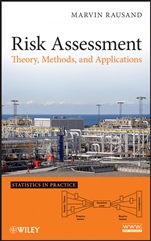
Risk Assessment: Theory, Methods, and Applications
ISBN 9780470637647
Autor: Marvin Rausand
Wydawca: Wiley
Dostępność: 3-6 tygodni
Cena: 681,45 zł
Przed złożeniem zamówienia prosimy o kontakt mailowy celem potwierdzenia ceny.
ISBN13: |
9780470637647 |
ISBN10: |
0470637641 |
Autor: |
Marvin Rausand |
Oprawa: |
Hardback |
Rok Wydania: |
2011-09-27 |
Ilość stron: |
664 |
Wymiary: |
238x169 |
Tematy: |
KFFN |
An introduction to risk assessment that utilizes key theory and state–of–the–art applications
With its balanced coverage of theory and applications along with standards and regulations, Risk Assessment: Theory, Methods, and Applications serves as a comprehensive introduction to the topic. The book serves as a practical guide to current risk analysis and risk assessment, emphasizing the possibility of sudden, major accidents across various areas of practice from machinery and manufacturing processes to nuclear power plants and transportation systems.
The author applies a uniform framework to the discussion of each method, setting forth clear objectives and descriptions, while also shedding light on applications, essential resources, and advantages and disadvantages. Following an introduction that provides an overview of risk assessment, the book is organized into two sections that outline key theory, methods, and applications.
Introduction to Risk Assessment defines key concepts and details the steps of a thorough risk assessment along with the necessary quantitative risk measures. Chapters outline the overall risk assessment process, and a discussion of accident models and accident causation offers readers new insights into how and why accidents occur to help them make better assessments.
Risk Assessment Methods and Applications carefully describes the most relevant methods for risk assessment, including preliminary hazard analysis, HAZOP, fault tree analysis, and event tree analysis. Here, each method is accompanied by a self–contained description as well as workflow diagrams and worksheets that illustrate the use of discussed techniques. Important problem areas in risk assessment, such as barriers and barrier analysis, human errors, and human reliability, are discussed along with uncertainty and sensitivity analysis.
Each chapter concludes with a listing of resources for further study of the topic,
and detailed appendices outline main results from probability and statistics, related formulas, and a listing of key terms used in risk assessment. A related website features problems that allow readers to test their comprehension of the presented material and supplemental slides to facilitate the learning process.
Risk Assessment is an excellent book for courses on risk analysis and risk assessment at the upper–undergraduate and graduate levels. It also serves as a valuable reference for engineers, researchers, consultants, and practitioners who use risk assessment techniques in their everyday work.
Spis treści:
Part I. Introduction to Risk Assessment.
1. Introduction.
2. The Words of Risk Analysis.
3. Hazards and Threats.
4. How to Measures and Evaluate Risk?
5. Risk Management.
6. Accidents Models.
7. Data for Risk Analysis.
Part II. Risk Assessment Methods and Applications.
8. Risk Assessment Process.
9. Hazard Identification.
10. Causal and Frequency Analysis.
11. Development of Accident Scenarios.
12. Barriers and Barrier Analysis.
13. Human Reliability Analysis.
14. Job Safety Analysis.
15. Common Cause Failures.
16. Uncertainty and Sensitivity.
17. Development and Applications of Risk Assessment.
Part III. Appendices.
Elements of Probability Theory.
Acronyms.
Glossary.
References.
Nota biograficzna:
Marvin Rausand is Professor in the Department of Production and Quality Engineering at the Norwegian University of Science and Technology. He has published extensively in his areas of research interest, which include system reliability theory, risk analysis, maintenance optimization, and probabilistic modeling. Professor Rausand is the author of System Reliability Theory: Models, Statistical Methods, and Applications, Second Edition (Wiley).
Okładka tylna:
An introduction to risk assessment tha
t utilizes key theory and state–of–the–art applications
With its balanced coverage of theory and applications along with standards and regulations, Risk Assessment: Theory, Methods, and Applications serves as a comprehensive introduction to the topic. The book serves as a practical guide to current risk analysis and risk assessment, emphasizing the possibility of sudden, major accidents across various areas of practice from machinery and manufacturing processes to nuclear power plants and transportation systems.
The author applies a uniform framework to the discussion of each method, setting forth clear objectives and descriptions, while also shedding light on applications, essential resources, and advantages and disadvantages. Following an introduction that provides an overview of risk assessment, the book is organized into two sections that outline key theory, methods, and applications.
Introduction to Risk Assessment defines key concepts and details the steps of a thorough risk assessment along with the necessary quantitative risk measures. Chapters outline the overall risk assessment process, and a discussion of accident models and accident causation offers readers new insights into how and why accidents occur to help them make better assessments.
Risk Assessment Methods and Applications carefully describes the most relevant methods for risk assessment, including preliminary hazard analysis, HAZOP, fault tree analysis, and event tree analysis. Here, each method is accompanied by a self–contained description as well as workflow diagrams and worksheets that illustrate the use of discussed techniques. Important problem areas in risk assessment, such as barriers and barrier analysis, human errors, and human reliability, are discussed along with uncertainty and sensitivity analysis.
Each chapter concludes with a listing of resources for further study of the topic, and detailed appendices outline main
results from probability and statistics, related formulas, and a listing of key terms used in risk assessment. A related website features problems that allow readers to test their comprehension of the presented material and supplemental slides to facilitate the learning process.
Risk Assessment is an excellent book for courses on risk analysis and risk assessment at the upper–undergraduate and graduate levels. It also serves as a valuable reference for engineers, researchers, consultants, and practitioners who use risk assessment techniques in their everyday work.
Koszyk
Książek w koszyku: 0 szt.
Wartość zakupów: 0,00 zł
Informacje


Kontakt
Gambit
Centrum Oprogramowania
i Szkoleń Sp. z o.o.
Al. Pokoju 29b/22-24
31-564 Kraków
Siedziba Księgarni
ul. Kordylewskiego 1
31-542 Kraków
+48 12 410 5991
+48 12 410 5987
+48 12 410 5989
Subskrypcje
Administratorem danych osobowych jest firma Gambit COiS Sp. z o.o. Na podany adres będzie wysyłany wyłącznie biuletyn informacyjny.
Autoryzacja płatności

Informacje na temat autoryzacji płatności poprzez PayU.

© Copyright 2012: GAMBIT COiS Sp. z o.o. Wszelkie prawa zastrzeżone.
Projekt i wykonanie: Alchemia Studio Reklamy