


Wydawcy
Katalog tematyczny
- Archeologia (109)
- Ekonomia, finanse, business (13704)
- Filozofia (1445)
- Historia (3040)
- Języki i językoznawstwo (2356)
- Lifestyle, hobby i rozrywka (475)
- Medycyna (9704)
- Nauki humanistyczne (4)
- Nauki o Ziemi i środowisku (2638)
- Nauki ścisłe (20412)
- Nauki społeczne (8486)
- Nauki techniczne (13450)
- Prawo (1696)
- Publikacje informacyjne i interdyscyplinarne (1288)
- Religia i wierzenia (917)
- Technika komputerowa (4067)
- Zdrowie, relacje międzyludzkie i rozwój osobisty (657)





Informacje szczegółowe o książce
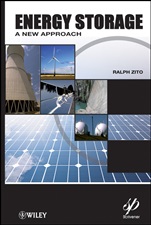
Energy Storage: A New Approach
ISBN 9780470625910
Autor: Ralph Zito
Wydawca: Wiley
Dostępność: 3-6 tygodni
Cena: 789,60 zł
Przed złożeniem zamówienia prosimy o kontakt mailowy celem potwierdzenia ceny.
ISBN13: |
9780470625910 |
ISBN10: |
0470625910 |
Autor: |
Ralph Zito |
Oprawa: |
Hardback |
Rok Wydania: |
2010-08-20 |
Ilość stron: |
322 |
Wymiary: |
240x177 |
Tematy: |
HB |
Energy Storage: A New Approach presents practical solutions to the problem of energy storage on a massive scale. This revolutionary book describes technologies that include basic chemical concepts that engineers have been practicing for years, but presents new material that could transform the energy industry. Regardless where power is generated from—oil, natural gas, coal, solar, wind, or any of the other emerging sources— energy storage is something that the industry MUST learn and practice. With the world energy demand increasing, mostly due to industrial growth in China and India, and with the West becoming increasingly more interested in fuel efficiency and “green” endeavors, energy storage is potentially a key technology in our energy future.
Spis treści:
Preface.
Dedications and Acknowledgements.
1 Introduction.
2 Comments on Classical Mechanics.
2.1 Force.
2.2 Energy Sources.
3 Conversion and Storage.
3.1 Availability of Solar Energy.
3.2 Conversion Processes.
3.3 Storage Processes.
4 Practical Purposes of Energy Storage.
4.1 The Need for Storage.
4.2 The Need for Secondary Energy Systems.
4.3 Sizing Power Requirements of Familiar Activities.
4.4 On–the–road Vehicles.
4.5 Rocket Propulsion Energy Needs Comparison.
5 Competing Storage Methods.
5.1 Problems with Batteries.
5.2 Hydrocarbon Fuel: Energy Density Data.
5.3 Electrochemical Cells.
5.4 Metal–Halogen and Half–Redox Couples.
5.5 Full Redox Couples.
5.6 Possible Applications.
6 The Concentration Cell.
6.1 Colligative Properties of Matter.
6.2 Electrochemical Application of Colligative Properties.
6.3 Further Discussions on Fundamental Issues.
6.4 Adsorption and Diffusion Rate Balance.
6.5 Storage by Adsorption and Solids Precipitation.
6.6 Some Intere
sting Aspects of Concentration Cells.
6.7 Concentration Cell Storage Mechanisms that Employ Sulfur.
6.8 Species Balance.
6.9 Electrode Surface Potentials.
6.10 Further Examination of Concentration Ratios.
6.11 Empirical Results with Small Laboratory Cells.
6.12 Iron/Iron Concentration Cell Properties.
6.13 The Mechanisms of Energy Storage Cells.
6.14 Operational Models of Sulfide Based Cells.
6.15 Storage Solely in Bulk Electrolyte.
6.16 More on Storage of Reagents in Adsorbed State.
6.17 Energy Density.
6.18 Observations Regarding Electrical Behavior.
6.19 Concluding Comments.
6.20 Typical Performance Characteristics.
6.21 Sulfide/Sulfur Half Cell Balance.
6.22 General Cell Attributes.
6.23 Electrolyte Information.
6.24 Concentration Cell Mechanism and Associated Mathematics.
6.25 Calculated Performance Data.
6.26 Another S/S–2Cell Balance Analysis Method.
6.27 A Different Example of a Concentration Cell, Fe+2/Fe+3.
6.28 Performance Calculations Based on Nernst Potentials.
6.29 Empirical Data.
7 Thermodynamics of Concentration Cells.
7.1 Thermodynamic Background.
7.2 The CIR Cell.
8 Polysulfide – Diffusion Analysis.
8.1 Polarization Voltages and Thermodynamics.
8.2 Diffusion and Transport Processes at the (–) Electrode Surface.
8.3 Electrode Surface Properties, Holes, and Pores.
8.4 Electric (Ionic) Current Density Estimates.
8.5 Diffusion and Supply of Reagents.
8.6 Cell Dynamics.
8.7 Further Analysis of Electrode Behavior.
8.8 Assessing the Values of Reagent Concentrations.
8.9 Solving the Differential Equations.
8.10 Cell and Negative Electrode Performance Analysis.
8.11 General Comments.
9 Design Considerations.
9.1 Examination of Diffusion and Reaction Rates and Cell Design.
9.2 Electrodes.
9.3 Physical Spacing in Cell Designs.
9.4 Carbon–Polymer Composite
Electrodes.
9.5 Resistance Measurements in Test Cells.
9.6 Electrolytes and Membranes.
9.7 Energy and Power Density Compromises.
9.8 Overcharging Effects on Cells.
9.9 Imbalance Considerations.
10 Calculated Cell Performance Data.
10.1 Electrical Performance Modeling.
11 Single Cell Empirical Data.
11.1 Design and Construction of Cells and the Materials Employed.
11.2 Experimental Data.
12 Conclusion: Problems and Solutions.
12.1 Pros and Cons of Concentration Cells.
12.2 Future Performance and Limitations.
Appendix 1: A History of Batteries.
Al.1 A History of the Battery.
A1.2 The Electric Car and the Power Source Search.
A1.3 The Initial Survey.
A1.4 Review of a Research Path for a Long–life, High ED Battery.
Appendix 2: Aids and Supplemental Material.
A2.1 Properties of Homogeneous Membranes.
A2.2 The van der Waals Equation and its Relevance to Concentration Cells.
A2.3 Derivation of Electrolyte Interconnectivity Losses.
A2.4 Efficiency Calculations.
A2.5 Specific Resistivity and Specific Gravity of Some Reagents.
Bibliography.
Index.
Koszyk
Książek w koszyku: 0 szt.
Wartość zakupów: 0,00 zł
Informacje


Kontakt
Gambit
Centrum Oprogramowania
i Szkoleń Sp. z o.o.
Al. Pokoju 29b/22-24
31-564 Kraków
Siedziba Księgarni
ul. Kordylewskiego 1
31-542 Kraków
+48 12 410 5991
+48 12 410 5987
+48 12 410 5989
Subskrypcje
Administratorem danych osobowych jest firma Gambit COiS Sp. z o.o. Na podany adres będzie wysyłany wyłącznie biuletyn informacyjny.
Autoryzacja płatności

Informacje na temat autoryzacji płatności poprzez PayU.

© Copyright 2012: GAMBIT COiS Sp. z o.o. Wszelkie prawa zastrzeżone.
Projekt i wykonanie: Alchemia Studio Reklamy