


Wydawcy
Katalog tematyczny
- Archeologia (109)
- Ekonomia, finanse, business (13704)
- Filozofia (1445)
- Historia (3040)
- Języki i językoznawstwo (2356)
- Lifestyle, hobby i rozrywka (475)
- Medycyna (9704)
- Nauki humanistyczne (4)
- Nauki o Ziemi i środowisku (2638)
- Nauki ścisłe (20412)
- Astronomia (294)
- Biologia (5119)
- Chemia (6540)
- Chemia analityczna (361)
- Chemia fizyczna (346)
- Chemia nieorganiczna (137)
- Chemia organiczna (535)
- Krystalografia (27)
- Minerologia (46)
- Fizyka (3309)
- Matematyka (4574)
- Nauki ścisłe, ogólnie (503)
- Nauki społeczne (8486)
- Nauki techniczne (13450)
- Prawo (1696)
- Publikacje informacyjne i interdyscyplinarne (1288)
- Religia i wierzenia (917)
- Technika komputerowa (4067)
- Zdrowie, relacje międzyludzkie i rozwój osobisty (657)





Informacje szczegółowe o książce
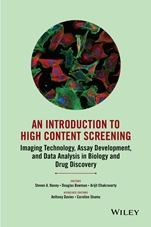
An Introduction To High Content Screening: Imaging Technology, Assay Development, and Data Analysis in Biology and Drug Discovery
ISBN 9780470624562
Autor: Steven A. Haney, Douglas Bowman, Arijit Chakravarty, Anthony Davies, Caroline Shamu
Wydawca: Wiley
Dostępność: 3-6 tygodni
Cena: 603,75 zł
Przed złożeniem zamówienia prosimy o kontakt mailowy celem potwierdzenia ceny.
ISBN13: |
9780470624562 |
ISBN10: |
0470624566 |
Autor: |
Steven A. Haney, Douglas Bowman, Arijit Chakravarty, Anthony Davies, Caroline Shamu |
Oprawa: |
Hardback |
Rok Wydania: |
2014-12-31 |
Ilość stron: |
352 |
Wymiary: |
245x176 |
Tematy: |
PN |
Master the Power of High Content Screening Although the level of interest and investment in high content (HC) technologies is growing rapidly, new users have been missing a standard and accessible introduction to the field. This book fills that need as a practical resource for HC techniques. Using a collaborative and interdisciplinary author base with experience in the pharmaceutical industry and academia, this book focuses on the fundamental concepts, rather than advanced material. The major objectives for the book are to educate people about the basic principles underlying HC screening that are rarely (or never) discussed in many publications in the field, and to provide the technical training needed to enable readers to design and implement their own HC screens. These objectives are met through the main text of the book, a tutorial chapter and a detailed appendix. • Instructs readers on the fundamentals of high content screening (HCS) techniques • Focuses on practical and widely–used techniques like image processing and multiparametric assays • Breaks down HCS into individual modules for training and connects them at the end • Includes a tutorial chapter that works through sample HCS assays, glossary, and detailed appendices
Preface Chapter 1. Introduction Steven Haney I. The beginning of High Content Screening II. Six skill sets essential to running HCS experiments III. Integrating skill sets into a team IV. A few words on experimental design V. Conclusions Key Points Further reading References Figure Legends Section I. Basic Principles Chapter 2. Fluorescence and Cell Labeling Anthony Davies and Steven Haney I. Introduction II. Anatomy of fluorescent probes, labels and dyes III. Stoke’s Shift and biological fluors IV. Fluorophore properties V. Localization of fluorophores within cells VI. Multiplexing fluorescent reagents VII. Specialized imaging applications derived from complex properties of fluorescence IX. Conclusions Key Points Further reading References Figure legends Chapter 3. Microscopy Fundamentals Steven Haney, Anthony Davies, and Doug Bowman I. HCS hardware II. Deconstructing light microscopy III. Using the imager to collect data IV. Conclusions Key Points Further reading References Figure legends Chapter 4. Image Processing John Bradley, Doug Bowman, and Arijit Chakravarty I. Overview of image processing and image analysis in HCS II. What is a digital image? III. “Addressing” pixel values in image analysis algorithms IV. Image analysis workflow V. Conclusions Key points Further reading Figure legends Section 2. Getting Started Chapter 5. Selecting and Setting Up a High Content Imaging Platform Craig Furman, Doug Bowman, Anthony Davies, Caroline Shamu, and Steven Haney I. Determining expectations of the HC system II. Establishing a HC platform acquisition team III. Basic hardware decisions IV. Data generation, analysis, and retention V. Installation VI. Managing the system VII. Setting up workflows for researchers VII. Conclusions Key points Further reading Figure legends Chapter 6. Informatics Considerations Jay Copeland and Caroline Shamu I. Informatics infrastructure for High Content Screening II. Using databases to store HCS data III. Mechanics of an informatics solution IV. Developing image analysis pipelines: Data management considerations V. Compliance with emerging data standards VI. Conclusions Key Points Further reading References Figure legends Chapter 7. Basic High Content Assay Development Steven Haney and Doug Bowman I. Introduction II. Initial technical considerations for developing a high content assay III. A simple protocol to fix and stain cells IV. Image capture and examining images V. Conclusions Key Points Further reading References Figure legends Section 3. Analyzing Data Chapter 8. Designing Metrics for High Content Assays Arijit Chakravarty, Steven Haney, and Doug Bowman I. Introduction: features, metrics, results II. Looking at features III. Metrics and results: The metric is the message IV. Types of high content assays and their metrics V. Metrics to results: Putting it all together VI. Conclusions Key Points Further reading References Figure legends Chapter 9. Analyzing Well–Level Data Steven Haney and Arijit Chakravarty I. Introduction II. Reviewing data III. Plate and control normalizations of data IV. Calculation of assay statistics V. Data analysis: Hit selection VI. Data analysis: IC50 determinations VII. Conclusions Key points References Figure legends Chapter 10. Analyzing Cell Level Data Steven Haney, Lin Guey, and Arijit Chakravarty I. Introduction II. Understanding general statistical terms and concepts III. Examining data IV. Developing a data analysis plan V. Cell–level data analysis: Comparing distributions through inferential statistics VI. Analyzing normal (or transformed) data VII. Analyzing non–normal data VIII. When to call for help IX. Conclusions Key points Further reading References Section 4: Advanced work Chapter 11. Designing Robust Assays Arijit Chakrivarty, Doug Bowman, Anthony Davies, and Caroline Shamu I. Introduction II. Common technical issues in high content assays III. Designing assays to minimize trouble IV. Looking for trouble: Building in quality control V. Conclusion Key points Further reading References Figure legends Chapter 12. Automation and Screening John Donovan, Arijit Chakravarty, Anthony Davies, Steven Haney, Doug Bowman, John Ringling, and Ben Knight I. Introduction II. Some preliminary considerations III. Laboratory options IV. The automated HCS laboratory V. Conclusions Key points Further reading References Figure legends Chapter 13. High Content Analysis for Tissue Samples Kristine Burke, Vaishali Sinde, Alice McDonald, Doug Bowman, and Arijit Chakrivarty I. Introduction II. Design choices in setting up a high–content assay in tissue III. System configuration: Aspects unique to tissue–based HCS IV. Data Analysis V. Conclusions Key Points Further Reading References Figure Legends Section 5. High Content Analytics Chapter 14. Factoring and Clustering High Content Data Steven Haney and Arijit Chakravarty I. Introduction II. Common Unsupervised Learning Methods III. An overview of experimental design IV. Conclusions Key points Further Reading References Chapter 15. Supervised Machine Learning Jeff Palmer and Arijit Chakravarty I. Introduction II. Foundational Concepts III. Choosing a machine learning algorithm IV. When do you need machine learning, and how do you use it? V. Conclusions Key Points Further Reading References Figure Legends Tutorial Doug Bowman and Steven Haney Glossary Appendix A. Web sites and additional information on instruments, reagents and instruction Appendix B. A few words about one letter: using R to quickly analyze HCS data Steven Haney I. Introduction II. Setting up R III. Analyzing data in R IV. Where to go next Further Reading Figure Legends Appendix C. Hypothesis Testing for High Content Data: A Refresher Lin Guey, Arijit Chakriarty I. Introduction II. Defining simple hypothesis testing III. Simple statistical tests to compare two samples IV. Statistical tests on groups of samples V. Introduction to regression models VI. Conclusions Key concepts Further reading References Figure legends
Steven Haney is a Senior Research Advisor and Group Leader at Eli Lilly and Company. He edited the book High Content Screening: Science, Techniques, and Applications (Wiley, 2008). Doug Bowman is a Senior Scientist at Millennium Pharmaceuticals where he is responsible for cellular imaging assays. Arijit Chakravarty is the Director of Modeling and Simulation (DMPK) at Takeda Pharmaceuticals. Anthony Davies is Director of the Irish National Center for High Content Screening and Analysis (INCHSA) and Chief Scientific Officer of Biocroi Ltd at Trinity College Dublin. Caroline Shamu is the Director of the ICCB–Longwood Screening Facility at Harvard Medical School.
Koszyk
Książek w koszyku: 0 szt.
Wartość zakupów: 0,00 zł
Informacje


Kontakt
Gambit
Centrum Oprogramowania
i Szkoleń Sp. z o.o.
Al. Pokoju 29b/22-24
31-564 Kraków
Siedziba Księgarni
ul. Kordylewskiego 1
31-542 Kraków
+48 12 410 5991
+48 12 410 5987
+48 12 410 5989
Subskrypcje
Administratorem danych osobowych jest firma Gambit COiS Sp. z o.o. Na podany adres będzie wysyłany wyłącznie biuletyn informacyjny.
Autoryzacja płatności

Informacje na temat autoryzacji płatności poprzez PayU.

© Copyright 2012: GAMBIT COiS Sp. z o.o. Wszelkie prawa zastrzeżone.
Projekt i wykonanie: Alchemia Studio Reklamy