


Wydawcy
Katalog tematyczny
- Archeologia (109)
- Ekonomia, finanse, business (13704)
- Filozofia (1445)
- Historia (3040)
- Języki i językoznawstwo (2356)
- Lifestyle, hobby i rozrywka (475)
- Medycyna (9704)
- Nauki humanistyczne (4)
- Nauki o Ziemi i środowisku (2638)
- Nauki ścisłe (20412)
- Astronomia (294)
- Biologia (5119)
- Chemia (6540)
- Fizyka (3309)
- Elektryczność i magnetyzm (90)
- Fizyka atomowa i molekularna (110)
- Fizyka cząstek elementarnych (36)
- Fizyka jądra atomowego (36)
- Fizyka kwantowa (210)
- Fizyka matematyczna (121)
- Fizyka relatywistyczna (36)
- Fizyka statystyczna (51)
- Fizyka stosowana (498)
- Mechanika klasyczna (186)
- Optyka i światło (133)
- Stany materii (202)
- Matematyka (4574)
- Nauki ścisłe, ogólnie (503)
- Nauki społeczne (8486)
- Nauki techniczne (13450)
- Prawo (1696)
- Publikacje informacyjne i interdyscyplinarne (1288)
- Religia i wierzenia (917)
- Technika komputerowa (4067)
- Zdrowie, relacje międzyludzkie i rozwój osobisty (657)





Informacje szczegółowe o książce
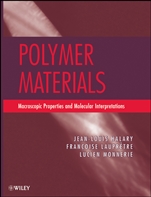
Polymer Materials: Macroscopic Properties and Molecular Interpretations
ISBN 9780470616192
Autor: Jean Louis Halary, Francoise Laupretre, Lucien Monnerie
Wydawca: Wiley
Dostępność: 3-6 tygodni
Cena: 653,10 zł
Przed złożeniem zamówienia prosimy o kontakt mailowy celem potwierdzenia ceny.
ISBN13: |
9780470616192 |
ISBN10: |
0470616199 |
Autor: |
Jean Louis Halary, Francoise Laupretre, Lucien Monnerie |
Oprawa: |
Hardback |
Rok Wydania: |
2011-04-19 |
Ilość stron: |
432 |
Wymiary: |
285x220 |
Tematy: |
PH |
"Molecular modeling of polymers . . . is a subject that cannot be found in any other [book] in any appreciable detail. . . . The detailed chapters on specific polymer systems are a great idea." —Gregory Odegard, Michigan Technological University
"The polymer community needs a textbook that can connect macroscopic mechanics with the mesoscopic and molecular aspects of polymers." —Liangbin Li, University of Science and Technology of China
This book takes a unique, multiscale approach to the mechanical properties of polymers, covering both the macroscopic and molecular levels unlike any other book on the market. Based on the authors′ extensive research and writing in the field, Polymer Materials emphasizes the relationships between the chemical structure and the mechanical behavior of polymer materials, providing authoritative guidelines for assessing polymer performance under different conditions and the design of new materials.
The authors focus on a few representative polymer systems—polystyrene, poly(methyl methacrylate), aliphatic polyamides, and epoxy resins—using them to investigate and demonstrate the different deformation and fracture mechanisms of pure polymers and also their toughening by fillers. The specific deformation and fracture mechanisms active in pure and filled elastomers are also explained in detail.
Key features of this book include:
Experimental results on selected examples that precede and reinforce the development of theoretical features
In–depth discussion of a limited number of polymer systems instead of a brief overview of many
Self–contained chapters with a summary of their key points
Comprehensive problems and a solutions manual for the different parts of the book
Coverage of the basics with an emphasis on polymer dynamics
An indispensable resource for polymer scientists and students alike, Polymer Materials is also highly u
seful for materials scientists, engineers, chemists, and physicists in industry and academia.
Spis treści:
PREFACE.
LIST OF SYMBOLS.
Introduction to Polymer Materials.
PART I.
1 The Four Classes of Polymer Materials.
2 The Macromolecular Chain in the Amorphous Bulk Polymer: Static and Dynamic Properties.
3 The Glass Transition.
4 Secondary Relaxations in Amorphous Polymers.
5 Entanglements in Bulk Un–Cross–Linked Polymers.
6 Semicrystalline Polymers.
PART II.
7 Elastic and Hyperelastic Behaviors.
8 Linear Viscoelastic Behavior.
9 Anelastic and Viscoplastic Behaviors.
10 Damage and Fracture of Solid Polymers.
PART III.
11 Mechanical Properties of Poly(Methyl Methacrylate) and Some of Its Random Copolymers.
12 Mechanical Properties of Bisphenol–A Polycarbonate.
13 Mechanical Properties of Epoxy Resins.
14 Polyethylene and Ethylene–a–olefi n Copolymers.
15 High–Modulus Thermoplastic Polymers.
PART IV.
16 Mechanical Tests for Studying Impact Behavior.
17 High–Impact Polystyrene.
18 Toughened Poly(Methyl Methacrylate).
19 Toughened Aliphatic Polyamides.
20 Toughened Epoxy Resins.
PART V.
21 Chemically Cross–Linked Elastomers.
22 Reinforcement of Elastomers by Fillers.
23 Thermoplastic Elastomers.
Appendix: Problems.
INDEX.
Nota biograficzna:
JEAN–LOUIS HALARY, PhD, is a professor at the Laboratory of Physico–Chemistry of Polymers and Dispersed Media at ESPCI ParisTech. He has published book chapters and numerous articles in international journals, presented over 150 communications in conferences and laboratories, and is the holder of two patents. Dr. Halary has coauthored the books De la Macromolécule au Matériau Polymère and Mécanique des Matériaux Polymères.
FRANÇOISE LAUPR TRE, Ph
D, is Professor Emeritus at the University Paris 12–Val de Marne in the Laboratory of Polymer Research. She has published numerous articles in scientific journals and a number of book chapters, and has lectured in many international conferences. Dr. Laupr¿tre has coauthored the books De la Macromolécule au Matériau Polymère and Mécanique des Matériaux Polymères.
LUCIEN MONNERIE, PhD, is Professor and Honorary Director of Studies of the ESPCI ParisTech. He has published hundreds of articles in scientific journals as well as a number of book chapters, and has lectured at many international meetings. Dr. Monnerie is coauthor of Mécanique des Matériaux Polymères.
Okładka tylna:
"Molecular modeling of polymers . . . is a subject that cannot be found in any other [book] in any appreciable detail. . . . The detailed chapters on specific polymer systems are a great idea." —Gregory Odegard, Michigan Technological University
"The polymer community needs a textbook that can connect macroscopic mechanics with the mesoscopic and molecular aspects of polymers." —Liangbin Li, University of Science and Technology of China
This book takes a unique, multiscale approach to the mechanical properties of polymers, covering both the macroscopic and molecular levels unlike any other book on the market. Based on the authors′ extensive research and writing in the field, Polymer Materials emphasizes the relationships between the chemical structure and the mechanical behavior of polymer materials, providing authoritative guidelines for assessing polymer performance under different conditions and the design of new materials.
The authors focus on a few representative polymer systems—polystyrene, poly(methyl methacrylate), aliphatic polyamides, and epoxy resins—using them to investigate and demonstrate the different deformation and fracture mecha
nisms of pure polymers and also their toughening by fillers. The specific deformation and fracture mechanisms active in pure and filled elastomers are also explained in detail.
Key features of this book include:
Experimental results on selected examples that precede and reinforce the development of theoretical features
In–depth discussion of a limited number of polymer systems instead of a brief overview of many
Self–contained chapters with a summary of their key points
Comprehensive problems and a solutions manual for the different parts of the book
Coverage of the basics with an emphasis on polymer dynamics
An indispensable resource for polymer scientists and students alike, Polymer Materials is also highly useful for materials scientists, engineers, chemists, and physicists in industry and academia.
Koszyk
Książek w koszyku: 0 szt.
Wartość zakupów: 0,00 zł
Informacje


Kontakt
Gambit
Centrum Oprogramowania
i Szkoleń Sp. z o.o.
Al. Pokoju 29b/22-24
31-564 Kraków
Siedziba Księgarni
ul. Kordylewskiego 1
31-542 Kraków
+48 12 410 5991
+48 12 410 5987
+48 12 410 5989
Subskrypcje
Administratorem danych osobowych jest firma Gambit COiS Sp. z o.o. Na podany adres będzie wysyłany wyłącznie biuletyn informacyjny.
Autoryzacja płatności

Informacje na temat autoryzacji płatności poprzez PayU.

© Copyright 2012: GAMBIT COiS Sp. z o.o. Wszelkie prawa zastrzeżone.
Projekt i wykonanie: Alchemia Studio Reklamy