


Wydawcy
Katalog tematyczny
- Archeologia (109)
- Ekonomia, finanse, business (13704)
- Filozofia (1445)
- Historia (3040)
- Języki i językoznawstwo (2356)
- Lifestyle, hobby i rozrywka (475)
- Medycyna (9704)
- Nauki humanistyczne (4)
- Nauki o Ziemi i środowisku (2638)
- Nauki ścisłe (20412)
- Nauki społeczne (8486)
- Nauki techniczne (13450)
- Prawo (1696)
- Publikacje informacyjne i interdyscyplinarne (1288)
- Religia i wierzenia (917)
- Technika komputerowa (4067)
- Zdrowie, relacje międzyludzkie i rozwój osobisty (657)





Informacje szczegółowe o książce
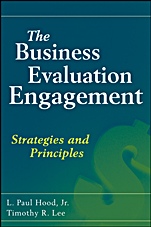
A Reviewers Handbook to Business Valuation: Practical Guidance to the Use and Abuse of a Business Appraisal
ISBN 9780470603406
Autor: L. Paul Hood Jr., Timothy R. Lee
Wydawca: Wiley
Dostępność: 3-6 tygodni
Cena: 449,40 zł
Przed złożeniem zamówienia prosimy o kontakt mailowy celem potwierdzenia ceny.
ISBN13: |
9780470603406 |
ISBN10: |
0470603402 |
Autor: |
L. Paul Hood Jr., Timothy R. Lee |
Oprawa: |
Hardback |
Rok Wydania: |
2011-05-20 |
Ilość stron: |
416 |
Wymiary: |
265x183 |
Tematy: |
KF |
Praise for A Reviewer′s Handbook to Business Valuation
"In business valuation, you don′t know what you don′t know. What a business owner and their advisors should know about business valuations could fill a book. Fortunately, Paul Hood and Tim Lee have written it! In one place, you′ll find the questions to ask, real–word guidance, the best, most understandable, primer on business valuation that you′ll find anywhere, and a list of mistakes that others have made—so that you won′t make them. Don′t even think of authorizing anyone to start or work with you on a business appraisal—until you′ve read this book (and I′d insist all the professionals involved read it too)!"—Stephan R. Leimberg, PublisherLeimberg Information Services Inc.
"In 1999, Kumho Tire Co. brought business valuation into the realm of scientific evidence and under the requirements of Daubert. And yet, courts continue to struggle with their ′concerns about the reliability of [the appraiser′s report]′ (Kohler v Commr., 2006) as much today as they did with this ′highly theoretical exercise′ (Reynolds v Commr., 1970) forty years ago. Has the business appraisal profession made any progress? Have we gotten any more ′scientific?′ Never before has such a complete work been assembled to address the courts′ concerns in this regard. A Reviewer′s Handbook to Business Valuation is a powerful new resource instructing not only reviewers of business valuation as to how to identify issues—it is also a preparer′s "must–have" checklist for reviewing their own work." —Nancy J. Fannon, ASA, CPA/ABV, MCBAFannon Valuation Group
"Recalling the trite adage that one cannot learn to ride a bike by reading a book, Tim Lee successfully conveys complexities of the business valuation profession that can only be offered by someone with years of experie
nce riding the business appraisal bicycle. Leveraging his career as a tax attorney, Paul Hood then takes Tim′s contribution to the next level and bridges the chasm between providers and users of business appraisal services. Readers won′t finish the book and then magically be able to ride the business appraisal bicycle. However, they will better understand the complexities and subtleties of the profession. More importantly, readers will be able to use the information to better serve their legal, accounting, and financial planning clients."—Chris D. Treharne, ASA, MCBA, BVALGibraltar Business Appraisals, Inc.
"Whether you are a business valuation professional or someone who works with valuation practitioners (attorneys, estate planners, CPAs), this book is for you. A Reviewer′s Handbook to Business Valuation provides an overview of valuation processes and methodology and in–depth review of the prevailing business valuation standards. What I found most compelling were the chapters regarding alleged errors, as well as the practical tips and thoughts. As a seasoned valuation practitioner, it gives me a lot to ponder and many things to consider when I perform my next engagement." —Linda B. Trugman, CPA/ABV, MCBA, ASA, MBATrugman Valuation Associates, Inc.
Spis treści:
Foreword.
Preface.
Highlights of this Book.
Who Should Read this Book?
About the Book.
Acknowledgments.
Part I Foundations: Valuing a Business.
Chapter 1 Fundamental Concepts for Defining Value.
Standard of Value.
Level of Value.
Premise of Value.
Conclusion.
Chapter 2 Defining the Engagement.
The Importance of Defining the Engagement.
Defining the Client.
The First Call.
The Subject Entity and Entity Type.
Entity Distinctions and Entity Significance in the Valuation.
State of Entity Organization or Incorporation.
Principal Business Location.
Description of the
Subject Interest.
Purpose and Intended Use of the Valuation.
Date of the Valuation.
Scope of the Work Product.
Summary Assignment Definition Table.
The As of Date of the Appraisal and the Date of the Appraisal Report – Added Thoughts and Perspective.
Conclusion.
Chapter 3 Information Collection and Due Diligence.
Importance of the Information Collection and Due Diligence Phase.
Industry and Economic Considerations.
Financial Information and Analysis.
The Management Interview.
Preparation.
Agenda of a Typical Management Interview.
Conclusion.
Chapter 4 An Overview of Valuation Approaches.
Recognized Valuation Approaches.
Methodology and Level of Value, Direct and Indirect Methodology.
Chapter 5 Valuation Approaches: The Cost Approach.
The Cost Approach.
Typical Adjustments in the Cost Approach (using Tangible Net Asset Value Methods).
To Tax Affect or Not.
Chapter 6 The Income Approach to Value.
Direct Capitalization and Discrete Projection Methods.
Reconciliation of Income Methods to Market Methods.
Typical Adjustments to the Income Statement.
Adjustments That Correspond to Balance Sheet Treatments.
Reconciling or Reclassifying Interim Period Measures to Fiscal Period Measures.
Income Statement Adjustments and Considerations.
Matching the Cost of Capital to the Benefit Stream.
Developing the Cost of Capital.
Summary Examples of Developing the Cost of Equity Capital.
Growth Rate of Earnings / Net Cash Flow.
Finishing the Direct Capitalization Equation.
Developing the Single–Period Benefit (“Ongoing Earnings” and “Ongoing Net Cash Flow”) and Preparation for the Discounted Future Benefits Method.
Example of a Single Period Capitalization to Derive the Market Value of Total Invested Capital.
The Discounted Future Benefits Method (DFB).
Conclusion.
Chapter 7 The Market Approach.Valuation Methods under the Market Approach.
Rules of Thumb.
Transactions Method.
Guideline Public Company Method.
The Fundamental Adjustment.
Guideline Transactions Method.
Chapter 8 Correlation of Value.
Global Considerations in the Correlation Process.
Examples of Correlating a Value Indication.
Conclusion.
Chapter 9 Valuation Discounts and Premiums.
The Levels of Value Revisited.
Perspective on the Control Premium.
Control Premiums – Substance Over Form.
Perspective of the Minority Interest Discount.
Marketability Discounts.
Conclusion.
Part II Business Valuation Standards.
Chapter 10 Uniform Standards of Professional Appraisal Practice (USPAP).
Overview of USPAP Valuation Standards.
USPAP Ethics Rule.
2010–11 USPAP Competency Rule.
2010–11 USPAP Scope of Work Rule.
2010–11 USPAP Jurisdictional Exception Rule.
USPAP Business Appraisal Review (USPAP Standard 3).
Business Appraisal Development: USPAP Standard 9.
Business Appraisal Report Standards USPAP Standard 10.
USPAP Certification Requirement.
USPAP Statements on Appraisal Standards and Advisory Opinions.
Chapter 11 American Society of Appraisers (ASA) Business Valuation Standards.
ASA BVS General Preamble.
ASA BVS–I (General Requirements for Developing a Business Valuation).
ASA BVS–II (Financial Statement Adjustments).
BVS–III (Asset–Based Approach to Business Valuation).
ASA BVS–IV (Income Approach to Business Valuation).
ASA BVS–V (Market Approach to Business Valuation).
ASA BVS–VI (Reaching a Conclusion of Value).
ASA BVS–VII (Valuation Discounts and Premiums).
ASA BVS–VIII (Comprehensive Written Business Valuation Report).
ASA BVS–IX (Intangible Asset Valuation).
ASA SBVS–1 (Guideline Public Company Method).
ASA SBVS–2 (Merger and Acquisition Me
thod).
PG–1 (Litigation Support: Role of the Independent Financial Expert).
PG–2 (Valuation of Partial Ownership Interests).
Chapter 12 The American Institute of Certified Public Accountants (AICPA) Statement on Standards for Valuation Services.
Introduction and Scope.
Overall Engagement Considerations.
Development.
Valuation Approaches and Methods.
Detailed Report.
Summary Report.
Calculation Report.
Oral Report.
Chapter 13 National Association of Certified Valuation Analysts (NACVA) Professional Standards.
Preamble; General and Ethical Standards.
Valuation Services.
Development Standards.
Reporting Standards.
Miscellany.
Chapter 14 The Institute of Business Appraisers (IBA) Business Appraisal Standards.
Standard One: Professional Conduct and Ethics.
Standard Two: Oral Appraisal Reports.
Standard Three: Expert Testimony.
Standard Four: Letter Form Written Appraisal Reports.
Standard Five: Formal Written Appraisal Reports.
Preliminary Reports.
Conclusion.
Chapter 15 Canadian Institute of Chartered Business Valuators Practice Standards.
Practice Standard 110 – Valuation Reports.
Practice Standard 120 – Scope of Work.
Practice Standard 130 – File Documentation.
Practice Standard 210 – Advisory Reports.
Practice Standard 220 – Scope of Work for Advisory Reports.
Practice Standard 230 – File Documentation for Advisory Reports.
Practice Standard 310 – Expert Reports.
Practice Standard 320 – Scope of Work for Expert Reports.
Practice Standard 330 – File Documentation Standards in Expert Reports.
Standard 410 – Limited Critique Reports.
Practice Standard 420 – Scope of Work for Limited Critique Reports.
Practice Standard 430 – File Documentation Standards for Limited Critique Reports.
Practice Bulletins.
Chapter 16 Internal Revenue Service (
IRS) Business Valuation Standards.
IRM 4.48.4.1 – Introduction.
IRM 4.48.2 – Development Guidelines.
IRM 4.48.4.3 – Resolution Guidelines.
IRM 4.48.4.4 – Reporting Guidelines.
Addendum A USPAP 3 Comparison Chart.
Addendum B USPAP 9 Comparison Chart.
Part III Lessons from the Trenches.
Chapter 17 Alleged Errors of Omission by Appraisers.
Failure to Comply With USPAP.
Valuation Credentials.
Too Much Involvement by Counsel in the Appraisal Report Preparation.
Standard of Value.
Valuation Date.
The Subject Property Interest.
Bias.
Sources of Data.
Independence.
Pure Reliance on Case Law.
Site Visits and Management Interviews.
Failure to Provide Sufficient Explanation.
Disregard of Material Facts.
Failure to Find Available Information.
Failure to Adequately Support Selection of Beta.
Improper Sampling Techniques.
Off Financial Statement Items.
Failure to Sufficiently Explain Assumptions.
Insufficient Due Diligence.
Failure to Make Inquiries With Significant Third Parties.
Failure to List All Appraisers′ Qualifications.
Failure to Consider the Small–Stock Premium.
Failure to Factor in Income Tax.
Failure to Set Forth the Adjustments to Financial Statements in the Appraisal Report.
Failure to Have Work be Susceptible of Replication.
Failure to Identify the Multiples Selected.
Failure to Discuss Weightings in the Appraisal Report.
Failure to Distinguish Between Tax and Book Depreciation.
Failure to List Guideline Companies.
Failing to Separate Operating and Nonoperating Aspects of a Company.
Failing to Lay Foundation for Small Stock Premium.
Failing to Justify Capitalization or Discount Rates.
Failure to Think like an Investor.
Failure to Define Capital Structure.
Failure to Adequately Consider the “Willing Buyer”.
Failure to Adequately Consider the “Willing Seller&#
8221;.
Failure to Accurately Describe the Subject Property.
Failure to Properly Classify the Subject Company.
Failure to Explain the Basis for a Valuation Discount.
Failure to Properly Consider the Subject Company′s Growth Rate.
Failure to Explain Market Multiples Selected For Guideline Companies.
Failure to Explain Equal Weighting of Conclusions of Value.
Failure to Consider Differences between the Subject Company and the Guideline Companies.
Failure to Utilize Data From a Guideline Company That the Appraiser′s Own Summary Chart Reflects is Closest to the Subject Company.
Failure to Explain the Selection of the Range of Performance Ratios Selected.
Failure to Adequately Explain Why Companies Selected as Guideline Companies are in Fact Comparable to the Subject Company.
Failure to Explain Why so Few Comparable Properties or Guideline Companies Were Selected.
Chapter 18 Alleged Errors of Commission.
Retrospective Appraisals.
Use of Past Publications of an Appraiser Against the Appraiser.
Using Untested Methodology.
Improper Reliance Upon a Draft Appraisal.
Conclusion of Value Offends Common Sense.
Mathematical Errors.
Inconsistency.
Double Counting.
Conflicting Conclusions of Value.
Sole Reliance upon a Valuation Model.
Incorrect Usage of the Discounted Cash Flow Method.
Skewed Assumptions.
Overemphasis on Buy–Sell Restrictions among Related Parties.
Using Historic Book Value of Assets in Net Asset Value Approach Even Though Asset Appraisals Had Been Obtained.
Misapplication of Pre and Post Tax Figures.
Ignoring the “Hypothetical” Nature of the Willing Buyer or Willing Seller.
Inconsistent Use of Commercially Available Data.
Use of Commercially Available Data That Warns of its Statistical Inaccuracy.
Misstatement of Methodology Employed by Appraisers on Whose Work the Appraiser Has Relied.
Undue Reliance Upon the Work of Another Apprai
ser.
Using a Valuation Method without Laying a Foundation That It Is a Legitimate Method (for example, The Business Broker Method Using Data from the IBA Market Database).
Improper Reliance on a Study That Does Not Completely Provide All of the Relevant Data.
Failure to Apply Discussion of Economic Factors to the Subject Company.
Using Commercially Available Data in a Manner Contrary To How The Data Source Says The Data Should Be Used.
Failure to Proofread Report Prior to Issuance.
Apparently Conflicting Assumptions Used for the Same General Purposes without Sufficient Explanation.
Use of Different Valuation Methods in Valuing the Same Interest in Valuation Reports Offered at Different Times without Adequate Explanation.
Making Improper Adjustments to Financial Statements.
Reliance upon the Pre–IPO Studies and the Restricted Stock Studies to Determine the Discount for Lack of Marketability for a Controlling Interest.
Misreading or Failing to Properly Consider Rev. Rul. 59–60.
Failure to Accurately State the Number of Shares Outstanding in the Subject Company.
Inconsistency in Valuation Methodology Expressed in Testimony Versus the Appraiser′s Methodology as Expressed in another Writing.
Unreasonably Low Projections.
Failure to Add Back Depreciation Included in Computation of Costs–of–Goods–Sold in the Computation of EBDIT.
Combining the Discount for Lack of Control with the Discount for Lack of Marketability.
Utilizing an Assumed Income Tax Rate That Differed From the Actual Past Tax Rates of the Subject Company.
Disconnect between Assumption as to When Revenues or Expenses Would be Received or Incurred and When Those Items Were Actually Received or Incurred.
Error in Computing Terminal Value when Using the Income Approach.
Discounting an Income Stream Only at or Close to the Risk–Free Rate.
Modifying or Abandoning Positions Taken in the Written Appraisal Report du
Koszyk
Książek w koszyku: 0 szt.
Wartość zakupów: 0,00 zł
Informacje


Kontakt
Gambit
Centrum Oprogramowania
i Szkoleń Sp. z o.o.
Al. Pokoju 29b/22-24
31-564 Kraków
Siedziba Księgarni
ul. Kordylewskiego 1
31-542 Kraków
+48 12 410 5991
+48 12 410 5987
+48 12 410 5989
Subskrypcje
Administratorem danych osobowych jest firma Gambit COiS Sp. z o.o. Na podany adres będzie wysyłany wyłącznie biuletyn informacyjny.
Autoryzacja płatności

Informacje na temat autoryzacji płatności poprzez PayU.

© Copyright 2012: GAMBIT COiS Sp. z o.o. Wszelkie prawa zastrzeżone.
Projekt i wykonanie: Alchemia Studio Reklamy