


Wydawcy
Katalog tematyczny
- Archeologia (109)
- Ekonomia, finanse, business (13704)
- Filozofia (1445)
- Historia (3040)
- Języki i językoznawstwo (2356)
- Lifestyle, hobby i rozrywka (475)
- Medycyna (9704)
- Nauki humanistyczne (4)
- Nauki o Ziemi i środowisku (2638)
- Nauki ścisłe (20412)
- Nauki społeczne (8486)
- Nauki techniczne (13450)
- Prawo (1696)
- Publikacje informacyjne i interdyscyplinarne (1288)
- Religia i wierzenia (917)
- Technika komputerowa (4067)
- Zdrowie, relacje międzyludzkie i rozwój osobisty (657)





Informacje szczegółowe o książce
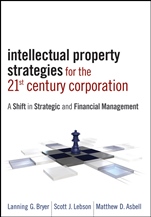
Intellectual Property Strategies for the 21st Century Corporation: A Shift in Strategic and Financial Management
ISBN 9780470601754
Autor: Lanning G. Bryer, Scott J. Lebson, Matthew D. Asbell
Wydawca: Wiley
Dostępność: 3-6 tygodni
Cena: 611,10 zł
Przed złożeniem zamówienia prosimy o kontakt mailowy celem potwierdzenia ceny.
ISBN13: |
9780470601754 |
ISBN10: |
0470601752 |
Autor: |
Lanning G. Bryer, Scott J. Lebson, Matthew D. Asbell |
Oprawa: |
Hardback |
Rok Wydania: |
2011-05-20 |
Ilość stron: |
336 |
Wymiary: |
259x187 |
Tematy: |
LA |
A practical approach to the modern management of intellectual property
The world has changed significantly in the past decade, resulting in new behavior and practices related to the ownership and management of intellectual property.
Intellectual Property Strategies for the 21st–Century Corporation helps executives, attorneys, accountants, managers, owners, and others understand the legal, technological, economic, and cultural changes that have affected IP ownership and management. It provides case studies, practical examples, and advice from seasoned professionals who have adopted new and streamlined methods and practices whether as in–house or outside counsel or service providers.
Take a look inside for:
A practical yet global approach to corporate IP management
An exploration of the numerous new challenges that have changed the ways in which intellectual property is obtained and managed
The latest trends in valuation, exploitation, and protection of intellectual property
Extensive coverage of the legal, financial, accounting, and general business aspects of intellectual property
The combined expertise of lawyers, accountants, economists, and other business professionals
Timely and relevant in view of the global economic recession amidst rampant technological development, this book offers new solutions, practices, policies, and strategies as a result of changes in economies and markets, laws, globalization, environment, and public perception.
Spis treści:
Preface.
Acknowledgments.
CHAPTER 1 Corporate Strategies, Structures, and Ownership of Intellectual Property Rights.
The Importance of Intellectual Property—A Changing Paradigm.
Operational Strategies, Structural Aspects, and Ownership Issues.
Roles: Legal versus Business.
Strategies and Structures for the Management of Intellectual Property Rights.
Ownership Issues.
Maximizing the Potential.
Tax Considerations.
Legal Concerns—Antitrust
Conclusion.
CHAPTER 2 Properly Evaluating a Target with Intellectual Property Rights.
Intellectual Property in Mergers and Acquisitions.
Identifying Intellectual Property in a Potential Target.
Verification of IP Rights.
Evaluating IP in the Target.
Looking Ahead.
Conclusion.
CHAPTER 3 Growth through Acquisition or Merger.
The Merger or Acquisition Target.
Benefits of Mergers and Acquisitions.
Logistics of the Acquisition/Merger.
Conclusion.
CHAPTER 4 Penetrating New Markets through Extension of Goods or Product Lines or Expansion into Other Territories.
Types of New Business in Connection with Patents.
Product Development and Market Exploitation in the 20th Century—Era of Closed Innovation.
Recent Product Development and Market Exploitation—Era of Open Innovation.
Future Product Development and Market Exploitation.
Conclusion.
CHAPTER 5 Intellectual Property: From Asset to Asset Class.
Introducing IP–Enhanced Indexes.
Creating a Market for Intellectual Property.
What Exactly Is a Live Multi–Lot IP Auction?
Moving to a Traded Exchange.
Benefits of the Unit License RightTM Contract Model.
Market Players and Economic Motivations.
Conclusion.
CHAPTER 6 Strategic Patent Management after the Boom: Managing the R&D and Patent Pipeline.
Patent Strategy.
Disruption: The Post 2008 Recession.
A New Strategic Approach.
Review and Communicate the Implementation of the Strategy.
Simplify Executive Communication.
Managing the R&D and Patent Pipeline.
Managing the Patent Staff.
Small Companies and Individual Inventors.
Conclusion.
CHAPTER 7 Global Piracy and Financial Valuation of Intellectual Property Revisited: Threats, Challenges, and Responses.
Google versus China: A Case Study for Cen
sorship in the Context of Economic Might.
Identity Theft, Cyber Gangs, and Alarming National Security Concerns.
Are Proceeds from Counterfeited Goods Funding International Terrorism?
Government and Corporate Responses to International Intellectual Property Theft: Nanotechnology to the Rescue?
Conclusion.
CHAPTER 8 When to Litigate: Rise of the Trolls.
What Is a Non–Practicing Entity?
Why Do You Believe Your Company May Be at Risk?
What Are Your Defenses?
Take Action or Wait?
License or Litigate?
Conclusion.
CHAPTER 9 Using Insurance to Manage Intellectual Property Risk.
Case Study—Bob′s Bike Shop.
Case Study—Blaze Telecommunications.
Issues Raised by the Case Studies.
Why Buy Insurance to Cover Intellectual Property Risk?
That Was Then: Development of Insurance Policies Covering Intellectual Property–Related Risks.
This Is Now: Types of Insurance Policies Responsive to Intellectual Property–Related Risks.
The Details: Process, Paperwork, Pricing, and Getting Claims Paid.
Conclusion: Why IP Insurance Is No Longer Optional.
CHAPTER 10 Exploring Alternative Dispute Resolution.
Why ADR Is Relevant.
Exploring the Use of ADR Methods.
Types of ADR.
Benefits of ADR.
Disadvantages of ADR.
Mediation Is the Best Option for IP Conflicts.
The Best Mediator.
Process and Tips.
International Mediation (Cultural Differences).
The Future of Mediation.
Conclusion.
CHAPTER 11 Outsourcing and Offshoring of IP Legal Work.
Reality Check.
Outsourcing or Offshoring in the IP Context.
Conflicts of Interest.
Confidentiality.
Supervision and Competence of Those Being Supervised.
Attorney–Client Privilege and the Practice of Law.
Billing.
Status Quo.
Conclusion.
CHAPTER 12 Intellectual Property Legal Process Outsourcing.
History.
Data Exchange Risks a
nd Protection Issues.
Outsourcing Economics.
Selecting Projects and Providers: What Is Outsourcable and Who Can Do It?
Case Studies.
Conclusion.
CHAPTER 13 Satisfying Ethical Obligations When Outsourcing Legal Work Overseas.
Permissibility of Outsourcing.
Need for Heightened Investigation and Supervision.
Evaluating the Project.
Evaluating the Potential Provider.
Ensure Absence of Conflicts.
Providing Initial Direction and Ongoing Supervision.
Avoiding the Unauthorized Practice of Law.
Protecting Confidences.
Payment for Outsourced Services.
Insurance.
Conclusion.
CHAPTER 14 The Brave New World of Web 2.0 and the 3–D Internet: How to Prepare Your Company to Participate.
Background: The Internet.
How Do Businesses Participate in Web 2.0 and Beyond?
Risks and Issues to Consider in Web 2.0 and Beyond.
How to Address the Risks and Issues of Participation in Web 2.0 and the 3–D Internet.
Conclusion.
CHAPTER 15 Managing Green Intellectual Property.
Green IP Fast Track.
What’s a Patent Worth?
To Patent or Not to Patent.
The Old Guard: Feeling the Winds of Change.
Conclusion.
CHAPTER 16 Accounting and Tax Policies as They Relate to Intellectual Property.
Types of Intellectual Property.
Accounting for Intangible Assets.
International Financial Reporting Standards.
Tax Treatment for Intangible Assets.
Overview of Section 197—Amortization of Goodwill and Certain Other Intangibles.
Overview of Section 195—Start–Up Expenditures.
Overview of Section 248—Organizational Expenditures.
Overview of Section 174—Research and Experimental Expenditures.
Overview of Section 173—Circulation Expenditures.
Overview of Section 167—Depreciation (Purchased Software).
Conclusion.
CHAPTER 17 Intellectual Property Valuation Techniques and Issues for the
21st Century.
Economic Valuation of IP Assets.
Recent Advances in the Methods of Valuation.
Contemporary Business Practices and Market Structures and IP Value.
Selected Contemporary Institutional Changes.
Conclusion.
About the Editors.
About the Contributors.
Index.
Nota biograficzna:
Lanning G. Bryer is a Partner in the New York office of Ladas & Parry LLP and is Director of the firm′s Mergers, Acquisitions, and Licensing Group. He is coauthor of Intellectual Property Assets in Mergers and Acquisitions, published by Wiley.
Scott J. Lebson is a Partner in the Mergers, Acquisitions, and Licensing Group of Ladas & Parry LLP, focusing primarily on counseling clients with respect to the acquisition, sale, licensing, and securitization of intellectual property rights and related technology.
Matthew D. Asbell is an Associate in the New York office of Ladas & Parry LLP, primarily practicing in the area of domestic and international trademark law.
Okładka tylna:
A practical approach to the modern management of intellectual property
The world has changed significantly in the past decade, resulting in new behavior and practices related to the ownership and management of intellectual property.
Intellectual Property Strategies for the 21st–Century Corporation helps executives, attorneys, accountants, managers, owners, and others understand the legal, technological, economic, and cultural changes that have affected IP ownership and management. It provides case studies, practical examples, and advice from seasoned professionals who have adopted new and streamlined methods and practices whether as in–house or outside counsel or service providers.
Take a look inside for:
A practical yet global approach to corporate IP management
An exploration of the numerous new challenges that
have changed the ways in which intellectual property is obtained and managed
The latest trends in valuation, exploitation, and protection of intellectual property
Extensive coverage of the legal, financial, accounting, and general business aspects of intellectual property
The combined expertise of lawyers, accountants, economists, and other business professionals
Timely and relevant in view of the global economic recession amidst rampant technological development, this book offers new solutions, practices, policies, and strategies as a result of changes in economies and markets, laws, globalization, environment, and public perception.
Koszyk
Książek w koszyku: 0 szt.
Wartość zakupów: 0,00 zł
Informacje


Kontakt
Gambit
Centrum Oprogramowania
i Szkoleń Sp. z o.o.
Al. Pokoju 29b/22-24
31-564 Kraków
Siedziba Księgarni
ul. Kordylewskiego 1
31-542 Kraków
+48 12 410 5991
+48 12 410 5987
+48 12 410 5989
Subskrypcje
Administratorem danych osobowych jest firma Gambit COiS Sp. z o.o. Na podany adres będzie wysyłany wyłącznie biuletyn informacyjny.
Autoryzacja płatności

Informacje na temat autoryzacji płatności poprzez PayU.

© Copyright 2012: GAMBIT COiS Sp. z o.o. Wszelkie prawa zastrzeżone.
Projekt i wykonanie: Alchemia Studio Reklamy