


Wydawcy
Katalog tematyczny
- Archeologia (109)
- Ekonomia, finanse, business (13704)
- Filozofia (1445)
- Historia (3040)
- Języki i językoznawstwo (2356)
- Lifestyle, hobby i rozrywka (475)
- Medycyna (9704)
- Nauki humanistyczne (4)
- Nauki o Ziemi i środowisku (2638)
- Nauki ścisłe (20412)
- Nauki społeczne (8486)
- Nauki techniczne (13450)
- Prawo (1696)
- Publikacje informacyjne i interdyscyplinarne (1288)
- Religia i wierzenia (917)
- Technika komputerowa (4067)
- Zdrowie, relacje międzyludzkie i rozwój osobisty (657)





Informacje szczegółowe o książce
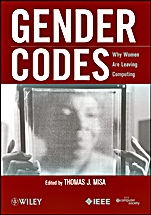
Gender Codes: Why Women Are Leaving Computing
ISBN 9780470597194
Autor: Thomas J. Misa
Wydawca: Wiley
Dostępność: 3-6 tygodni
Cena: 211,05 zł
Przed złożeniem zamówienia prosimy o kontakt mailowy celem potwierdzenia ceny.
ISBN13: |
9780470597194 |
ISBN10: |
0470597194 |
Autor: |
Thomas J. Misa |
Oprawa: |
Paperback |
Rok Wydania: |
2010-08-20 |
Ilość stron: |
328 |
Wymiary: |
254x178 |
Tematy: |
HB |
A fresh, constructive examination of the gender imbalance in computer education and technology The computing profession is facing a serious gender crisis. Women are abandoning the computing field at an alarming rate. Fewer are entering the profession than anytime in the past twenty–five years, while too many are leaving the field in mid–career. With a maximum of insight and a minimum of jargon, Gender Codes explains the complex social and cultural processes at work in gender and computing today. Edited by Thomas Misa and featuring a Foreword by Linda Shafer, Chair of the IEEE Computer Society Press, this insightful collection of essays explores the persisting gender imbalance in computing and presents a clear course of action for turning things around. Through engaging historical accounts, Gender Codes tells the stories of women programmers, systems analysts, managers, and IT executives who flooded this initially attractive field in the 1960s and ′70s. It celebrates their notable successes in all segments of the industry. The book then examines why, while most other science and technology fields have seen steady growth in the number of female participants, the computing field experienced just the opposite. Providing a unique international perspective, the contributors to this unprecedented volume reveal how computing has become male–coded, highlighting the struggles women have faced in the office, the media, and in culture at large. The book assesses the existing intervention strategies and pinpoints why they are not working and what can—and must—be done to stall the exodus. Gender Codes will resonate with female professionals in computing, engineering, and the sciences; with scholars and educators in history, gender/women′s studies, and science and technology; with deans, department chairs, center directors, and those in industry and government with hiring responsibilities; and with staff and executives at foundations and funding agencies.
Foreword ix Preface xiii Contributors xv PART I: TOOLS FOR UNDERSTANDING 1 1 Gender Codes 3 Defining the Problem Thomas J. Misa 2 Computer Science 25 The Incredible Shrinking Woman Caroline Clarke Hayes 3 Masculinity and the Machine Man 51 Gender in the History of Data Processing Thomas Haigh PART II: INSTITUTIONAL LIFE 73 4 A Gendered Job Carousel 75 Employment Effects of Computer Automation Corinna Schlombs 5 Meritocracy and Feminization in Confl ict 95 Computerization in the British Government Marie Hicks 6 Making Programming Masculine 115 Nathan Ensmenger 7 Gender and Computing in the Push–Button Library 143 Greg Downey PART III: MEDIA AND CULTURE 163 8 Cultural Perceptions of Computers in Norway 1980–2007 165 From "Anybody" Via "Male Experts" to "Everybody" Hilde G. Corneliussen 9 Constructing Gender and Technology in Advertising Images 187 Feminine and Masculine Computer Parts Aristotle Tympas, Hara Konsta, Theodore Lekkas, and Serkan Karas PART IV: WOMEN IN COMPUTING 211 10 The Pleasure Paradox 213 Bridging the Gap Between Popular Images of Computing and Women’s Historical Experiences Janet Abbate 11 Programming Enterprise 229 Women Entrepreneurs in Software and Computer Services Jeffrey R. Yost 12 Gender Codes 251 Lessons from History Thomas J. Misa 13 Gender Codes 265 Prospects for Change Caroline Clarke Hayes Bibliography 275 Index 297
THOMAS J. MISA is at the University of Minnesota, where he directs the Charles Babbage Institute, teaches in the graduate program for the History of Science, Technology, and Medicine, and is a faculty member in the Department of Electrical and Computer Engineering.
"This is a very valuable book in dispelling many of the myths about women and computing . . . For anyone interested in understanding why women are not attracted to the computing profession, including teachers and IT managers, this book is highly recommended. It provides an in–depth understanding of how and why we are where we are." (Sex Roles, 2011) "Gender Codes is an important book . . . this is a task in which the IEEE History Center can play a role, and we think our readers can and should as well–they can begin with reading this seminal book" (Bibliography, 1 March 2011) "This book is an excellent introduction to some of the main themes, and there are many more chapters waiting to be written." (IEEE Annals of the History of Computing, 1 April 2011) "Summing up: Recommended [for] all levels/libraries." ( CHOICE, January 2011)
Koszyk
Książek w koszyku: 0 szt.
Wartość zakupów: 0,00 zł
Informacje


Kontakt
Gambit
Centrum Oprogramowania
i Szkoleń Sp. z o.o.
Al. Pokoju 29b/22-24
31-564 Kraków
Siedziba Księgarni
ul. Kordylewskiego 1
31-542 Kraków
+48 12 410 5991
+48 12 410 5987
+48 12 410 5989
Subskrypcje
Administratorem danych osobowych jest firma Gambit COiS Sp. z o.o. Na podany adres będzie wysyłany wyłącznie biuletyn informacyjny.
Autoryzacja płatności

Informacje na temat autoryzacji płatności poprzez PayU.

© Copyright 2012: GAMBIT COiS Sp. z o.o. Wszelkie prawa zastrzeżone.
Projekt i wykonanie: Alchemia Studio Reklamy