


Wydawcy
Katalog tematyczny
- Archeologia (109)
- Ekonomia, finanse, business (13704)
- Filozofia (1445)
- Historia (3040)
- Języki i językoznawstwo (2356)
- Lifestyle, hobby i rozrywka (475)
- Medycyna (9704)
- Nauki humanistyczne (4)
- Nauki o Ziemi i środowisku (2638)
- Nauki ścisłe (20412)
- Nauki społeczne (8486)
- Nauki techniczne (13450)
- Budownictwo lądowe (1045)
- Chemia przemysłowa (2258)
- Elektronika i telekomunikacja (3287)
- Energetyka (1122)
- Inne nauki stosowane (363)
- Inżynieria biochemiczna (507)
- Inżynieria transportu (232)
- Mechanika i materiały (3316)
- Nauka o środowisku (321)
- Rolnictwo (507)
- Technika, ogólnie (475)
- Prawo (1696)
- Publikacje informacyjne i interdyscyplinarne (1288)
- Religia i wierzenia (917)
- Technika komputerowa (4067)
- Zdrowie, relacje międzyludzkie i rozwój osobisty (657)





Informacje szczegółowe o książce
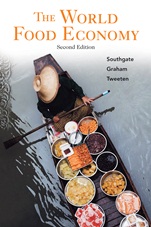
The World Food Economy
ISBN 9780470593622
Autor: Douglas D. Southgate Jr., Douglas H. Graham, Luther G. Tweeten
Wydawca: Wiley
Dostępność: 3-6 tygodni
Cena: 484,05 zł
Przed złożeniem zamówienia prosimy o kontakt mailowy celem potwierdzenia ceny.
ISBN13: |
9780470593622 |
ISBN10: |
0470593628 |
Autor: |
Douglas D. Southgate Jr., Douglas H. Graham, Luther G. Tweeten |
Oprawa: |
Paperback |
Rok Wydania: |
2010-12-31 |
Numer Wydania: |
2nd Edition |
Ilość stron: |
464 |
Wymiary: |
227x156 |
Tematy: |
TV |
Praise for The World Food Economy, Second Edition
“Even for my students who had little or no knowledge of economics and agriculture, the Southgate et al. book was accessible and engaging… The authors’ approach stimulated critical thinking about food, markets, poverty, agriculture and agricultural development… I could not have selected a better book for my course.”
—Drew L. Kershen, University of Oklahoma
“(The authors) show that there have been real economic gains in the battle against world poverty. In addition, they supplement this with non–economic data, such as height and longevity, which fit in beautifully with the strcture and content of my course… The World Food Economy covers the economic aspect of the food problem better than the other books I use.”
—Thomas De Gregori, University of Houston
“I intend to continue using this text in the second edition… The book is accessible for a wide range of students and can be used to expand their understanding of economics and of the globalized economy in which we live.”
—Alex Winter–Nelson, University of Illinois
“Three experienced authors, a convincingly clear structure, and a competently applied dose of economic theory are the well chosen ingredients of The World Food Economy. This excellently written book will be a highly valued contribution to the reading list of economic courses focused on world food problems.”
—Martina Brockmeier, University of Hohenheim, Germany
“The large amount of historical and institutional detail… helps students understand the different observations about demography, agricultural performance and food policy in different regions.”
—David Schodt, St. Olaf College
“The authors combine economic concepts and real–world applications with clarity and insig
ht, giving readers the necessary tools to fully comprehend today’s headlines and the forces that are driving international food markets.”
—Julia Paxton, Ohio University
Spis treści:
Preface to the Second Edition.
Acknowledgments.
1 Introduction.
1.1 Our Focus.
1.2 Chapter Outline.
Key Words and Terms.
Study Questions
2 The Demand Side: How Population Growth and Higher Incomes Affect Food Consumption.
2.1 Classic Malthusianism, Its Modern Variants, and Its Critiques.
2.2 Demographic Transition.
2.3 Trends in Human Numbers, Past and Present.
2.4 Food Consumption and Income.
2.5 Demand Trends and Projections.
2.6 Summary and Conclusions.
Key Words and Terms.
Study Questions.
Appendix: The Fundamental Economics of Demand.
3 The Supply Side: Agricultural Production and Its Determinants.
3.1 The Nature of Agriculture.
3.2 Increases in Agricultural Supply.
3.3 Has Intensification Run Its Course?
3.4 The Food Economy Beyond the Farm Gate.
3.5 Trends in Per Capita Production.
Key Words and Terms.
Study Questions.
Appendix: The Fundamental Economics of Supply.
4 Aligning the Consumption and Production of Food over Time.
4.1 The Desirability of Competitive Equilibrium.
4.2 Public Policy and Markets for Farm Products.
4.3 Historical Trends in the Scarcity of Agricultural Products.
4.4 Outlook for the Twenty–First Century.
Key Words and Terms.
Study Questions.
Appendix: The Coordination of Decentralized Decision Making.
5 Agriculture and the Environment.
5.1 Diagnosing and Correcting Environmental Market Failure.
5.2 Agriculture and Climate Change.
5.3 Farmland Degradation.
5.4 Agriculture and Deforestation.
5.5 Agricultural Development and the Environment.
Key Words and Terms.
Study Questions.
Appendix: Market Failure and Its Remedies.
6 Globalization and Ag
riculture.
6.1 The Theory of Comparative Advantage.
6.2 Trade Distortions and the Economic Impacts.
6.3 The Debate over Globalization.
6.4 Potential Gains from Agricultural Trade Liberalization.
6.5 Multilateral Trade Negotiations and Agriculture.
6.6 The Case for Free Trade Still Stands.
Key Words and Terms.
Study Questions.
Appendix: Two–Country Illustrations of Comparative Advantage.
7 Agriculture and Economic Development.
7.1 Economic Expansion and Structural Transformation.
7.2 Agriculture′s Role in Economic Development.
7.3 Trying to Develop at Agriculture′s Expense.
7.4 Agricultural Development for the Sake of Economic Growth and Diversification.
7.5 Summary and Conclusions.
Key Words and Terms.
Study Questions.
8 Striving for Food Security.
8.1 Who and Where Are the Food–Insecure?
8.2 Achieving Food Security.
8.3 The Food Security Synthesis and Economic Development.
8.4 The Standard Model and Communitarian Values.
Key Words and Terms.
Study Questions.
9 Inter–Regional Differences and Similarities.
9.1 Economic Growth and Income Distribution.
9.2 Population Dynamics.
9.3 Agriculture′s Response to Demand Growth.
9.4 Summary.
Key Words and Terms.
Study Questions.
10 Affluent Nations.
10.1 Standards of Living.
10.2 Population Dynamics.
10.3 The Food Economy.
10.4 Dietary Change and Consumption Trends.
10.5 Summary.
Key Words and Terms.
Study Questions.
11 Asia.
11.1 Trends in GDP per Capita.
11.2 Population Dynamics.
11.3 Agricultural Development.
11.4 Dietary Change, Consumption Trends, and Food Security.
11.5 Summary.
Key Words and Terms.
Study Questions.
12 Latin America and the Caribbean.
12.1 Trends in GDP per Capita.
12.2 Population Dynamics.
12.3 Agricultural Development.
12.4 Dietary Change, Consumption Trends, and Food
Security.
12.5 Summary.
Key Words and Terms.
Study Questions.
13 The Middle East and North Africa.
13.1 Political Realities and Economic Trends.
13.2 Population Dynamics.
13.3 Agricultural Development.
13.4 Dietary Change, Consumption Trends, and Food Security.
13.5 Summary.
Key Words and Terms.
Study Questions.
14 Eastern Europe and the Former Soviet Union.
14.1 Economic Trends since the Fall of Communism.
14.2 Demographic Trends.
14.3 The Agricultural Sector.
14.4 Dietary Change, Consumption Trends, and Food Security.
14.5 Summary.
Key Words and Terms.
Study Questions.
15 Sub–Saharan Africa.
15.1 Trends in GDP per Capita.
15.2 Demographic Trends.
15.3 Agricultural Development.
15.4 Consumption Trends and Food Security.
15.5 Summary.
Key Words and Terms.
Study Questions.
16 The Global Food Economy in the Twenty–First Century.
16.1 Victims of Our Own Success?
16.2 The New Food Economy.
16.3 The Changing Role of Government.
16.4 Back to the Future Food Economy?
Key Words and Terms.
Study Questions.
Abbreviations and Acronyms.
Map Annex.
References.
Index.
Okładka tylna:
Praise for The World Food Economy, Second Edition
“Even for my students who had little or no knowledge of economics and agriculture, the Southgate et al. book was accessible and engaging… The authors’ approach stimulated critical thinking about food, markets, poverty, agriculture and agricultural development… I could not have selected a better book for my course.”
—Drew L. Kershen, University of Oklahoma
“(The authors) show that there have been real economic gains in the battle against world poverty. In addition, they supplement this with non–economic data, such as height and longevity, which fit in beautifully with the strcture and content of my cou
rse… The World Food Economy covers the economic aspect of the food problem better than the other books I use.”
—Thomas De Gregori, University of Houston
“I intend to continue using this text in the second edition… The book is accessible for a wide range of students and can be used to expand their understanding of economics and of the globalized economy in which we live.”
—Alex Winter–Nelson, University of Illinois
“Three experienced authors, a convincingly clear structure, and a competently applied dose of economic theory are the well chosen ingredients of The World Food Economy. This excellently written book will be a highly valued contribution to the reading list of economic courses focused on world food problems.”
—Martina Brockmeier, University of Hohenheim, Germany
“The large amount of historical and institutional detail… helps students understand the different observations about demography, agricultural performance and food policy in different regions.”
—David Schodt, St. Olaf College
“The authors combine economic concepts and real–world applications with clarity and insight, giving readers the necessary tools to fully comprehend today’s headlines and the forces that are driving international food markets.”
—Julia Paxton, Ohio University
Koszyk
Książek w koszyku: 0 szt.
Wartość zakupów: 0,00 zł
Informacje


Kontakt
Gambit
Centrum Oprogramowania
i Szkoleń Sp. z o.o.
Al. Pokoju 29b/22-24
31-564 Kraków
Siedziba Księgarni
ul. Kordylewskiego 1
31-542 Kraków
+48 12 410 5991
+48 12 410 5987
+48 12 410 5989
Subskrypcje
Administratorem danych osobowych jest firma Gambit COiS Sp. z o.o. Na podany adres będzie wysyłany wyłącznie biuletyn informacyjny.
Autoryzacja płatności

Informacje na temat autoryzacji płatności poprzez PayU.

© Copyright 2012: GAMBIT COiS Sp. z o.o. Wszelkie prawa zastrzeżone.
Projekt i wykonanie: Alchemia Studio Reklamy