


Wydawcy
Katalog tematyczny
- Archeologia (109)
- Ekonomia, finanse, business (13704)
- Filozofia (1445)
- Historia (3040)
- Języki i językoznawstwo (2356)
- Lifestyle, hobby i rozrywka (475)
- Medycyna (9704)
- Nauki humanistyczne (4)
- Nauki o Ziemi i środowisku (2638)
- Nauki ścisłe (20412)
- Astronomia (294)
- Biologia (5119)
- Chemia (6540)
- Chemia analityczna (361)
- Chemia fizyczna (346)
- Chemia nieorganiczna (137)
- Chemia organiczna (535)
- Krystalografia (27)
- Minerologia (46)
- Fizyka (3309)
- Matematyka (4574)
- Nauki ścisłe, ogólnie (503)
- Nauki społeczne (8486)
- Nauki techniczne (13450)
- Prawo (1696)
- Publikacje informacyjne i interdyscyplinarne (1288)
- Religia i wierzenia (917)
- Technika komputerowa (4067)
- Zdrowie, relacje międzyludzkie i rozwój osobisty (657)





Informacje szczegółowe o książce
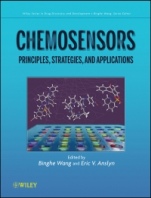
Chemosensors – Principles, Strategies, and Applications
ISBN 9780470592069
Autor: B Wang
Wydawca: Wiley
Dostępność: 3-6 tygodni
Cena: 773,85 zł
Przed złożeniem zamówienia prosimy o kontakt mailowy celem potwierdzenia ceny.
ISBN13: |
9780470592069 |
ISBN10: |
0470592060 |
Autor: |
B Wang |
Oprawa: |
Hardback |
Rok Wydania: |
2011-09-30 |
Ilość stron: |
524 |
Wymiary: |
282x219 |
Tematy: |
PN |
A thorough, accessible, and general overview of chemosensors
Providing a comprehensive overview of chemosensors—organic molecules designed to bind and sense small molecules or metal ions—and their applications, Chemosensors: Principles, Strategies, and Applications is an accessible one–stop resource for analysts, clinicians, and graduate students studying advanced chemistry and chemosensing.
Chemosensors function on a molecular level, generating a signal upon binding. The book reviews their synthesis, design, and applications for detecting biological and organic molecules as well as metal ions. The text highlights applications in drug discovery and catalyses that have not been well covered elsewhere.
Covering such topics as molecular recognition, detection methods, design strategies, and important biological issues, the book is broken into four sections that examine intermolecular interactions, strategies in sensor design, detection methods, and case studies in metal, saccharide, and amino acid sensing.
An indispensable source of information for chemical and biomedical experts using sensors, Chemosensors includes case studies to make the material both accessible and understandable to chemists of all backgrounds.
Spis treści:
Contributors.
Preface.
SECTION 1 FORCES GOVERNING EXCHANGEABLE INTERACTIONS.
1 van der Waals Interactions and the Hydrophobic Effect (Bruce C. Gibb).
2 Ionic, Hydrogen Bond, and p –Cation Interactions (Hector Adam Velazquez and Donald Hamelberg).
3 Covalent Interactions in Chemosensor Design (Yunfeng Cheng, Xiaochuan Yang, and Binghe Wang).
4 Metal Chelation Chemistry (Dongwhan Lee).
SECTION 2 STRATEGIES TOWARD BUILDING THE DESIRED BINDING MOIETY.
5 Scaffold Design Using Computational Chemistry (Dale Drueckhammer).
6 Combinatorial Search of Sensors (Marc Vendrell, Suihan Feng, and Young–Tae Cha
ng).
7 Molecular Imprinting and Sensor Development (Yagang Zhang and Ken D. Shimizu).
8 Dendrimer–Based Sensors (Lin Pu).
9 Nanoparticles and Sensors (Yi–Cheun Yeh, Sarit S. Agasti, Krishnendu Saha, and Vincent M. Rotello).
10 Aptamer Selection, Phage Display, and Sensor Development (Hui Wang, Yan Chen, and Weihong Tan).
11 Sensor Development Using Existing Scaffolds (Hiroyasu Yamaguchi, Tomoki Ogoshi, and Akira Harada).
SECTION 3 DETECTION METHODS IN CHEMOSENSING.
12 Fluorescent Detection Principles and Strategies (Raman Parkesh, Emma B. Veale, and Thorfinnur Gunnlaugsson).
13 New Fluorophore Design (Michael D. Heagy).
14 Colorimetric Sensor Design (Kevin L. Bicker, Sheryl L. Wiskur, and John J. Lavigne).
15 Electrochemical Detection (Simon R. Bayly, George Z. Chen, and Paul D. Beer).
16 Surface Plasmon Resonance and Quartz Crystal Microbalance Methods for Detection of Molecular Interactions (Yang Liu, Archana Jaiswal, Mark A. Poggi, and W. David Wilson).
17 Array–Based Sensors (Pavel Anzenbacher and Manuel A. Palacios).
SECTION 4 CHEMOSENSORS: CASE STUDIES.
18 Design of Cation–Selective Synthetic Fluorescent Indicators (Christoph J. Fahrni).
19 Anion Sensors (Philip A. Gale and Claudia Caltagirone).
20 Chemosensors: Case Studies of Indicators for Organic Molecules (Oleksandr Rusin, Jorge O. Escobedo, and Robert M. Strongin).
21 Molecular Recognition Elements for Toxin and Pathogen Detection (Daniel M. Lewallen, Duane M. Hatch, and Suri S. Iyer).
22 Chemical Sensing and Detection in Forensic Science (Simon W. Lewis).
Index.
Nota biograficzna:
BINGHE WANG, PhD, is Professor and Chair of the Department of Chemistry at Georgia State University as well as Georgia Research Alliance Eminent Scholar in Drug Discovery. He is Editor–
;in–Chief of the journal Medicinal Research Reviews, series editor for the Wiley Series in Drug Discovery and Development, and coeditor of Drug Delivery: Principles and Applications and Carbohydrate Recognition: Biological Problems, Methods, and Applications, both from Wiley.
ERIC V. ANSLYN, PhD, is the Norman Hackerman Professor of Chemistry at the University of Texas at Austin. His research interests include physical organic chemistry, molecular recognition, sensor design, and sensor arrays.
Okładka tylna:
A thorough, accessible, and general overview of chemosensors
Providing a comprehensive overview of chemosensors—organic molecules designed to bind and sense small molecules or metal ions—and their applications, Chemosensors: Principles, Strategies, and Applications is an accessible one–stop resource for analysts, clinicians, and graduate students studying advanced chemistry and chemosensing.
Chemosensors function on a molecular level, generating a signal upon binding. The book reviews their synthesis, design, and applications for detecting biological and organic molecules as well as metal ions. The text highlights applications in drug discovery and catalyses that have not been well covered elsewhere.
Covering such topics as molecular recognition, detection methods, design strategies, and important biological issues, the book is broken into four sections that examine intermolecular interactions, strategies in sensor design, detection methods, and case studies in metal, saccharide, and amino acid sensing.
An indispensable source of information for chemical and biomedical experts using sensors, Chemosensors includes case studies to make the material both accessible and understandable to chemists of all backgrounds.
Koszyk
Książek w koszyku: 0 szt.
Wartość zakupów: 0,00 zł
Informacje


Kontakt
Gambit
Centrum Oprogramowania
i Szkoleń Sp. z o.o.
Al. Pokoju 29b/22-24
31-564 Kraków
Siedziba Księgarni
ul. Kordylewskiego 1
31-542 Kraków
+48 12 410 5991
+48 12 410 5987
+48 12 410 5989
Subskrypcje
Administratorem danych osobowych jest firma Gambit COiS Sp. z o.o. Na podany adres będzie wysyłany wyłącznie biuletyn informacyjny.
Autoryzacja płatności

Informacje na temat autoryzacji płatności poprzez PayU.

© Copyright 2012: GAMBIT COiS Sp. z o.o. Wszelkie prawa zastrzeżone.
Projekt i wykonanie: Alchemia Studio Reklamy