


Wydawcy
Katalog tematyczny
- Archeologia (109)
- Ekonomia, finanse, business (13704)
- Filozofia (1445)
- Historia (3040)
- Języki i językoznawstwo (2356)
- Lifestyle, hobby i rozrywka (475)
- Medycyna (9704)
- Chirurgia (272)
- Inne gałęzie medycyny (1871)
- Medycyna kliniczna (4187)
- Choroby wewnętrzne (514)
- Dermatologia (51)
- Diagnostyka medyczna (3)
- Endokrynologia (144)
- Gastroenterologia (27)
- Geriatria (50)
- Ginekologia i położnictwo (134)
- Hematologia (46)
- Hepatologia (10)
- Kardiologia (71)
- Laryngologia (12)
- Nefrologia (10)
- Neurologia (500)
- Oftalmologia (50)
- Pediatria (33)
- Pulmunologia (32)
- Reumatologia (14)
- Terapia genowa (1)
- Układ mięśniowo-szkieletowy (1)
- Urologia (14)
- Medycyna niekonwencjonalna (14)
- Medycyna przedkliniczna (269)
- Medycyna, ogólnie (1740)
- Medyczne służby pomocnicze (745)
- Studia medyczne (16)
- Weterynaria (548)
- Nauki humanistyczne (4)
- Nauki o Ziemi i środowisku (2638)
- Nauki ścisłe (20412)
- Nauki społeczne (8486)
- Nauki techniczne (13450)
- Prawo (1696)
- Publikacje informacyjne i interdyscyplinarne (1288)
- Religia i wierzenia (917)
- Technika komputerowa (4067)
- Zdrowie, relacje międzyludzkie i rozwój osobisty (657)





Informacje szczegółowe o książce
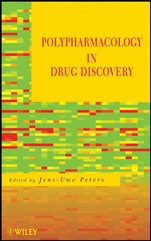
Polypharmacology in Drug Discovery
ISBN 9780470590904
Autor: Jens–Uwe Peters
Wydawca: Wiley
Dostępność: 3-6 tygodni
Cena: 627,90 zł
Przed złożeniem zamówienia prosimy o kontakt mailowy celem potwierdzenia ceny.
ISBN13: |
9780470590904 |
ISBN10: |
0470590904 |
Autor: |
Jens–Uwe Peters |
Oprawa: |
Hardback |
Rok Wydania: |
2012-03-27 |
Ilość stron: |
536 |
Wymiary: |
243x181 |
Tematy: |
MJ |
An essential outline of the main facets of polypharmacology indrug discovery research
Extending drug discovery opportunities beyond the "one drug, onetarget" philosophy, a polypharmacological approach to the treatmentof complex diseases is emerging as a hot topic in both industry andacademic research. Polypharmacology in Drug Discovery presents anoverview of the various facets of polypharmacology and how it canbe applied as an innovative concept for developing medicines fortreating bacterial infections, epilepsy, cancer, psychiatricdisorders, and more. Filled with a collection of instructive casestudies that reinforce the material and illuminate the subject,this practical guide:
Covers the two–sided nature of polypharmacology itscontribution to adverse drug reactions and its benefit in certaintherapeutic drug classes
Addresses the important topic of polypharmacology in drugdiscovery, a subject that has not been thoroughly covered outsideof scattered journal articles
Overviews state–of–the–art approaches and developments to helpreaders understand concepts and issues related topolypharmacology
Fosters interdisciplinary drug discovery research by embracingcomputational, synthetic, in vitro and in vivo pharmacological andclinical aspects of polypharmacology
A clear road map for helping readers successfully navigatearound the problems involved with promiscuous ligands and targets,Polypharmacology in Drug Discovery provides real examples, in–depthexplanations and discussions, and detailed reviews and opinions tospark inspiration for new drug discovery projects.
List of contributors.
Preface.
Introduction: the case for polypharmacology
Andrew L. Hopkins
Part A: Polypharmacology a safety concern in drugdiscovery.
1 The relevance of off–target polypharmacology
Bruce D. Car
2 Screening for safety–relevant off–target activities
Laszlo Urban, Steven Whitebread, Jacques Hamon, DmitriMikhailov and Kamal Azzaoui
2.1 Introduction.
2.2 General aspects.
2.3 Selection of off–targets.
2.4 In silico approaches to off–target profiling.
2.5 Summary and conclusions.
3 Pharmacological promiscuity and molecular properties
Jens–Uwe Peters
3.1 Introduction: pharmacological promiscuity in the history ofdrug discovery.
3.2 Lipophilicity.
3.3 Molecular weight.
3.4 Ionisation state.
3.5 Other molecular descriptors and structural motifs.
3.6 Implications for drug discovery.
4 Kinases as antitargets in genotoxicity
Stephan Kirchner
4.1 Protein Kinases and inhibitor–binding sites.
4.2 Cyclin–Dependent Kinases (CDKs) controlling unregulated cellproliferation.
4.3 Mitotic kinases as guardians protecting cells from aberrantchromosome segregation.
5 Activity at cardiovascular ion channels: a key issue fordrug discovery
Ian M. Bell, Mark T. Bilodeau and Armando A.Lagrutta
5.1 Introduction.
5.2 Screening methods.
5.3 Structural insights into the interaction between drugs andCV ion channels.
5.4 Medicinal Chemistry approaches.
5.5 Conclusion.
6 Prediction of side effects based on fingerprint profilingand data mining
Jacques Migeon
6.1 Introduction to BioPrint.
6.2 The pharmacological fingerprint.
6.3 Antidepressant example.
6.4 Profile similarity at non–therapeutic targets.
6.5 Interpreting the polypharmacology profile.
6.6 Methods.
6.7 Patterns of activity.
6.8 Integrating function profile data with traditionalpharmacological binding data.
6.9 Analysis of the antifungal tioconazole.
6.10 Conclusions.
Part B: Polypharmacology an opportunity for drugdiscovery.
7 Polypharmacological drugs "magic shotguns" forpsychiatric diseases
Wesley K. Kroeze and Bryan L. Roth
7.1 Introduction.
7.2 Definition.
7.3 The discovery and extent of promiscuity among psychiatricdrugs.
7.4 Why are so many psychiatric drugs promiscuous?
7.5 Conclusions.
8 Polypharmacological kinase inhibitors: new hopes for thetherapy of cancer
Annalisa Petrelli
8.1 Targeted therapies: a new era in the treatment ofcancer.
8.2 The single–targeted therapy.
8.3 From single to multi–targeted drugs in cancer therapy.
8.4 Polypharmacology kinase inhibitors in clinical practice andunder development.
8.5 Concluding remarks.
9 Polypharmacology as an emerging trend in antibacterialdiscovery
Lynn L. Silver
9.1 Introduction.
9.2 Classical antibacterial polypharmacology.
9.3 New approaches to multi–targeted single pharmacophores.
9.4 Synthetic lethals.
9.5 Hybrid molecules.
9.6 Conclusions.
10 A "magic shotgun" perspective on anticonvulsantmechanisms
Matt T. Bianchi and Kathy Chuang
10.1 Introduction.
10.2 Anticonvulsant mechanism.
10.3 Defining promiscuity.
10.4 Promiscuity: lessons from endogenous signaling.
10.5 Promiscuity: lessons from anticonvulsantelectrophysiology.
10.6 Use of anticonvulsants in disorders other thanepilepsy.
10.7 Experimental and theoretical support for a "Magic Shotgun"approach.
10.8 Current multi–target strategies.
10.9 Practical considerations.
10.10 Conclusion.
11 Selective Optimization of Side Activities (SOSA): apromising way for drug discovery
Thierry Langer and Camille–Georges Wermuth
11.1 Introduction.
11.2 Definition and principle.
11.3 Rationale of SOSA.
11.4 Establishing the SOSA approach.
11.5 A successful example of the SOSA approach.
11.6 Other examples of SOSA switches.
11.7 Discussion.
11.8 Computer–assisted design using pharmacophores.
11.9 Conclusions.
Part C: Selected approaches to polypharmacological drugdiscovery
12 Selective multi–targeted drugs
Richard Morphy
12.1 Introduction.
12.2 Lead Generation.
12.3 Lead optimization.
12.4 Case studies.
12.5 Summary.
13 Computational multitarget drug discovery
Jeremy A. Horst, Adrian Laurenzi, Brady Bernard and RamSamudrala
13.1 Introduction.
13.2 The pharmacologic hunt of yesteryear.
13.3.Established technological advancements.
13.4.Computational drug discovery.
13.5.Recent technical improvements.
13.6.Emerging concepts.
13.7 Summary.
14 Behavior–based screening as an approach topolypharmacological ligands
Dani Brunner, Vadim Alexandrov, Barbara Caldarone, TaleenHanania, David Lowe, Jeff Schneider and JayaramanChandrasekhar
14.1 The Challenges of CNS Drug Discovery.
14.2 In vivo high throughput screening.
14.3 Screening libraries of compounds.
14.4 Relationship between molecular properties and in vivo CNSactivity.
14.5 Following screening hits in secondary assays.
14.6 Potential therapeutic value of dual adenosinecompounds.
14.7 Summary.
15 Multicomponent Therapeutics
Alexis A. Borisy, Grant R. Zimmermann and JosephLehár
15.1 Introduction.
15.2 Drug synergies are statistically more contextdependent.
15.3 How a synergistic mechanism can lead to therapeuticselectivity.
15.4 Discussion.
Part D: Case studies
16 The discovery of sunitinib as a multitarget treatment ofcancer
Catherine Delbaldo, Camelia Colichi, Marie–Paule Sablin,Chantal Dreyer, Bertrand Billemont, Sandrine Faivre and EricRaymond
16.1 A brief introduction to tumor angiogenesis.
16.2 The discovery of sunitinib: from drug design to firstevidences of clinical activity.
16.3 Pharmacology of sunitinib.
16.4 Safety of sunitinib.
16.5 Activity of Sunitinib.
16.6 Surrogate imaging techniques to capture vascularchanges.
16.7 Surrogate biomarkers.
16.8 Conclusion.
17 Antipsychotics
Claus Riemer
17.1 Definition and diagnosis of schizophrenia.
17.2 Etiology and pathophysiology of schizophrenia.
17.3 Epidemiology.
17.4 Medical practice and treatment options.
17.5 Case studies.
17.6 CATIE.
17.7 Conclusions.
18 Triple Uptake Inhibitors ("Broad Spectrum"Antidepressants)
Phil Skolnick
18.1 Introduction.
18.2 What is the rationale for developing triple uptakeinhibitors as antidepressants?
18.3 Preclinical data.
18.4 Clinical data.
18.5 Concluding remarks.
19 Therapeutic potential of small molecules modulating thecyclooxygenase and 5–lipoxygenase pathway
Stefan Laufer and Wolfgang Albrecht
19.1 Targets of the eicosanoid pathway.
19.2 Rationale for development of dual inhibitors of thecyclooxygenase and 5–lipoxygenase pathway.
19.3 Dual inhibitors of the cyclooxygenase and 5–lipoxygenasepathway.
19.4 Development of Licofelone.
19.5 Conclusions.
20 Drug research leading to imatinib and beyond tonilotinib
Paul W. Manley and Jürg Zimmermann
20.1 Introduction.
20.2 Historical background.
20.3 BCR–ABL1 as the molecular target for CML therapy.
21 Towards antimalarial hybrid drugs
Bernard Meunier
22 Multitarget drugs for the treatment of Alzheimer sdisease
Andrea Cavalli and Maria Laura Bolognesi
22.1 Introduction.
22.2 Case studies.
22.3 Conclusions and perspectives.
23 Carbonic anhydrases: off–targets, add–on activities, oremerging novel targets?
Claudiu Supuran
23.1 Introduction.
23.2 Carbonic anhydrase inhibition.
23.3 Topiramate and zonisamide, antiepileptics with potentantiobesity action.
23.4 Sulfonamide coxibs with antitumor activity due to CA IX/XIIinhibition.
23.5 Sulfamates with steroid sulfatase and carbonic anhydraseinhibitory action as anticancer agents in clinical development.
23.6 Lacosamide, an antiepileptic with a strange binding mode toCas.
23.7 The protein tyrosine kinase inhibitors imatinib andnilotinib strongly inhibit several mammalian CA isoforms.
23.8 Conclusions.
Jens–Uwe Peters, PhD, works in the Medicinal ChemistryDepartment at F. Hoffmann–La Roche. In his ten years at Roche, hehas been involved in numerous drug discovery projects, hascontributed to Early Safety Profiling initiatives, and hasresearched opportunities for polypharmacological drug discovery.Dr. Peters is author or coauthor on twenty–six journal papers andis named on twenty–two patents.
The book is well presented and the price is reasonablefor anyone (drug designers, medicinal chemists, biochemists,biologists, clinicians and toxicologists) interested in any of themany facets that come together to makepolypharmacology. (British Toxicology Society,1 July 2013)
However, anyone interested in the complex issues relatingto drug promiscuity should find this very timely and topical bookto be a reliable and stimulating reference that they will revisitmany times. (ChemMedChem, 2012)
Koszyk
Książek w koszyku: 0 szt.
Wartość zakupów: 0,00 zł
Informacje


Kontakt
Gambit
Centrum Oprogramowania
i Szkoleń Sp. z o.o.
Al. Pokoju 29b/22-24
31-564 Kraków
Siedziba Księgarni
ul. Kordylewskiego 1
31-542 Kraków
+48 12 410 5991
+48 12 410 5987
+48 12 410 5989
Subskrypcje
Administratorem danych osobowych jest firma Gambit COiS Sp. z o.o. Na podany adres będzie wysyłany wyłącznie biuletyn informacyjny.
Autoryzacja płatności

Informacje na temat autoryzacji płatności poprzez PayU.

© Copyright 2012: GAMBIT COiS Sp. z o.o. Wszelkie prawa zastrzeżone.
Projekt i wykonanie: Alchemia Studio Reklamy