


Wydawcy
Katalog tematyczny
- Archeologia (109)
- Ekonomia, finanse, business (13704)
- Filozofia (1445)
- Historia (3040)
- Języki i językoznawstwo (2356)
- Lifestyle, hobby i rozrywka (475)
- Medycyna (9704)
- Nauki humanistyczne (4)
- Nauki o Ziemi i środowisku (2638)
- Nauki ścisłe (20412)
- Nauki społeczne (8486)
- Nauki techniczne (13450)
- Prawo (1696)
- Publikacje informacyjne i interdyscyplinarne (1288)
- Religia i wierzenia (917)
- Technika komputerowa (4067)
- Zdrowie, relacje międzyludzkie i rozwój osobisty (657)





Informacje szczegółowe o książce
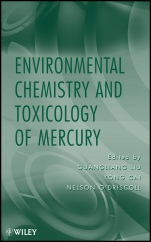
Environmental Chemistry and Toxicology of Mercury
ISBN 9780470578728
Autor: Guangliang Liu, Yong Cai, Nelson ODriscoll
Wydawca: Wiley
Dostępność: 3-6 tygodni
Cena: 708,75 zł
Przed złożeniem zamówienia prosimy o kontakt mailowy celem potwierdzenia ceny.
ISBN13: |
9780470578728 |
ISBN10: |
0470578726 |
Autor: |
Guangliang Liu, Yong Cai, Nelson ODriscoll |
Oprawa: |
Hardback |
Rok Wydania: |
2012-02-20 |
Ilość stron: |
600 |
Wymiary: |
241x162 |
Tematy: |
AT |
The book that looks at mercury′s impact on the planet today
Recent research by the EPA has concluded that one in six womenof childbearing age have unsafe levels of mercury in their bodies,which puts 630,000 newborn babies each year at risk of neurologicalimpairment. Mercury poses severe risks to the health of animals andecosystems around the world, and this book provides the essentialinformation that anyone interested in environmental sciences shouldknow about the fundamentals of the entire mercury cycle.
Comprised of four parts that present an overview of mercury inthe environment, mercury transformations, transport, andbioaccumulation and toxicology, each chapter of EnvironmentalChemistry and Toxicology of Mercury includes the basic concepts ofthe targeted subject, a critical review of that subject, and thefuture research needs.
This book explains the environmental behavior and toxicologicaleffects of mercury on humans and other organisms, and provides abaseline for what is known and what uncertainties remain in respectto mercury cycling. The chapters focus on the fundamental scienceunderlying the environmental chemistry and fate of mercury. Thiswork will be invaluable to a wide range of policy experts,environmental scientists, and other people requiring acomprehensive source for the state of the science in thisfield.
PREFACE xiii
ACKNOWLEDGMENTS xv
CONTRIBUTORS xvii
1 OVERVIEW OF MERCURY IN THE ENVIRONMENT 1
Guangliang Liu, Yong Cai, Nelson O Driscoll, XinbinFeng, and Guibin Jiang
1.1 Introduction / 1
1.2 Toxicity and Health Risks of Mercury Exposure / 2
1.3 Sources of Mercury / 2
1.4 Overview of Mercury Biogeochemical Cycling / 7
1.5 Structure of the Book / 8
1.6 Concluding Remarks / 9
References / 9
PART I ANALYTICAL DEVELOPMENTS 13
2 ADVANCES IN SPECIATION ANALYSIS OF MERCURY IN THEENVIRONMENT 15
Yanbin Li, Yongguang Yin, Guangliang Liu, and YongCai
2.1 Introduction / 15
2.2 Sample Preparation for Hg Speciation in EnvironmentalSamples / 16
2.3 Application of GC Technique in Hg Speciation Analysis /32
2.4 Application of HPLC Technique in Hg Speciation Analysis /36
2.5 Application of Capillary Electrophoresis Techniques in HgSpeciation Analysis / 39
2.6 Application of X–Ray Absorption Spectroscopy in ProbingChemical Microenvironment of Hg / 40
2.7 Application of Stable Isotope Dilution Technique in MercurySpeciation Analysis / 41
2.8 Summary / 43
References / 44
3 MEASURING GAS PHASE MERCURY EMISSIONS FROM INDUSTRIALEFFLUENTS 59
Samuel J. Ippolito, Ylias M. Sabri, and Suresh K.Bhargava
3.1 Introduction / 59
3.2 Standardized Methods for Measuring Mercury / 72
3.3 Mercury Continuous Emission Monitors (CEMs) / 81
3.4 Future Outlook / 95
References / 96
PART II SPECIATION AND TRANSFORMATION 111
4 ATMOSPHERIC CHEMISTRY OF MERCURY 113
Che–Jen Lin, Pattaraporn Singhasuk, and Simo O.Pehkonen
4.1 Introduction / 113
4.2 The Overall Picture / 114
4.3 Chemical Transformations in the Gas Phase / 118
4.4 Chemical Transformations in the Aqueous Phase / 131
4.5 Redox Chemistry at the Interface Between the Atmosphere andEarth s Surfaces / 136
4.6 Atmospheric Implications of the Identified Redox Pathways /139
4.7 Future Research Needs / 143
References / 144
5 MICROBIAL TRANSFORMATIONS IN THE MERCURY CYCLE 155
Chu–Ching Lin, Nathan Yee, and Tamar Barkay
5.1 Introduction / 155
5.2 Mercury Methylation / 158
5.3 Methylmercury Degradation / 168
5.4 Redox Cycling of Inorganic Hg / 169
5.5 Conclusions / 179
References / 180
6 PHOTOREACTIONS OF MERCURY IN AQUATIC SYSTEMS 193
Emma E. Vost, Marc Amyot, and Nelson J.O Driscoll
6.1 Significance of Mercury Photoreactions / 193
6.2 Concepts in Mercury Photoreactions / 194
6.3 Current Methods in Mercury Photochemistry / 209
6.4 Summary / 211
References / 212
7 CHEMICAL SPECIATION OF MERCURY IN SOIL AND SEDIMENT219
Ulf Skyllberg
7.1 Introduction / 219
7.2 Physicochemical Properties, Oxidation States, ChemicalForms, Structures, and Concentrations of Mercury in the Environment/ 220
7.3 Aqueous Phase: Major Ligands and Their Affinities forMercury(II) / 222
7.4 Liquid and Solid Phases of Mercury in Soils and Sediments /229
7.5 Reactions of Mercury(II) with Soil and Sediment ParticleSurfaces / 231
7.6 Stabilization of Nanoparticulate Mercury(II) Sulfides byNatural Organic Matter / 237
7.7 Solubility and Chemical Speciation of Mercury(II) in Soilsand Sediments / 237
7.8 Methods for Studying the Chemistry of Mercury(II) in Soilsand Sediments / 248
7.9 Future Research Needs / 249
References / 252
8 THE EFFECTS OF DISSOLVED ORGANIC MATTER ON MERCURYBIOGEOCHEMISTRY 259
Chase A. Gerbig, Joseph N. Ryan, and George R. Aiken
8.1 Introduction / 259
8.2 Dissolved Organic Matter / 260
8.3 Field Observations / 263
8.4 Effects of DOM on Mercury Distributions Between Solution andParticles / 265
8.5 Mercury Binding Strength / 268
8.6 Mercury Binding Environment / 271
8.7 Methylmercury Binding Strength and Environment / 274
8.8 DOM and Mercury Mineral Dissolution / 276
8.9 DOM and Mercury Mineral Precipitation / 280
References / 284
9 TRACKING GEOCHEMICAL TRANSFORMATIONS AND TRANSPORT OFMERCURY THROUGH ISOTOPE FRACTIONATION 293
Holger Hintelmann and Wang Zheng
9.1 Introduction / 293
9.2 Fractionation of Mercury Isotopes in Environmental Processes/ 300
9.3 Hg Isotope Variations in Nature / 315
9.4 Summary / 319
References / 320
PART III TRANSPORT AND FATE 329
10 ATMOSPHERIC TRANSPORT OF MERCURY 331
Oleg Travnikov
10.1 Introduction / 331
10.2 General Concepts of Mercury Cycling in the
Atmosphere / 331
10.3 Methods for Studying Atmospheric Mercury Transport /336
10.4 Assessments of Airborne Mercury Pollution / 342
10.5 Knowledge Gaps / 354
References / 356
11 ADSORPTION OF MERCURY ON SOLIDS IN THE AQUATIC ENVIRONMENT367
Guangliang Liu, Yanbin Li, and Yong Cai
11.1 Introduction / 367
11.2 Adsorption of Mercury on Solids / 369
11.3 Role of Colloids in Mercury Adsorption / 374
11.4 Concluding Remarks / 380
References / 381
12 EXCHANGE OF ELEMENTAL MERCURY BETWEEN THE OCEANS AND THEATMOSPHERE 389
Asif Qureshi, Matthew Macleod, Elsie Sunderland, and KonradHungerbu¨ hler
12.1 Introduction / 389
12.2 Models of Gas Exchange of Elemental Mercury at theAir Sea Interface / 390
12.3 Field Studies of Ocean–To–Air Fluxes of Mercury / 398
12.4 Rate Constants for Reduction and Oxidation of MercurySpecies in Ocean Waters / 400
12.5 Modeling Studies Estimating Oceanic Air Sea Exchange/ 411
12.6 Conclusions and Future Directions / 415
References / 416
13 EXCHANGE OF MERCURY BETWEEN THE ATMOSPHERE AND TERRESTRIALECOSYSTEMS 423
Mae Sexauer Gustin
13.1 General Overview / 423
13.2 Methods and Tools Applied for Measurement and Understandingof Air Terrestrial Surface Exchange / 425
13.3 Measured Fluxes / 433
13.4 Conclusions / 442
References / 444
PART IV BIOACCUMULATION, TOXICITY, AND METALLOMICS 453
14 BIOACCUMULATION AND BIOMAGNIFICATION OF MERCURY THROUGHFOOD WEBS 455
Karen Kidd, Meredith Clayden, and Tim Jardine
14.1 Introduction / 455
14.2 Mercury in Aquatic and Terrestrial Organisms / 457
14.3 Mercury within Organisms / 464
14.4 Factors Affecting Mercury in Biota / 465
14.5 Biomagnification of Mercury Through Food Webs / 474
14.6 Mercury Stable Isotopes in Bioaccumulation Studies /481
14.7 Case Study Kejimkujik National Park and HistoricSite, Nova Scotia, Canada / 482
14.8 Conclusions / 484
References / 485
15 A REVIEW OF MERCURY TOXICITY WITH SPECIAL REFERENCE TOMETHYLMERCURY 501
Mineshi Sakamoto, Katsuyuki Murata, Akiyoshi Kakita, andMasanori Sasaki
15.1 Introduction / 501
15.2 Global Mercury Emission into the Atmosphere / 502
15.3 Metabolism and Toxicity of Chemical Forms of Mercury /503
15.4 Risk Assessment of Prenatal Exposure to Methylmercury /509
15.5 Risks and Benefits of Fish Consumption for BrainDevelopment / 510
15.6 Exceptional Methylmercury Exposure Through Rice / 510
15.7 Summary / 511
References / 511
16 METALLOMICS OF MERCURY: ROLE OF THIOLANDSELENOL–CONTAINING BIOMOLECULES 517
Feiyue Wang, Marcos Lemes, and Mohammad A.K. Khan
16.1 Introduction / 517
16.2 Metallomics of Mercury / 517
16.3 Mercury and Methylmercury Complexes with Thiol–ContainingBiomolecules / 519
16.4 Mercury and Methylmercury Binding to Selenol–ContainingBiomolecules / 522
16.5 Lability of Mercury or Methylmercury Complexes with Thiolsor Selenols / 524
16.6 Thiol–Containing Biomolecules in the Uptake and Metabolismof Mercury / 526
16.7 Selenium Aided Biomineralization of Mercury andMethylmercury / 529
16.8 Analytical and Modeling Approaches / 531
16.9 Conclusion / 538
References / 538
17 HUMAN HEALTH SIGNIFICANCE OF DIETARY EXPOSURES TOMETHYLMERCURY 545
Anna L. Choi and Philippe Grandjean
17.1 Introduction / 545
17.2 Methylmercury Exposure / 546
17.3 Nutrients in Fish and Seafood / 548
17.4 Major Prospective Cohort Studies / 549
17.5 Health Effects / 552
17.6 Cardiovascular Outcomes / 555
17.7 Nutrient and Methylmercury Exposure as Predictors ofDevelopmental Outcomes / 556
17.8 Confounding Variables / 557
17.9 Risk Assessment and Exposure Imprecision / 558
17.10 Conclusions / 559
References / 561
INDEX 569
Guangliang Liu, PhD, is Research Scientist in the Departmentof Chemistry and Biochemistry, Florida International University,where he manages the Mercury Laboratory.
Yong Cai, PhD, is Professor in the Department ofChemistry and Biochemistry, Florida International University. Hehas been working on environmental chemistry and the geochemistry ofmercury for almost twenty years.
Nelson O′Driscoll, PhD, is Canada Research Chair inEnvironmental Biogeochemistry and Associate Professor in theDepartment of Earth and Environmental Science, AcadiaUniversity.
JOURNAL OF APPLIEDTOXICOLOGY BRITISH TOXICOLOGY SOCIETYNEW ENVIRONMENTAL CHEMISTRYGROUP TOXICOLOGY ECOTOXICOLOGY INTERNATIONAL JOURNAL OFENVIRONMENTAL SCIENCES GREEN CHEMISTRY ENVIRONMENTALENGINEERING APPLIEDGEOCHEMISTRY CHEMICAL & ENGINEERINGNEWS CLINICAL TOXICOLOGY ENVIRONMENTALGEOSCIENCES ENVIRONMENTAL SCIENCE ANDTECHNOLOGY ENVIRONMENTAL TOXICOLOGY& CHEMISTRY INSTRUMENTATION SCIENCE &TECHNOLOGY INTERNATIONAL JOURNAL OFTOXICOLOGY JOURNAL OF TOXICOLOGY ANDENVIRONMENTAL HEALTH SCIENCE NEWS TOXICOLOGY MECHANISMS, ANDMETHODS
Koszyk
Książek w koszyku: 0 szt.
Wartość zakupów: 0,00 zł
Informacje


Kontakt
Gambit
Centrum Oprogramowania
i Szkoleń Sp. z o.o.
Al. Pokoju 29b/22-24
31-564 Kraków
Siedziba Księgarni
ul. Kordylewskiego 1
31-542 Kraków
+48 12 410 5991
+48 12 410 5987
+48 12 410 5989
Subskrypcje
Administratorem danych osobowych jest firma Gambit COiS Sp. z o.o. Na podany adres będzie wysyłany wyłącznie biuletyn informacyjny.
Autoryzacja płatności

Informacje na temat autoryzacji płatności poprzez PayU.

© Copyright 2012: GAMBIT COiS Sp. z o.o. Wszelkie prawa zastrzeżone.
Projekt i wykonanie: Alchemia Studio Reklamy