


Wydawcy
Katalog tematyczny
- Archeologia (109)
- Ekonomia, finanse, business (13704)
- Filozofia (1445)
- Historia (3040)
- Języki i językoznawstwo (2356)
- Lifestyle, hobby i rozrywka (475)
- Medycyna (9704)
- Nauki humanistyczne (4)
- Nauki o Ziemi i środowisku (2638)
- Nauki ścisłe (20412)
- Astronomia (294)
- Biologia (5119)
- Chemia (6540)
- Chemia analityczna (361)
- Chemia fizyczna (346)
- Chemia nieorganiczna (137)
- Chemia organiczna (535)
- Krystalografia (27)
- Minerologia (46)
- Fizyka (3309)
- Matematyka (4574)
- Nauki ścisłe, ogólnie (503)
- Nauki społeczne (8486)
- Nauki techniczne (13450)
- Prawo (1696)
- Publikacje informacyjne i interdyscyplinarne (1288)
- Religia i wierzenia (917)
- Technika komputerowa (4067)
- Zdrowie, relacje międzyludzkie i rozwój osobisty (657)





Informacje szczegółowe o książce
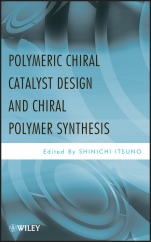
Polymeric Chiral Catalyst Design and Chiral Polymer Synthesis
ISBN 9780470568200
Autor: Shinichi Itsuno
Wydawca: Wiley
Dostępność: 3-6 tygodni
Cena: 762,30 zł
Przed złożeniem zamówienia prosimy o kontakt mailowy celem potwierdzenia ceny.
ISBN13: |
9780470568200 |
ISBN10: |
0470568208 |
Autor: |
Shinichi Itsuno |
Oprawa: |
Hardback |
Rok Wydania: |
2011-09-23 |
Ilość stron: |
522 |
Wymiary: |
245x167 |
Tematy: |
PN |
Get to grips with chiral polymer synthesis and its application to asymmetric catalysis
Written and edited by leading experts from around the world, Polymeric Chiral Catalyst Design and Chiral Polymer Synthesis is the first book to bring together in a coherent and cohesive form the history and latest research on chiral polymers.
Because they can be easily separated from a reaction mixture and reused, repeatedly, polymer–immobilized chiral catalysts have received considerable attention in recent years, making the book a particularly timely contribution to the literature on the subject.
Covering polymer–immobilized catalysts, the design of polymer–immobilized asymmetric catalysts, the synthetic aspects of chiral polymers, and dendrimers, the book includes chapters on peptide–catalyzed and enantioselective synthesis,optically–active polymers, continuous flow processes, and much more.
With up–to–the–minute explanations of potential applications in academic and industry R&D, Polymeric Chiral Catalyst Design and Chiral Polymer Synthesis is an absolute must–have resource. Not only is it suitable for use as an introductory text for students, it also provides a much–needed one–stop handbook for professionals interested in the chemistry, properties, and applications of chiral polymers.
Spis treści:
PREFACE xiii
FOREWORD xvii
CONTRIBUTORS xix
1 An Overview of Polymer–Immobilized Chiral Catalysts and Synthetic Chiral Polymers 1
Shinichi Itsuno
1.1 Introduction / 1
1.2 Polymeric Chiral Catalyst / 2
1.3 Synthesis of Optically Active Polymers / 8
2 Polymer–Immobilized Chiral Organocatalyst 17
Naoki Haraguchi and Shinichi Itsuno
2.1 Introduction / 17
2.2 Synthesis of Polymer–immobilized Chiral Organocatalyst / 18
2.3 Polymer–immobilized Cinchona Alkaloids / 22
2.4 Other Polymer–i
mmobilized Chiral Basic Organocatalysts / 27
2.5 Polymer–immobilized Cinchona Alkaloid Quaternary Ammonium Salts / 28
2.6 Polymer–immobilized MacMillan Catalysts / 35
2.7 Polymer–immobilized Pyrrolidine Derivatives / 42
2.8 Other Polymer–immobilized Chiral Quaternary Ammonium Salts / 46
2.9 Polymer–immobilized Proline Derivatives / 46
2.10 Polymer–immobilized Peptides and Poly(amino acid)s / 50
2.11 Polymer–immobilized Chiral Acidic Organocatalysts / 50
2.12 Helical Polymers as Chiral Organocatalysts / 51
2.13 Cascade Reactions Using Polymer–immobilized Chiral Organocatalysts / 52
2.14 Conclusions / 54
3 Asymmetric Synthesis Using Polymer–Immobilized Proline Derivatives 63
Michelangelo Gruttadauria, Francesco Giacalone, and Renato Noto
3.1 Introduction / 63
3.2 Polymer–supported Proline / 66
3.3 Polymer–supported Prolinamides / 73
3.4 Polymer–supported Proline–Peptides / 75
3.5 Polymer–supported Pyrrolidines / 78
3.6 Polymer–supported Prolinol and Diarylprolinol Derivatives / 80
3.7 Conclusions and Outlooks / 84
4 Peptide–Catalyzed Asymmetric Synthesis 91
Kazuaki Kudo and Kengo Akagawa
4.1 Introduction / 91
4.2 Poly(amino acid) Catalysts / 94
4.3 Tri– and Tetrapeptide Catalysts / 99
4.4 Longer Peptides with a Secondary Structure / 110
4.5 Others / 118
4.6 Conclusions and Outlooks / 119
5 Continuous Flow System using Polymer–Supported Chiral Catalysts 125
Santiago V. Luis and Eduardo Garcıa–Verdugo
5.1 Introduction / 125
5.2 Asymmetric Polymer–supported, Metal–based Catalysts and Reagents / 132
5.3 Polymer–supported Asymmetric Organocatalysts / 147
5.4 Polymer–supported Biocatalysts / 151
5.5 Conclusions / 152
6 Chiral Synthesis on Polymer Support: A Combinatorial Approach 157
Deepak B. Salunke and Chung–Ming Sun
6.1 Introduction / 157
6.2 Chiral Synthesis of Complex Polyfunctional Molecules on Polymer Support / 160
6.3 Conclusions / 194
7 Synthesis and Application of Helical Polymers with Macromolecular Helicity Memory 201
Hiroki Iida and Eiji Yashima
7.1 Introduction / 201
7.2 Macromolecular Helicity Memory / 203
7.3 Enantioselective Reaction Assisted by Helical Polymers with Helicity Memory / 218
7.4 Conclusions / 219
8 Poly(isocyanide)s, Poly(quinoxaline–2,3–diyl)s, and Related Helical Polymers Used as Chiral Polymer Catalysts in Asymmetric Synthesis 223
Yuuya Nagata and Michinori Suginome
8.1 Introduction / 223
8.2 Asymmetric Synthesis of Poly(isocyanide)s / 224
8.3 Asymmetric Synthesis of Poly(quinoxaline)s / 244
8.4 Enantioselective Catalysis using Helical Polymers / 255
8.5 Conclusions / 262
9 C2 Chiral Biaryl Unit–Based Helical Polymers and Their Application to Asymmetric Catalysis 267
Takeshi Maeda and Toshikazu Takata
9.1 Introduction / 267
9.2 Synthesis of C2 Chiral Unit–based Helical Polymers / 269
9.3 Asymmetric Reactions Catalyzed by Helical Polymer Catalysts / 282
9.4 Conclusions / 289
10 Immobilization of Multicomponent Asymmetric Catalysts (MACs) 293
Hiroaki Sasai and Shinobu Takizawa
10.1 Introduction / 293
10.2 Dendrimer–Supported and Dendronized Polymer–supported MACs / 294
10.3 Nanoparticles as Supports for Chiral Catalysts [13] / 302
10.4 The Catalyst Analog Approach [24] / 311
10.5 Metal–bridged Polymers as Heterogeneous Catalysts: An Immobilization Method for MACs Without Using Any Support [26] / 314
10.6 Conclusion / 318
11 Optically Active Polymer and Dendrimer Synthesis and Their Use in Asymmetric Synthesis 323
Qiao–Sheng Hu and Lin Pu
11.1 Introduction / 323
11
.2 Synthesis and Application of BINOL/BINAP–based Optically Active Polymers / 324
11.3 Synthesis and Application of Optically Active Dendrimers / 355
11.4 Conclusions / 360
12 Asymmetric Polymerizations of N–Substituted Maleimides 365
Kenjiro Onimura and Tsutomu Oishi
12.1 Introduction / 365
12.2 Chirality of 1–Mono– or 1,1–Disubstituted and 1,2–Disubstituted Olefins / 365
12.3 Asymmetric Polymerizations of Achiral N–Substituted Maleimides / 368
12.4 Anionic Polymerization Mechanism of RMI / 371
12.5 Asymmetric Polymerizations of Chiral N–Substituted Maleimides / 372
12.6 Structure and Absolute Stereochemistry of Poly(RMI) / 373
12.7 Asymmetric Radical Polymerizations ofN–Substituted Maleimides / 378
12.8 Chiral Discrimination Using Poly(RMI) / 378
12.9 Conclusions / 384
13 Synthesis of Hyperbranched Polymer Having Binaphthol Units via Oxidative Cross–Coupling Polymerization 389
Shigeki Habaue
13.1 Introduction / 389
13.2 Oxidative Cross–coupling Reaction between 2–Naphthol and 3–Hydroxy–2–naphthoate / 391
13.3 Oxidative Cross–coupling Polymerization Affording Linear Poly(binaphthol) / 392
13.4 Oxidative Cross–coupling Polymerization Leading to a Hyperbranched Polymer / 396
13.5 Photoluminescence Properties of Hyperbranched Polymers / 400
13.6 Conclusions / 403
14 Optically Active Polyketones 407
Kyoko Nozaki
14.1 Introduction / 407
14.2 Asymmetric Synthesis of Isotactic Poly(propylene–alt–co) / 409
14.3 Asymmetric Synthesis of Isotactic Syndiotactic Poly(styrene–alt–co) / 411
14.4 Asymmetric Terpolymers Consisting of Two Kinds of Olefins and Carbon Monoxide / 413
14.5 Asymmetric Polymerization of Other Olefins with CO / 414
14.6 Chemical Transformations of Optically Active Polyketones / 415
14.7 C
onformational Studies on the Optically Active Polyketones / 416
14.8 Conclusions / 419
15 Synthesis and Function of Chiral p–Conjugated Polymers from Phenylacetylenes 423
Toshiki Aoki, Takashi Kaneko, and Masahiro Teraguchi
15.1 Introduction / 423
15.2 Helix–sense–selective Polymerization (HSSP) of Substituted Phenylacetylenes and Function of the Resulting One–handed Helical Poly(phenylacetylene)s / 425
15.3 Chiral Desubstitution of Side Groups in Membrane State / 439
15.4 Synthesis of Chiral Polyradicals / 446
16 P–Stereogenic Oligomers, Polymers, and Related Cyclic Compounds 457
Yasuhiro Morisaki and Yoshiki Chujo
16.1 Introduction / 457
16.2 P–Stereogenic Oligomers Containing Chiral "P" Atoms in the Main Chain / 458
16.3 P–Stereogenic Polymers Containing Chiral "P" Atoms in the Main Chain / 470
16.4 Cyclic Phosphines Using P–Stereogenic Oligomers as Building Blocks / 475
16.5 Conclusions / 485
INDEX 489
Nota biograficzna:
Shinichi Itsuno, PhD, is a Professor at Toyohashi University of Technology. His research focuses on the interface between organic chemistry and polymer chemistry, and is especially concerned with asymmetric synthesis, reactive polymers, and new polymer synthesis. Dr. Itsuno has written over a hundred papers, as well as thirty book chapters.
Okładka tylna:
Get to grips with chiral polymer synthesis and its application to asymmetric catalysis
Written and edited by leading experts from around the world, Polymeric Chiral Catalyst Design and Chiral Polymer Synthesis is the first book to bring together in a coherent and cohesive form the history and latest research on chiral polymers.
Because they can be easily separated from a reaction mixture and reused, repeatedly, polymer–immobilized chiral catalysts have received considerable attention in recent ye
ars, making the book a particularly timely contribution to the literature on the subject.
Covering polymer–immobilized catalysts, the design of polymer–immobilized asymmetric catalysts, the synthetic aspects of chiral polymers, and dendrimers, the book includes chapters on peptide–catalyzed and enantioselective synthesis,optically–active polymers, continuous flow processes, and much more.
With up–to–the–minute explanations of potential applications in academic and industry R&D, Polymeric Chiral Catalyst Design and Chiral Polymer Synthesis is an absolute must–have resource. Not only is it suitable for use as an introductory text for students, it also provides a much–needed one–stop handbook for professionals interested in the chemistry, properties, and applications of chiral polymers.
Koszyk
Książek w koszyku: 0 szt.
Wartość zakupów: 0,00 zł
Informacje


Kontakt
Gambit
Centrum Oprogramowania
i Szkoleń Sp. z o.o.
Al. Pokoju 29b/22-24
31-564 Kraków
Siedziba Księgarni
ul. Kordylewskiego 1
31-542 Kraków
+48 12 410 5991
+48 12 410 5987
+48 12 410 5989
Subskrypcje
Administratorem danych osobowych jest firma Gambit COiS Sp. z o.o. Na podany adres będzie wysyłany wyłącznie biuletyn informacyjny.
Autoryzacja płatności

Informacje na temat autoryzacji płatności poprzez PayU.

© Copyright 2012: GAMBIT COiS Sp. z o.o. Wszelkie prawa zastrzeżone.
Projekt i wykonanie: Alchemia Studio Reklamy