


Wydawcy
Katalog tematyczny
- Archeologia (109)
- Ekonomia, finanse, business (13704)
- Filozofia (1445)
- Historia (3040)
- Języki i językoznawstwo (2356)
- Lifestyle, hobby i rozrywka (475)
- Medycyna (9704)
- Nauki humanistyczne (4)
- Nauki o Ziemi i środowisku (2638)
- Nauki ścisłe (20412)
- Nauki społeczne (8486)
- Nauki techniczne (13450)
- Prawo (1696)
- Publikacje informacyjne i interdyscyplinarne (1288)
- Religia i wierzenia (917)
- Technika komputerowa (4067)
- Zdrowie, relacje międzyludzkie i rozwój osobisty (657)





Informacje szczegółowe o książce
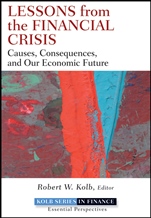
Lessons from the Financial Crisis: Causes, Consequences, and Our Economic Future
ISBN 9780470561775
Autor: Rob Quail
Wydawca: Wiley
Dostępność: 3-6 tygodni
Cena: 455,70 zł
Przed złożeniem zamówienia prosimy o kontakt mailowy celem potwierdzenia ceny.
ISBN13: |
9780470561775 |
ISBN10: |
0470561777 |
Autor: |
Rob Quail |
Oprawa: |
Hardback |
Rok Wydania: |
2010-06-18 |
Ilość stron: |
668 |
Wymiary: |
259x193 |
Tematy: |
KF |
Kolb Series in Finance
Essential Perspectives
LESSONS from the FINANCIAL CRISIS
The Robert W. Kolb Series in Finance is an unparalleled source of information dedicated to the most important issues in modern finance. Each book focuses on a specific topic in the field of finance and contains contributed chapters from both respected academics and experienced financial professionals. As part of the Robert W. Kolb Series in Finance, Lessons from the Financial Crisis provides a comprehensive understanding of the conceptual underpinnings of the issues that lie at the heart of this crisis.
Lessons from the Financial Crisis puts the events that have transpired in perspective and explores what can be done to avoid future missteps. Throughout the book, you′ll be introduced to different points of view on the crisis, with chapters discussing everything from subprime mortgages and securitization to risk modeling and regulation, as well as related research that will help you develop a deeper understanding of the economic obstacles we have all faced.
Topics touched upon include:
The possible causes of this crisis and its emerging consequences for our economy and lives
The decisions of the Federal Reserve and how the very actions it has taken to avert disaster may be laying the foundation for more financial problems in the future
The international dimensions of the financial crisis
The role of regulation, its absence, and the failure of regulators to enforce existing rules
And much more
The recent financial crisis has been an economic event that ranks second only to the Great Depression. With this book as your guide, you′ll gain a firm understanding of what occurred and why, and discover how we might be able to move forward in light of everything that has happened.
Spis treści:
Part 1. Overview of the Crisis.
Chapter 1. Leverage and Liberal Democrac
y (George Bragues).
Chapter 2. A Property Economics Explanation of the Global Financial Crisis
(Gunnar Heinsohn and Frank Decker).
Chapter 3. Of Subprimes and Sundry Symptoms: The Political Economy of the Financial Crisis (Ashok Bardhan).
Chapter 4. The Political Economy of the Financial Crisis of 2008 (Roger D. Congleton).
Chapter 5. The Global Financial Crisis of 2008: What Went Wrong? (Hershey H. Friedman and Linda Weiser Friedman).
Chapter 6. The Roots of the Crisis and How to Bring It to a Close (James K. Galbraith).
Chapter 7. Enron Rerun: The Credit Crisis in Three “Easy” Pieces (Jonathan C. Lipson).
Chapter 8. The Global Crisis and Its Origins (Peter L. Swan).
Chapter 9. Four Paradoxes of the 2008/2009 Economic and Financial Crisis (John E. Marthinsen).
Chapter 10. Understanding the Subprime Financial Crisis (Steven L. Schwarcz).
Part 2. Causes and Consequences of the Financial Crisis.
Chapter 11. The Origins of the Financial Crisis (Martin N. Baily, Robert E. Litan, and Matthew S. Johnson).
Chapter 12. Ten Myths about Subprime Mortgages (Yuliya Demyanyk).
Chapter 13. The Financial Crisis: How Did We Get Here and Where Do We Go Next? New Evidence on How the Crisis Spread among Financial Institutions (James R. Barth, Tong Li, Wenling Lu, and Glenn Yago).
Chapter 14. A Decade of Living Dangerously: The Causes and Consequences of the Mortgage, Financial and Economic Crises (Jon Garfinkel and Jarjisu Sa–Aadu).
Chapter 15. Making Sense of the Subprime Crisis (Kristopher Gerardi, Andreas Lehnert, Shane M. Sherlund and Paul Willen).
Chapter 16. Miraculous Financial Engineering or "Legacy" Assets? (Ivo Pezzuto).
Chapter 17. The Making and Ending of the Financial Crisis of 2008? (Austin Murphy).
Chapter 18. The Subprime Mortgage Problem: Causes and Likely Cure (Ronald D. Utt).
Chapter 19. Sequence of Asset Bubbles and the Global Financial Crisis (Abol Jalilvand and A.G. Malliaris).<
br>Part 3. Borrowers.
Chapter 20. The Past, Present, and Future of Subprime Mortgages (Shane M. Sherlund).
Chapter 21. FHA Loans and Policy Responses to Credit Availability (Marsha Courchane, Rajeev Darolia, and Peter Zorn).
Chapter 22. The Single–Family Mortgage Industry in the Internet Era: Technology Developments and Market Structure (Forrest Pafenberg).
Chapter 23. Speed Kills? Mortgage Credit Boom and the Crisis (Giovanni Dell′Ariccia, Deniz Igan, and Luc Laeven).
Chapter 24. Subprime Mortgages: What Have We Learned from a New Class of Homeowners (Todd Zywicki and Satya Thallam).
Chapter 25. Fannie Mae and Freddie Mac: Privatizing Profit and Socializing Loss (David J. Reiss).
Part 4. The Process of Securitization.
Chapter 26. A Primer on the Role of Securitization in the Credit Market Crisis of 2007 (John D. Martin).
Chapter 27. Incentives in the Originate–to–Distribute Model of Mortgage Production (Robert W. Kolb).
Chapter 28. Did Securitization Lead to Lax Screening? Evidence from Subprime Loans (Benjamin J. Keys, Tanmoy Mukherjee, Amit Seru, and Vikrant Vig).
Chapter 29. Tumbling Tower of Babel: Subprime Securitization and the Credit Crisis (Bruce I. Jacobs).
Chapter 30. The Incentives of Mortgage Servicers and Designing Loan Modifications to Address the Mortgage Crisis (Larry Cordell, Karen Dynan, Andreas Lehnert, Nellie Liang, and Eileen Mauskopf).
Chapter 31. The Contribution of Structured Finance to the Financial Crisis (Adrian van Rixtel and Sarai Criado).
Chapter 32. Problematic Practices Of Credit Rating Agencies: The Neglected Risks Of Mortgage–Backed Securities (Phil Hosp).
Chapter 33. Did Asset Complexity Trigger Ratings Bias? (Vasiliki Skreta and Laura Veldkamp).
Chapter 34. The Pitfalls of Originate–to–Distribute in Bank Lending (Antje Berndt and Anurag Gupta).
Part 5. Risk Management and Mismanagement.
Chapter 35. Behaviora
l Basis of the Financial Crisis (J.V. Rizzi).
Chapter 36. Risk Management Failures During the Financial Crisis (Michel Crouhy).
Chapter 37. The Outsourcing of Financial Regulation to Risk Models (Erik F. Gerding).
Chapter 38. The Future of Risk Modeling (Elizabeth Sheedy).
Chapter 39. What Happened to Risk Management During the 2008–09 Financial Crisis? (Michael McAleer, Juan Angel Jiménez–Martin, Teodosio Pérez–Amaral).
Chapter 40. Risk Management Lessons from the Global Financial Crisis for Derivative Exchanges (J. R. Varma).
Part 6. The Problem of Regulation.
Chapter 41. Regulation and Financial Stability in the Age of Turbulence (David S. Bieri).
Chapter 42. The Financial Crisis of 2007–09: Missing Financial Regulation or Absentee Regulators? (George Kaufman and A.G. Malliaris).
Chapter 43. The Demise of the UK′s Northern Rock and Large U.S. Financial Institutions: Public Policy Lessons (Robert A. Eisenbeis and George G. Kaufman).
Chapter 44. Why Securities Regulation Failed to Prevent the CDO Meltdown (Richard E. Mendales).
Chapter 45. Curbing Optimism in Managerial Estimates through Transparent Accounting: The Case of Securitizations (Stephen Bryan, Steven Lilien, and Bharat Sarath).
Chapter 46. Basel II Put on Trial: What Role in the Financial Crisis ? (Francesco Cannata and Mario Quagliariello).
Chapter 47. Credit Rating Organizations, Their Role in the Current Calamity, and Future Prospects for Reform (Thomas J. Fitzpatrick, IV and Chris Sagers).
Chapter 48. Global Regulation for Global Markets? (Michael W. Taylor and Douglas W. Arner).
Chapter 49. Financial Regulation, Behavioral Finance, and the Global Financial Crisis: In Search of a New Regulatory Model (Emilios Avgouleas).
Part 7. Institutional Failures.
Chapter 50. Why Financial Conglomerates Are at the Center of the Financial Crisis (Arthur E. Wilmarth, Jr.).
Chapter 51. Corporate Governance a
Koszyk
Książek w koszyku: 0 szt.
Wartość zakupów: 0,00 zł
Informacje


Kontakt
Gambit
Centrum Oprogramowania
i Szkoleń Sp. z o.o.
Al. Pokoju 29b/22-24
31-564 Kraków
Siedziba Księgarni
ul. Kordylewskiego 1
31-542 Kraków
+48 12 410 5991
+48 12 410 5987
+48 12 410 5989
Subskrypcje
Administratorem danych osobowych jest firma Gambit COiS Sp. z o.o. Na podany adres będzie wysyłany wyłącznie biuletyn informacyjny.
Autoryzacja płatności

Informacje na temat autoryzacji płatności poprzez PayU.

© Copyright 2012: GAMBIT COiS Sp. z o.o. Wszelkie prawa zastrzeżone.
Projekt i wykonanie: Alchemia Studio Reklamy