


Wydawcy
Katalog tematyczny
- Archeologia (109)
- Ekonomia, finanse, business (13704)
- Filozofia (1445)
- Historia (3040)
- Języki i językoznawstwo (2356)
- Lifestyle, hobby i rozrywka (475)
- Medycyna (9704)
- Nauki humanistyczne (4)
- Nauki o Ziemi i środowisku (2638)
- Nauki ścisłe (20412)
- Astronomia (294)
- Biologia (5119)
- Chemia (6540)
- Chemia analityczna (361)
- Chemia fizyczna (346)
- Chemia nieorganiczna (137)
- Chemia organiczna (535)
- Krystalografia (27)
- Minerologia (46)
- Fizyka (3309)
- Matematyka (4574)
- Nauki ścisłe, ogólnie (503)
- Nauki społeczne (8486)
- Nauki techniczne (13450)
- Prawo (1696)
- Publikacje informacyjne i interdyscyplinarne (1288)
- Religia i wierzenia (917)
- Technika komputerowa (4067)
- Zdrowie, relacje międzyludzkie i rozwój osobisty (657)





Informacje szczegółowe o książce
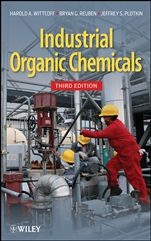
Industrial Organic Chemicals
ISBN 9780470537435
Autor: Harold A. Wittcoff, Bryan G. Reuben, Jeffery S. Plotkin
Wydawca: Wiley
Dostępność: 3-6 tygodni
Cena: 746,55 zł
Przed złożeniem zamówienia prosimy o kontakt mailowy celem potwierdzenia ceny.
ISBN13: |
9780470537435 |
ISBN10: |
0470537434 |
Autor: |
Harold A. Wittcoff, Bryan G. Reuben, Jeffery S. Plotkin |
Oprawa: |
Hardback |
Rok Wydania: |
2013-01-04 |
Numer Wydania: |
3rd Edition |
Ilość stron: |
848 |
Wymiary: |
261x151 |
Tematy: |
PN |
An essential introduction to the organic chemicalsindustry in the context of globalization, advances intechnology, and environmental concerns
Providing 95 percent of the 500 billion pounds of organicchemicals produced in the world, the petroleum and natural gasindustries are responsible for products that ensure our presentquality of life. Products as diverse as gasoline, plastics,detergents, fibers, pesticides, tires, lipstick, shampoo, andsunscreens are based on seven raw materials derived from petroleumand natural gas. In an updated and expanded Third Edition,Industrial Organic Chemicals examines why each of thesechemical building blocks ethylene, propylene, C4 olefins(butenes and butadiene), benzene toluene, the xylenes, andmethane is preferred over another in the context of anenvironmental issue or manufacturing process, as well as theirindividual chemistry, derivatives, method of manufacture, uses, andeconomic significance.
The new edition details the seismic shifts in the world′schemistry industry away from the United States, Western Europe andJapan, transforming the Middle East and Asia–Pacific region,especially China, into major players. The book also details:
The impact of globalization on the patterns of worldwidetransportation of chemicals, including methods of shippingchemicals The technological advances in the area of polymerization andcatalysis, including catalyst design and single–site catalysts Chemicals for electronics, with much new material on conductingpolymers, photovoltaic cells, and related materials The discovery of vast reserves of shale gas and shale oil,altering long–term predictions of resource depletion in the UnitedStates and other countries Commercial and market aspects of the chemical industry, withcoverage of emerging new companies such as INEOS, Formosa Plastics,LyondellBasell, and SABICWith expanded coverage on the vital role of green chemistry,renewables, chemicals and fuels on issues of sustainability andclimate change, Industrial Organic Chemicals offers anunparalleled examination of what is at the heart of thismulti–billion dollar industry, how globalization has transformedit, and its ever growing role in preserving the Earth and itsresources.
Preface xxiii
Preface to the First Edition xxv
Preface to the Second Edition xxvii
Acknowledgments xxix
Bryan Godel Reuben 1934 2012 xxxi
List of Acronyms and Abbreviations xxxiii
Introduction: How to Use Industrial Organic Chemicals, ThirdEdition 1
I.1 Why This Book Was Written and How It Is Structured 2
I.2 North American Industry Classification System 5
I.3 Units and Nomenclature 5
I.4 General Bibliography 6
1. The Evolution of the Organic Chemicals Industry 13
1.1 The National Economy 13
1.2 Size of the Chemical Industry 16
1.3 Characteristics of the Chemical Industry 22
1.4 The Top Companies 43
1.5 The Top Chemicals 44
2. Globalization of the Chemical Industry 49
2.1 Overcapacity 51
2.3 Participation in International Trade 63
2.4 Competition from Developing Countries 66
3. Transporting Chemicals 71
3.1 Shipping Petroleum 71
3.2 Shipping Gas 74
3.3 Shipping Chemicals 75
3.4 Health and Safety 86
3.5 Economic Aspects 87
3.6 Trade in Specific Chemicals 88
3.7 Top Shipping Companies 90
4. Chemicals from Natural Gas and Petroleum 93
4.1 Petroleum Distillation 97
4.2 Shale Gas 100
4.3 Naphtha Versus Gaseous Feedstocks 102
4.4 Heavier Oil Fractions 103
4.5 Steam Cracking and Petroleum Refining Reactions 104
4.6 Catalytic Cracking 114
4.7 Mechanisms of Steam and Catalytic Cracking 117
4.8 Catalytic Reforming 119
4.9 Oligomerization 122
4.10 Alkylation 124
4.11 Hydrotreating and Coking 125
4.12 Dehydrogenation 126
4.13 Isomerization 128
4.14 Metathesis 128
4.15 Function of the Refinery and the Potential PetroleumShortage 133
4.16 Separation of Natural Gas 136
4.17 Oil from Tar Sands 137
5. Chemicals and Polymers from Ethylene 139
5.1 Ethylene Polymers 141
5.2 Ethylene Copolymers 151
5.3 Oligomerization 154
5.4 Vinyl Chloride 160
5.5 Acetaldehyde 165
5.6 Vinyl Acetate 167
5.7 Ethylene Oxide 169
5.8 Styrene 177
5.9 Ethanol 181
5.10 Major Chemicals from Ethylene A Summary 182
5.11 Lesser Volume Chemicals from Ethylene 185
6. Chemicals and Polymers from Propylene 211
6.1 On–Purpose Propylene Production Technologies and PropaneDehydrogenation 214
6.2 Main Polymers and Chemicals from Propylene 217
6.3 Oligomerization 221
6.4 Acrylic Acid 222
6.5 Acrylonitrile 227
6.6 Cumene/Phenol and Cumene Hydroperoxide 231
6.7 Acetone and Isopropanol 233
6.8 Propylene Oxide 242
6.9 n–Butyraldehyde and Isobutyraldehyde 255
6.10 Major Chemicals from Propylene A Perspective261
6.11 Lesser Volume Chemicals from Propylene 263
7. Chemicals from the C4 Stream 273
7.1 Chemicals and Polymers from Butadiene 277
7.2 Chemicals and Polymers from Isobutene 296
7.3 Chemicals and Polymers from 1– and 2–Butenes 302
7.4 Chemicals from n–Butane 303
8. Chemicals from the C5 Stream 309
8.1 Separation of the C5 Stream 311
8.2 Isoprene 312
8.3 Cyclopentadiene and Dicyclopentadiene 319
8.4 Pentene–1 and Piperylene 321
9. Chemicals from Benzene 323
9.1 Phenol 326
9.2 Cyclohexane 344
9.3 Aniline 354
9.4 Alkylbenzenes 361
9.5 Maleic Anhydride 362
9.6 Chlorinated Benzenes 363
9.7 Dihydroxybenzenes 364
9.8 Anthraquinone 370
9.8.1 Hydrogen Peroxide 371
10. Chemicals from Toluene 375
10.1 Hydrodealkylation, Disproportionation, and Transalkylation375
10.2 Solvents 378
10.3 Dinitrotoluene and Toluene Diisocyanate 378
10.4 Lesser Volume Chemicals from Toluene 380
11. Chemicals from Xylenes 383
11.1 o–Xylene and Phthalic Anhydride 386
11.2 m–Xylene and Isophthalic Acid 395
11.3 p–Xylene and Terephthalic Acid/Dimethyl Terephthalate397
12. Chemicals from Methane 407
12.1 Hydrocyanic Acid 408
12.2 Halogenated Methanes 411
12.3 Acetylene 417
12.4 Synthesis Gas 424
12.5 Chemicals from Synthesis Gas 429
12.6 Carbon Monoxide Chemistry 454
12.7 Gas–to–Liquid Fuels 459
13. Chemicals from Alkanes 463
13.1 Functionalization of Methane 464
13.2 Functionalization of C2 C4 Alkanes 468
13.3 Carbon Black 472
14. Chemicals from Coal 475
14.1 Chemicals from Coke Oven Distillate 477
14.2 The Fischer Tropsch Reaction 480
14.3 Coal Hydrogenation 484
14.4 Substitute Natural Gas 485
14.5 SNG and Synthesis Gas Technology 485
14.6 Underground Coal Gasification 488
14.7 Calcium Carbide 488
14.8 Coal and the Environment 490
15. Fats and Oils 493
15.1 Markets for Fats and Oils 495
15.2 Purification of Fats and Oils 497
15.3 Fatty Acids 499
15.4 Fatty Nitrogen Compounds 502
15.5 "Dimer" Acid 504
15.6 Aminoamides and Imidazolines 506
15.7 Azelaic, Pelargonic, and Petroselinic Acids 507
15.8 Fatty Alcohols 508
15.9 Epoxidized Oils 509
15.10 Ricinoleic Acid 510
15.11 Glycerol 512
15.12 Alcoholysis of Fats and Oils 513
15.13 Alkyl Polyglycosides 519
15.14 Non–Caloric Fat–like Substances 519
16. Carbohydrates 523
16.1 Sugars and Sorbitol 523
16.2 Furfural 530
16.3 Starch 532
16.4 Cellulose 535
16.5 Gums 543
16.6 Fermentation and Biotechnology 544
17. How Polymers Are Made 561
17.1 Polymerization 565
17.2 Functionality 568
17.3 Step Growth and Chain Growth Polymerizations 571
17.4 Examples of Step Polymerization 605
17.5 Polymer Properties 622
17.6 Classes of Polymers 630
17.7 Plastics Fabrication Techniques 631
18. Industrial Catalysis 637
18.1 Catalyst Choice 637
18.2 Homogeneous and Heterogeneous Catalysis 643
18.3 Catalyst Markets 647
18.4 Catalysis by Acids and Bases 651
18.5 Dual Function Catalysis 654
18.6 Catalysis by Metals, Semiconductors, and Insulators 655
18.7 Coordination Catalysis 657
18.8 Enzymes 661
18.9 Shape–Selective Catalysts 664
18.10 Phase–Transfer and Fluorous Biphase Catalysis 669
18.11 Nanocatalysis 670
18.12 Catalysts of the Future 673
19. Green Chemistry 681
19.1 The Decline of Acetylene Chemistry 683
19.2 Nylon 683
19.3 Replacement of Phosgene 684
19.4 Monomethylation by Dimethyl Carbonate 685
19.5 Liquid and Supercritical Carbon Dioxide and Water 685
19.6 Ionic Liquids 687
19.7 Photocatalysts 690
19.8 Paired Electrosynthesis 691
19.9 "Green" Pharmaceuticals 692
19.10 Catalytic Dehydrogenation of Diethanolamine 698
19.11 Genetic Manipulation 698
19.12 Biodegradable Packaging 698
19.13 The Presidential Green Chemistry Challenge Program 703
20. Sustainability 707
20.1 Climate Change 708
20.2 Resource Depletion 712
20.3 Energy Sources 717
20.4 Pollution 736
20.5 Valediction 759
Endnotes 761
Appendix A: A Note on Cost Calculations 765
Appendix B: Units and Conversion Factors 771
Appendix C: Special Units in the Chemical Industry 773
Appendix D: The Importance of Shale Gas and Shale Oil 775
Index 779
HAROLD A. WITTCOFF has taught industrial organicchemistry at the University of Minnesota, while serving as VicePresident of Corporate Research for General Mills Inc. Asscientific adviser to Nexant ChemSystems, he has presented 300courses in industrial chemistry in twenty–eight countries.
The late BRYAN G. REUBEN was Professor Emeritus ofChemical Technology at London South Bank University, and was theauthor or coauthor of 130 publications and a single patent.
JEFFREY S. PLOTKIN is Vice President, Chemicals andTechnology, at Nexant ChemSystems and is the author or coauthor oftwenty–five technical publications and thirty patents.
The book presents its information with concepts ofsustainability and climate change in mind, covering green chemistryand renewables, including research into processes (such aselectricity generation) that produce less or no carbondioxide. (Chemical Engineering Progress, 1 January 2013)
Every organic chemist who contemplates a career in thefield should read the book. Even future and active pharmaceuticalresearchers will need the chemical insight from this book tounderstand the nature of their starting materials. Summing Up:Highly recommended. Upper–division undergraduates throughprofessionals/practitioners. (Choice, 1 October2013)
Koszyk
Książek w koszyku: 0 szt.
Wartość zakupów: 0,00 zł
Informacje


Kontakt
Gambit
Centrum Oprogramowania
i Szkoleń Sp. z o.o.
Al. Pokoju 29b/22-24
31-564 Kraków
Siedziba Księgarni
ul. Kordylewskiego 1
31-542 Kraków
+48 12 410 5991
+48 12 410 5987
+48 12 410 5989
Subskrypcje
Administratorem danych osobowych jest firma Gambit COiS Sp. z o.o. Na podany adres będzie wysyłany wyłącznie biuletyn informacyjny.
Autoryzacja płatności

Informacje na temat autoryzacji płatności poprzez PayU.

© Copyright 2012: GAMBIT COiS Sp. z o.o. Wszelkie prawa zastrzeżone.
Projekt i wykonanie: Alchemia Studio Reklamy