


Wydawcy
Katalog tematyczny
- Archeologia (109)
- Ekonomia, finanse, business (13704)
- Filozofia (1445)
- Historia (3040)
- Języki i językoznawstwo (2356)
- Lifestyle, hobby i rozrywka (475)
- Medycyna (9704)
- Nauki humanistyczne (4)
- Nauki o Ziemi i środowisku (2638)
- Nauki ścisłe (20412)
- Nauki społeczne (8486)
- Nauki techniczne (13450)
- Budownictwo lądowe (1045)
- Chemia przemysłowa (2258)
- Elektronika i telekomunikacja (3287)
- Energetyka (1122)
- Inne nauki stosowane (363)
- Inżynieria biochemiczna (507)
- Inżynieria transportu (232)
- Mechanika i materiały (3316)
- Nauka o środowisku (321)
- Rolnictwo (507)
- Technika, ogólnie (475)
- Prawo (1696)
- Publikacje informacyjne i interdyscyplinarne (1288)
- Religia i wierzenia (917)
- Technika komputerowa (4067)
- Zdrowie, relacje międzyludzkie i rozwój osobisty (657)





Informacje szczegółowe o książce
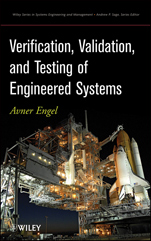
Verification, Validation, and Testing of Engineered Systems
ISBN 9780470527511
Autor: Avner Engel
Wydawca: Wiley
Dostępność: 3-6 tygodni
Cena: 822,15 zł
Przed złożeniem zamówienia prosimy o kontakt mailowy celem potwierdzenia ceny.
ISBN13: |
9780470527511 |
ISBN10: |
047052751X |
Autor: |
Avner Engel |
Oprawa: |
Hardback |
Rok Wydania: |
2010-07-02 |
Ilość stron: |
720 |
Wymiary: |
241x200 |
Tematy: |
TJ |
Systems′ Verification Validation and Testing (VVT) are carried out throughout systems′ lifetimes. Notably, quality–cost expended on performing VVT activities and correcting system defects consumes about half of the overall engineering cost. Verification, Validation and Testing of Engineered Systems provides a comprehensive compendium of VVT activities and corresponding VVT methods for implementation throughout the entire lifecycle of an engineered system. In addition, the book strives to alleviate the fundamental testing conundrum, namely: What should be tested? How should one test? When should one test? And, when should one stop testing? In other words, how should one select a VVT strategy and how it be optimized?
The book is organized in three parts: The first part provides introductory material about systems and VVT concepts. This part presents a comprehensive explanation of the role of VVT in the process of engineered systems (Chapter–1). The second part describes 40 systems′ development VVT activities (Chapter–2) and 27 systems′ post–development activities (Chapter–3). Corresponding to these activities, this part also describes 17 non–testing systems′ VVT methods (Chapter–4) and 33 testing systems′ methods (Chapter–5). The third part of the book describes ways to model systems’ quality cost, time and risk (Chapter–6), as well as ways to acquire quality data and optimize the VVT strategy in the face of funding, time and other resource limitations as well as different business objectives (Chapter–7). Finally, this part describes the methodology used to validate the quality model along with a case study describing a system’s quality improvements (Chapter–8).
Fundamentally, this book is written with two categories of audience in mind. The first category is composed of VVT practitioners, including Systems, Test, Production and
Maintenance engineers as well as first and second line managers. The second category is composed of students and faculties of Systems, Electrical, Aerospace, Mechanical and Industrial Engineering schools. This book may be fully covered in two to three graduate level semesters; although parts of the book may be covered in one semester. University instructors will most likely use the book to provide engineering students with knowledge about VVT, as well as to give students an introduction to formal modeling and optimization of VVT strategy.
Spis treści:
1. INTRODUCTION.
1.1 OPENING.
1.2 VVT SYSTEMS AND PROCESS.
1.3 CANONICAL SYSTEMS VVT PARADIGM.
1.4 METHODOLOGY APPLICATION.
1.5 CHAPTER–1 BIBLIOGRAPHY.
2. SYSTEMS VVT ACTIVITIES: DEVELOPMENT.
2.1 STRUCTURE OF CHAPTER.
2.2 VVT ACTIVITIES DURING THE DEFINITION PHASE.
2.3 VVT ACTIVITIES DURING THE DESIGN PHASE.
2.4 VVT ACTIVITIES DURING THE IMPLEMENTATION PHASE.
2.5 VVT ACTIVITIES DURING THE INTEGRATION PHASE.
2.6 VVT ACTIVITIES DURING THE QUALIFICATION PHASE.
2.7 CHAPTER–2 BIBLIOGRAPHY.
3. SYSTEMS VVT ACTIVITIES: POST–DEVELOPMENT.
3.1 STRUCTURE OF CHAPTER.
3.2 VVT ACTIVITIES DURING THE PRODUCTION PHASE.
3.3 VVT ACTIVITIES DURING THE USE/MAINTENANCE PHASE.
3.4 VVT ACTIVITIES DURING THE DISPOSAL PHASE.
3.5 CHAPTER–3 BIBLIOGRAPHY.
4. SYSTEMS VVT METHODS: NON–TESTING.
4.1 INTRODUCTION.
4.2 PREPARE VVT PRODUCTS.
4.3 PERFORM VVT ACTIVITIES.
4.4 PARTICIPATE IN REVIEWS.
4.5 CHAPTER–4 BIBLIOGRAPHY.
5. SYSTEMS VVT METHODS: TESTING.
5.1 INTRODUCTION.
5.2 WHITE BOX TESTING.
5.3 BLACK BOX – BASIC TESTING.
5.4 BLACK BOX – HIGH VOLUME TESTING.
5.5 BLACK BOX – SPECIAL TESTING.
5.6 BLACK BOX – ENVIRONMENT TESTING.
5.7 BLACK BOX – PHASE TESTING.
5.8 CHAPTER–5 BIBLIOGRAPHY.
6. MODELING QUALITY COST, TIME
AND RISK.
6.1 PURPOSE AND BASIC CONCEPTS.
6.2 VVT COST AND RISK MODELING.
6.3 VVT TIME AND RISK MODELING.
6.4 FUZZY VVT COST MODELING.
6.5 CHAPTER–6 BIBLIOGRAPHY.
7. OBTAINING QUALITY DATA AND OPTIMIZING VVT STRATEGY.
7.1 SYSTEMS′ QUALITY COSTS IN THE LITERATURE.
7.2 OBTAINING SYSTEM QUALITY DATA.
7.3 IAI/LAHAV QUALITY DATA – AN ILLUSTRATION.
7.4 THE VVT–TOOL.
7.5 VVT COST, TIME AND RISK OPTIMIZATION.
7.6 CHAPTER–7 BIBLIOGRAPHY.
8. METHODOLOGY VALIDATION AND EXAMPLES.
8.1 METHODOLOGY VALIDATION USING A PILOT PROJECT.
8.2 OPTIMIZING THE VVT STRATEGY.
8.3 IDENTIFYING AND AVOIDING SIGNIFICANT RISKS.
8.4 IMPROVING SYSTEMS QUALITY PROCESS.
9. APPENDIX–A: THE SYSTEST PROJECT.
9.1 ABOUT SYSTEST.
9.2 SYSTEST KEY PRODUCTS.
9.3 SYSTEST PILOT PROJECTS.
9.4 SYSTEST TEAM.
9.5 EC EVALUATION OF THE SYSTEST PROJECT.
9.6 SYSTEST REFERENCES 812.
10. APPENDIX–B: VVT MASTER PLAN (VVT–MP).
10.1 CHAPTER–1 SYSTEM INTEGRATION.
10.2 CHAPTER–2 INTEGRATED VVT PROGRAM SUMMARY.
10.3 CHAPTER–3 SYSTEM VERIFICATION, VALIDATION AND TESTING.
10.4 CHAPTER–4 VVT RESOURCE SUMMARY.
11. APPENDIX–C: LIST OF ACRONYMS.
12. APPENDIX–D: INDEX OF TERMS (PRELIMINARY).
Nota biograficzna:
Dr. Avner Engel worked for over 35 years as a practicing systems and software engineer as well as technical manager. Throughout his carrier he was involved in sizeable projects within large industrial organizations in the US and Israel, including IBM, NASA and the Israel Aerospace Industries (IAI). Currently he is teaching Systems Engineering courses at the Faculty of Technology Management, Holon Institute of Technology (HIT), Israel.
Koszyk
Książek w koszyku: 0 szt.
Wartość zakupów: 0,00 zł
Informacje


Kontakt
Gambit
Centrum Oprogramowania
i Szkoleń Sp. z o.o.
Al. Pokoju 29b/22-24
31-564 Kraków
Siedziba Księgarni
ul. Kordylewskiego 1
31-542 Kraków
+48 12 410 5991
+48 12 410 5987
+48 12 410 5989
Subskrypcje
Administratorem danych osobowych jest firma Gambit COiS Sp. z o.o. Na podany adres będzie wysyłany wyłącznie biuletyn informacyjny.
Autoryzacja płatności

Informacje na temat autoryzacji płatności poprzez PayU.

© Copyright 2012: GAMBIT COiS Sp. z o.o. Wszelkie prawa zastrzeżone.
Projekt i wykonanie: Alchemia Studio Reklamy