


Wydawcy
Katalog tematyczny
- Archeologia (109)
- Ekonomia, finanse, business (13704)
- Filozofia (1445)
- Historia (3040)
- Języki i językoznawstwo (2356)
- Lifestyle, hobby i rozrywka (475)
- Medycyna (9704)
- Nauki humanistyczne (4)
- Nauki o Ziemi i środowisku (2638)
- Nauki ścisłe (20412)
- Nauki społeczne (8486)
- Nauki techniczne (13450)
- Prawo (1696)
- Publikacje informacyjne i interdyscyplinarne (1288)
- Religia i wierzenia (917)
- Technika komputerowa (4067)
- Zdrowie, relacje międzyludzkie i rozwój osobisty (657)





Informacje szczegółowe o książce
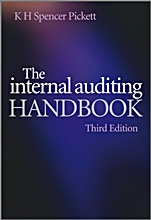
The Internal Auditing Handbook
ISBN 9780470518717
Autor: K. H. Spencer Pickett
Wydawca: Wiley
Dostępność: 3-6 tygodni
Cena: 854,70 zł
Przed złożeniem zamówienia prosimy o kontakt mailowy celem potwierdzenia ceny.
ISBN13: |
9780470518717 |
ISBN10: |
0470518715 |
Autor: |
K. H. Spencer Pickett |
Oprawa: |
Hardback |
Rok Wydania: |
2010-04-09 |
Numer Wydania: |
3rd Edition |
Ilość stron: |
1088 |
Wymiary: |
252x172 |
Tematy: |
KF |
The first edition of The Internal Auditing Handbook received wide acclaim from readers and became established as one of the definitive publications on internal auditing. The second edition was released soon after to reflect the rapid progress of the internal audit profession. There have been a number of significant changes in the practice of internal auditing since publication of the second edition and this revised third edition reflects those changes. The third edition of The Internal Auditing Handbook retains all the detailed material that formed the basis of the second edition and has been updated to reflect the Institute of Internal Auditor’s (IIA) International Standards for the Professional Practice of Internal Auditing. Each chapter has a section on new developments to reflect changes that have occurred over the last few years. The key role of auditors in reviewing corporate governance and risk management is discussed in conjunction with the elevation of the status of the chief audit executive and heightened expectations from boards and audit committees. Another new feature is a series of multi–choice questions that have been developed and included at the end of each chapter.
This edition of The Internal Auditing Handbook will prove to be an indispensable reference for both new and experienced auditors, as well as business managers, members of audit committees, control and compliance teams, and all those who may have an interest in promoting corporate governance.
Spis treści:
List of Abbreviations.
Foreword to Second Edition.
Acknowledgements.
1 Introduction.
Introduction.
1.1 Reasoning behind the Book.
1.2 The IIA Standards and Links to the Book.
1.3 How to Navigate around the Book.
1.4 The Handbook as a Development Tool.
1.5 The Development of Internal Auditing.
Summary and Conclusions.
References.
2 Corporate Governance Perspectives.
Introduction
.
2.1 The Agency Concept.
2.2 Corporate Ethics and Accountability.
2.3 International Scandals and their Impact.
2.4 Models of Corporate Governance.
2.5 Putting Governance into Practice.
2.6 The External Audit.
2.7 The Audit Committee.
2.8 Internal Audit.
2.9 The Link to Risk Management and Internal Control.
2.10 Reporting on Internal Controls.
2.11 New Developments.
Summary and Conclusions.
Assignment Questions.
Multi–choice Questions.
References.
3 Managing Risk.
Introduction.
3.1 What Is Risk?
3.2 The Risk Challenge.
3.3 Risk Management and Residual Risk.
3.4 Mitigation through Controls.
3.5 Risk Registers and Appetites.
3.6 The Risk Policy.
3.7 Enterprise–wide Risk Management.
3.8 Control Self–assessment.
3.9 Embedded Risk Management.
3.10 The Internal Audit Role in Risk Management.
3.11 New Developments.
Summary and Conclusions.
Assignment Questions.
Multi–choice Questions.
References.
4 Internal Controls.
Introduction.
4.1 Why Controls?.
4.2 Control Framework – COSO.
4.3 Control Framework – CoCo.
4.4 Other Control Models.
4.5 Links to Risk Management.
4.6 Control Mechanisms.
4.7 Importance of Procedures.
4.8 Integrating Controls.
4.9 The Fallacy of Perfection.
4.10 Internal Control Awareness Training.
4.11 New Developments.
Summary and Conclusions.
Assignment Questions.
Multi–choice Questions.
References.
5 The Internal Audit Role.
Introduction.
5.1 Why Auditing?
5.2 Defining Internal Audit.
5.3 The Audit Charter.
5.4 Audit Services.
5.5 Independence.
5.6 Audit Ethics.
5.7 Police Officer versus Consultant.
5.8 Managing Expectations through Web Design.
5.9 Audit Competencies.
5.10 Training and Development.
5.11 New Developments.
Summary and Conclusions.
Assignment Questions.
Multi–choice Questions.
References.
6 Professionalism.
Introduction.
6.1 Audit Professionalism.
6.2 Internal Auditing Standards.
6.3 Due Professional Care.
6.4 Professional Consulting Services.
6.5 The Quality Concept.
6.6 Defining the Client.
6.7 Internal Review and External Review.
6.8 Tools and Techniques.
6.9 Marketing the Audit Role.
6.10 Continuous Improvement.
6.11 New Developments.
Summary and Conclusions.
Assignment Questions.
Multi–choice Questions.
References.
7 The Audit Approach.
Introduction.
7.1 The Systems Approach.
7.2 Control Risk Self–assessment (CRSA).
7.3 Facilitation Skills.
7.4 Integrating Self–assessment and Audit.
7.5 Fraud Investigations.
7.6 Information Systems Auditing.
7.7 Compliance.
7.8 VFM, Social and Financial Audits.
7.9 The Consulting Approach.
7.10 The ‘Right’ Structure.
7.11 New Developments.
Summary and Conclusions.
Assignment Questions.
Multi–choice Questions.
References.
8 Setting an Audit Strategy.
Introduction.
8.1 Risk–based Strategic Planning.
8.2 Resourcing the Strategy.
8.3 Managing Performance.
8.4 Dealing with Typical Problems.
8.5 The Audit Manual.
8.6 Delegating Audit Work
8.7 Audit Information Systems.
8.8 Establishing a New Internal Audit Shop.
8.9 The Outsourcing Approach.
8.10 The Audit Planning Process.
8.11 New Developments.
Summary and Conclusions.
Assignment Questions.
Multi–choice Questions.
References.
9 Audit Field Work.
Introduction.
9.1 Planning the Audit.
9.2 Interviewing Skills.
9.3 Ascertaining the System.
9.4 Evaluation.
9.5 Testing Strategies.
9.6 Evidence and Working Papers.
9.7 Statistical Sampling.
9.8 Reporting Results of the Audit.
9.9 Formal Presentations.
9.10 Audit Committee Reporting.
9.11 New Developments.
Summary and Conclusions.
Assignment Q
uestions.
Multi–choice Questions.
References.
10 Meeting the Challenge.
Introduction.
10.1 The New Dimensions of Internal Auditing.
10.2 The Audit Reputation.
10.3 Globalization.
10.4 Examples.
10.5 Meeting the Challenge.
Summary and Conclusions.
Multi–choice Questions.
References.
Appendix A Induction/Orientation Programme.
Appendix B CRSA Best Practice Guide.
Appendix C A Poem by Professor Gerald Vinten.
Appendix D Analytical Techniques by Sue Seamour.
Appendix E Multi–choice Questions: Answer Guide.
Index.
Nota biograficzna:
K H Spencer Pickett MSc FCCA MIIA FIIA CFE ASSOC.CIPD (London, UK) is a course director specialising in internal audit, risk management and fraud awareness training. Spencer has authored 12 books published by John Wiley and Sons (Inc and UK). He is a member of ACCA Corporate Governance and Risk Management Committee, a member of ACCA Internal Audit Members Network, and is an executive committee member of the UK’s Control Risk Self Assessment Forum.
Okładka tylna:
The first edition of The Internal Auditing Handbook received wide acclaim from readers and became established as one of the definitive publications on internal auditing. The second edition was released soon after to reflect the rapid progress of the internal audit profession. There have been a number of significant changes in the practice of internal auditing since publication of the second edition and this revised third edition reflects those changes. The third edition of The Internal Auditing Handbook retains all the detailed material that formed the basis of the second edition and has been updated to reflect the Institute of Internal Auditor’s (IIA) International Standards for the Professional Practice of Internal Auditing. Each chapter has a section on new developments to reflect changes that have occurred over the last few
years. The key role of auditors in reviewing corporate governance and risk management is discussed in conjunction with the elevation of the status of the chief audit executive and heightened expectations from boards and audit committees. Another new feature is a series of multi–choice questions that have been developed and included at the end of each chapter.
This edition of The Internal Auditing Handbook will prove to be an indispensable reference for both new and experienced auditors, as well as business managers, members of audit committees, control and compliance teams, and all those who may have an interest in promoting corporate governance.
Koszyk
Książek w koszyku: 0 szt.
Wartość zakupów: 0,00 zł
Informacje


Kontakt
Gambit
Centrum Oprogramowania
i Szkoleń Sp. z o.o.
Al. Pokoju 29b/22-24
31-564 Kraków
Siedziba Księgarni
ul. Kordylewskiego 1
31-542 Kraków
+48 12 410 5991
+48 12 410 5987
+48 12 410 5989
Subskrypcje
Administratorem danych osobowych jest firma Gambit COiS Sp. z o.o. Na podany adres będzie wysyłany wyłącznie biuletyn informacyjny.
Autoryzacja płatności

Informacje na temat autoryzacji płatności poprzez PayU.

© Copyright 2012: GAMBIT COiS Sp. z o.o. Wszelkie prawa zastrzeżone.
Projekt i wykonanie: Alchemia Studio Reklamy