


Wydawcy
Katalog tematyczny
- Archeologia (109)
- Ekonomia, finanse, business (13704)
- Filozofia (1445)
- Historia (3040)
- Języki i językoznawstwo (2356)
- Lifestyle, hobby i rozrywka (475)
- Medycyna (9704)
- Nauki humanistyczne (4)
- Nauki o Ziemi i środowisku (2638)
- Nauki ścisłe (20412)
- Astronomia (294)
- Biologia (5119)
- Chemia (6540)
- Fizyka (3309)
- Elektryczność i magnetyzm (90)
- Fizyka atomowa i molekularna (110)
- Fizyka cząstek elementarnych (36)
- Fizyka jądra atomowego (36)
- Fizyka kwantowa (210)
- Fizyka matematyczna (121)
- Fizyka relatywistyczna (36)
- Fizyka statystyczna (51)
- Fizyka stosowana (498)
- Mechanika klasyczna (186)
- Optyka i światło (133)
- Stany materii (202)
- Matematyka (4574)
- Nauki ścisłe, ogólnie (503)
- Nauki społeczne (8486)
- Nauki techniczne (13450)
- Prawo (1696)
- Publikacje informacyjne i interdyscyplinarne (1288)
- Religia i wierzenia (917)
- Technika komputerowa (4067)
- Zdrowie, relacje międzyludzkie i rozwój osobisty (657)





Informacje szczegółowe o książce
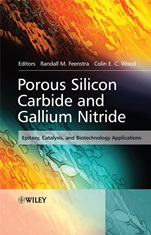
Porous Silicon Carbide and Gallium Nitride: Epitaxy, Catalysis, and Biotechnology Applications
ISBN 9780470517529
Autor: Randall M. Feenstra, Colin E. C. Wood
Wydawca: Wiley
Dostępność: 3-6 tygodni
Cena: 859,95 zł
Przed złożeniem zamówienia prosimy o kontakt mailowy celem potwierdzenia ceny.
ISBN13: |
9780470517529 |
ISBN10: |
0470517522 |
Autor: |
Randall M. Feenstra, Colin E. C. Wood |
Oprawa: |
Hardback |
Rok Wydania: |
2008-03-11 |
Ilość stron: |
332 |
Wymiary: |
235x160 |
Tematy: |
PH |
Like all semiconductors, silicon carbide (SiC) and gallium nitride (GaN) have an energy gap separating the electron energy levels that are normally filled with electrons from those that are normally empty of electrons. Both SiC and GaN have high bond strengths, making them suitable for high–temperature applications. Their wide band gaps also permit a number of novel applications for the materials, including blue and ultra–violet light–emitting devices as well as high–power and high–speed electronic devices. Porous layers of SiC or GaN can be formed by photo–electro–chemical etching, and these porous layers have unique properties and applications such as electronic/optical devices, fuel cells, catalytic sensors, and semipermeable membranes.
The book presents the state–of–the–art in knowledge and applications of porous semiconductor materials having a wide band gap, and the underlying scientific basis for each application area is described. The book starts with an overview of porous wide–band–gap technology. The coverage includes preparation, characterization, morphology and processing of porous SiC, growth of SiC, preparation and properties of porous GaN, growth of GaN, dislocation mechanism GaN films, electrical properties of porous SiC, magnetism of GaN nanostructures, SiC catalysis technology and nanoporous silicon carbide as a biomembrane for medical use.
This book gives both experts and nonexperts a good overview of porous semiconductors. The book is aimed at researchers intending to pursue work relating to porous wide–band–gap semiconductors in the manufacturing/semiconductor industry. It will also appeal to postgraduate students and researchers in materials science, engineering, chemistry, and nanotechnology.
Spis treści:
Preface.
1. Porous SiC Preparation, Characterization and Morphology
1.1 Introduction
1.2 Triangular Porous Morpho
logy in n–type 4H–SiC.
1.3 Nano–columnar Pore Formation in 6H SiC.
1.4 Summary.
Acknowledgements.
References.
2. Processing Porous SiC: Diffusion, Oxidation, Contact Formation.
2.1 Introduction.
2.2 Formation of Porous Layer.
2.3 Diffusion in Porous SiC.
2.4 Oxidation.
2.5 Contacts to Porous SiC.
Acknowledgments.
References.
3. Growth of SiC on Porous SiC Buffer Layers.
3.1 Introduction.
3.2 SiC CVD Growth.
3.3 Growth of 3C–SiC on porous Si via Cold–Wall Epitaxy.
3.4 Growth of 3C–SiC on Porous 3C–SiC.
3.5 Growth of 4H–SiC on Porous 4H–SiC.
3.6 Conclusion.
Acknowledgements.
References.
4. Preparation and Properties of Porous GaN Fabricated by Metal–Assisted Electroless Etching.
4.1 Introduction.
4.2 Creation of Porous GaN by Electroless Etching.
4.3 Morphology Characterization.
4.4 Luminescence of Porous GaN.
4.5 Raman Spectroscopy of Porous GaN.
4.6 Summary and Conclusions.
Acknowledgments.
References.
5. Growth of GaN on Porous SiC by Molecular Beam Epitaxy.
5.1 Introduction.
5.2 Morphology and Preparation of Porous SiC Substrates.
5.3 MBE Growth of GaN on Porous SiC Substrates.
5.4 Summary.
Acknowledgments.
References.
6. GaN Lateral Epitaxy Growth Using Porous SiNx, TiNx and SiC.
6.1 Introduction.
6.2 Epitaxy of GaN on Porous SiNx Network.
6.3 Epitaxial Lateral Overgrowth of GaN on Porous TiN.
6.4 Growth of GaN on Porous SiC.
Acknowledgements.
References.
7. HVPE Growth of GaN on Porous SiC Substrates.
7.1 Introduction.
7.2 PSC Substrate Fabrication and Properties.
7.3 Epitaxial Growth of GaN Films on PSC.
Summary.
References.
8. Dislocation Mechanisms in GaN Films Grown on Porous Substrates or Interlayers.
8.1 Introduction.
8.2 Extended Defects In Epitaxially Grown GaN Thin Layers.
8.3 Disl
ocation Mechanisms in Conventional Lateral Epitaxy Overgrowth of GaN.
8.4 Growth of GaN on Porous SiC Substrates.
8.5 Growth of GaN on Porous SiN and TiN Interlayers.
8.6 Summary.
Acknowledgments.
References.
9. Electrical Properties of Porous SiC.
9.1 Introduction.
9.2 Resistivity and Hall Effect.
9.3 Deep Level Transient Spectroscopy.
9.4 Sample Considerations.
9.5 Potential Energy Near a Pore.
9.6 DLTS Data and Analysis.
Acknowledgements.
References.
10. Magnetism of Doped GaN Nanostructures.
10.1 Introduction.
10. 2 Mn–Doped GaN Crystal.
10. 3 Mn–Doped GaN Thin Films.
10.4 Mn– and Cr–Doped GaN One–Dimensional Structures.
10.5 N–Doped Mn and Cr Clusters.
10.6 Summary.
Acknowledgments
References.
11 SiC Catalysis Technology.
11.1 Introduction.
11.2 Silicon Carbide Support.
11.3 Heat Effects During Reaction.
11.4 Reactions on SiC as Catalytic Supports.
11.5 Examples of SiC Catalyst Applications.
11.6 Prospects and Conclusions.
References.
12. Nanoporous SiC as a Semi–Permeable Biomembrane for Medical Use: Practical and Theoretical Considerations.
12. 1. The Rationale for Implantable Semi–Permeable Materials.
12. 2. The Biology of Soluble Signaling Proteins in Tissue.
12. 3. Measuring Cytokine Secretion In Living Tissues and Organs.
12.4. Creating a Biocompatible Tissue – Device Interface: Advantages of SiC.
12.5. The Testing of SiC Membranes for Permeability of Proteins.
12.6. Improving the Structure of SiC Membranes for Biosensor Interfaces.
12.7. Theoretical Considerations: Modeling Diffusion through a Porous Membrane.
12.8. Future Development: Marriage of Membrane and Microchip.
12.9. Conclusions
Acknowledgments.
References.
Okładka tylna:
Like all semiconductors, silicon carbide (SiC) and gallium nitride (GaN) have an ener
gy gap separating the electron energy levels that are normally filled with electrons from those that are normally empty of electrons. Both SiC and GaN have high bond strengths, making them suitable for high–temperature applications. Their wide band gaps also permit a number of novel applications for the materials, including blue and ultra–violet light–emitting devices as well as high–power and high–speed electronic devices. Porous layers of SiC or GaN can be formed by photo–electro–chemical etching, and these porous layers have unique properties and applications such as electronic/optical devices, fuel cells, catalytic sensors, and semipermeable membranes.
The book presents the state–of–the–art in knowledge and applications of porous semiconductor materials having a wide band gap, and the underlying scientific basis for each application area is described. The book starts with an overview of porous wide–band–gap technology. The coverage includes preparation, characterization, morphology and processing of porous SiC, growth of SiC, preparation and properties of porous GaN, growth of GaN, dislocation mechanism GaN films, electrical properties of porous SiC, magnetism of GaN nanostructures, SiC catalysis technology and nanoporous silicon carbide as a biomembrane for medical use.
This book gives both experts and nonexperts a good overview of porous semiconductors. The book is aimed at researchers intending to pursue work relating to porous wide–band–gap semiconductors in the manufacturing/semiconductor industry. It will also appeal to postgraduate students and researchers in materials science, engineering, chemistry, and nanotechnology.
Koszyk
Książek w koszyku: 0 szt.
Wartość zakupów: 0,00 zł
Informacje


Kontakt
Gambit
Centrum Oprogramowania
i Szkoleń Sp. z o.o.
Al. Pokoju 29b/22-24
31-564 Kraków
Siedziba Księgarni
ul. Kordylewskiego 1
31-542 Kraków
+48 12 410 5991
+48 12 410 5987
+48 12 410 5989
Subskrypcje
Administratorem danych osobowych jest firma Gambit COiS Sp. z o.o. Na podany adres będzie wysyłany wyłącznie biuletyn informacyjny.
Autoryzacja płatności

Informacje na temat autoryzacji płatności poprzez PayU.

© Copyright 2012: GAMBIT COiS Sp. z o.o. Wszelkie prawa zastrzeżone.
Projekt i wykonanie: Alchemia Studio Reklamy