


Wydawcy
Katalog tematyczny
- Archeologia (109)
- Ekonomia, finanse, business (13704)
- Filozofia (1445)
- Historia (3040)
- Języki i językoznawstwo (2356)
- Lifestyle, hobby i rozrywka (475)
- Medycyna (9704)
- Chirurgia (272)
- Inne gałęzie medycyny (1871)
- Medycyna kliniczna (4187)
- Medycyna niekonwencjonalna (14)
- Medycyna przedkliniczna (269)
- Medycyna, ogólnie (1740)
- Historia medycyny (3)
- Lekarze, sprawy zawodowe (8)
- Medycyna, aspekty prawne (10)
- Służba zdrowia (36)
- Wyposażenie medyczne (157)
- Zdrowie publiczne (460)
- Medyczne służby pomocnicze (745)
- Studia medyczne (16)
- Weterynaria (548)
- Nauki humanistyczne (4)
- Nauki o Ziemi i środowisku (2638)
- Nauki ścisłe (20412)
- Nauki społeczne (8486)
- Nauki techniczne (13450)
- Prawo (1696)
- Publikacje informacyjne i interdyscyplinarne (1288)
- Religia i wierzenia (917)
- Technika komputerowa (4067)
- Zdrowie, relacje międzyludzkie i rozwój osobisty (657)





Informacje szczegółowe o książce
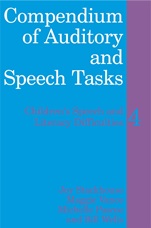
Compendium of Auditory and Speech Tasks: Childrens Speech and Literacy Difficulties 4 with CD–ROM
ISBN 9780470516591
Autor: Joy Stackhouse, Maggie Vance, Michelle Pascoe, Bill Wells
Wydawca: Wiley
Dostępność: 3-6 tygodni
Cena: 392,70 zł
Przed złożeniem zamówienia prosimy o kontakt mailowy celem potwierdzenia ceny.
ISBN13: |
9780470516591 |
ISBN10: |
0470516593 |
Autor: |
Joy Stackhouse, Maggie Vance, Michelle Pascoe, Bill Wells |
Oprawa: |
Paperback |
Rok Wydania: |
2007-09-07 |
Ilość stron: |
486 |
Wymiary: |
227x155 |
Tematy: |
MB |
Compendium of Auditory and Speech Tasks investigates input and output speech processing skills in children with typical and atypical development. This practical handbook
presents 30 auditory and speech tasks designed for use with the psycholinguistic framework presented in the first book of this series (Stackhouse and Wells, 1997);
includes four questionnaire formats for collecting background information from parents and teachers;
matches items across tasks, permitting detailed profiling of a client′s strengths and weaknesses;
focuses on typical development as a basis for identifying atypical performance;
summarises research findings from projects which have used these auditory and speech tasks with a range of participants having a variety of problems.
Each task has instructions, pictures where appropriate, scoring procedures and sheets, normative data, a description of typical performance, and guidelines on interpretation of results. While most of the normative data are from children from 3–7 years, the tasks can be used with older children and adolescents with speech and literacy difficulties; indeed the principles described enable practitioners to develop tasks for clients of any age. Two chapters focus on how the tasks and questionnaires can be used to identify children at risk of persisting speech difficulties and associated literacy problems, and the final chapter shows how the data can be used as a basis for planning intervention and for deciding whether a speech difficulty has really been ′resolved′.
Spis treści:
Preface.
Compendium CD–Rom.
Acknowledgements.
Conventions.
Phonetic Symbols and Diacritics.
Chapter 1: A Psycholinguistic Approach.
Chapter 2: Development of the Assessment Tasks and Normative Data.
Chapter 3: Auditory Discrimination Tasks.
Chapter 4: Auditory Lexical Discrimination Tasks.Chapter 5: Speech Production: Single Words.
Chapter 6: Speech Production: Connected Speech.
Chapter 7: Speech Accuracy, Rate and Consistency.
Chapter 8: Predicting Persisting Speech Difficulties.
Chapter 9: Assessing Risk Factors through Questionnaires.
Chapter 10: Using Auditory and Speech Tasks in Practice References.
Appendix A.1: Tasks for Each Question in the Psycholinguistic Assessment Framework.
Appendix A.2: Speech Processing Profile.
Appendix A.3: Speech Processing Model.
Appendix B: Standardised Assessments used in the Longitudinal Study.
Appendix C.1: Auditory Discrimination Task 1: Same/Different, S–Cluster Sequences, Words and Non–words – Reduced Version (from Bridgeman & Snowling, 1988).
Appendix C.2: Auditory Discrimination Task 1: Same/Different, S–Cluster Sequences,Words and Non–words – Shortest Form (from Bridgeman & Snowling, 1988) .
Appendix C.3: Auditory Discrimination Task 2: Complex Non–words (from Stackhouse, 1989).
Appendix C.4: Auditory Discrimination Task 3: ABX Task – Full Version (Vance, 1996).
Appendix C.5: Auditory Discrimination Task 3: ABX Task – Short Form (Nathan et al., 2004).
Appendix C.6: Auditory Discrimination Task 4: Legal versus Illegal Non–words.
Appendix D.1: Auditory Lexical Discrimination Task 1: Mispronunciation Detection – Full Version (from Vance, 1995).
Appendix D.2: Auditory Lexical Discrimination Task 1: Mispronunciation Detection – Short Form (from Nathan et al., 2004).
Appendix D.3: Auditory Lexical Discrimination Task 2:Without Pictures (from Constable, Stackhouse & Wells, 1997).
Appendix D.4: Auditory Lexical Discrimination Task 2:With Pictures (from Constable, Stackhouse & Wells, 1997).
Appendix D.5: Auditory Lexical Discrimination Task 3: Mispronunciation Detection for Individual Children (after Locke, 1980).
Appendix D.6: Audit
ory Lexical Discrimination Task 4: Words in Sentences (from Cassidy, 1994).
Appendix E.1: Picture Naming Task 1 – Full Version (from Vance, Stackhouse & Wells, 2005).
Appendix E.2: Picture Naming Task 1 – Short Form.
Appendix E.3: Guidelines for Scoring Full Versions and Short Forms of Speech Production Tasks.
Appendix E.4: Speech Production: Single Words – Picture Naming Task 2 (from Snowling, van Wagtendonk & Stafford, 1988).
Appendix E.5: Word Repetition Task – Full Version (from Vance, Stackhouse & Wells, 2005).
Appendix E.6: Word Repetition Task – Short Form (from Nathan et al., 2004a).
Appendix E.7: Word Repetition Task: Low–Frequency Words (from Nathan et al., 2004a).
Appendix E.8: Non–Word Repetition Task – Full Version (from Vance, Stackhouse & Wells, 2005).
Appendix E.9: Non–Word Repetition Task – Short Form (from Nathan et al., 2004).
Appendix E.10: Non–word Repetition Task: Matched to Low–Frequency Words (from Nathan et al., 2004a).
Appendix E.11: Mispronunciation Self–Correction.
Appendix F.1: Connected Speech Task 1:Words in Sentences (from Vance, Stackhouse & Wells, 1995).
Appendix F.2: Connected Speech Task 2: Connected Speech Processes (CSP) Repetition (from Newton, 1999).
Appendix F.3: Connected Speech Task 3: Final Consonant Juncture Repetition (from Pascoe, Stackhouse & Wells, 2006).
Appendix G.1: Speech Accuracy, Rate and Consistency Task 1: Oral Movements and Silent DDK Rates (from Williams & Stackhouse, 2000).
Appendix G.2: Speech Accuracy, Rate and Consistency Task 2a: Repetition and Spoken DDK Rates:Words (from Williams & Stackhouse, 2000).
Appendix G.3: Speech Accuracy, Rate and Consistency Task 2b: Repetition and Spoken DDK Rates: Non–Words (from Williams & Stackhouse, 2000).
Appendix G.4: Speech Accuracy, Rate
and Consistency Task 2c: Repetition and Spoken DDK Rates: Syllable Sequences (from Williams & Stackhouse, 2000).
Appendix G.5: Speech Accuracy and Consistency Task 3 (from Coffield, 1994).
Appendix H.1: Questionnaire 1: Developmental History.
Appendix H.2: Questionnaire 2: Family Information.
Appendix H.3: Questionnaire 3: Educational History.
Appendix H.4: Questionnaire 4: Speech and Language Therapy.
Index.
Other Titles in this Series.
Okładka tylna:
Compendium of Auditory and Speech Tasks investigates input and output speech processing skills in children with typical and atypical development. This practical handbook
presents 30 auditory and speech tasks designed for use with the psycholinguistic framework presented in the first book of this series (Stackhouse and Wells, 1997);
includes four questionnaire formats for collecting background information from parents and teachers;
matches items across tasks, permitting detailed profiling of a client′s strengths and weaknesses;
focuses on typical development as a basis for identifying atypical performance;
summarises research findings from projects which have used these auditory and speech tasks with a range of participants having a variety of problems.
Each task has instructions, pictures where appropriate, scoring procedures and sheets, normative data, a description of typical performance, and guidelines on interpretation of results. While most of the normative data are from children from 3–7 years, the tasks can be used with older children and adolescents with speech and literacy difficulties; indeed the principles described enable practitioners to develop tasks for clients of any age. Two chapters focus on how the tasks and questionnaires can be used to identify children at risk of persisting speech difficulties and associated literacy problems, and the final chapter shows
Koszyk
Książek w koszyku: 0 szt.
Wartość zakupów: 0,00 zł
Informacje


Kontakt
Gambit
Centrum Oprogramowania
i Szkoleń Sp. z o.o.
Al. Pokoju 29b/22-24
31-564 Kraków
Siedziba Księgarni
ul. Kordylewskiego 1
31-542 Kraków
+48 12 410 5991
+48 12 410 5987
+48 12 410 5989
Subskrypcje
Administratorem danych osobowych jest firma Gambit COiS Sp. z o.o. Na podany adres będzie wysyłany wyłącznie biuletyn informacyjny.
Autoryzacja płatności

Informacje na temat autoryzacji płatności poprzez PayU.

© Copyright 2012: GAMBIT COiS Sp. z o.o. Wszelkie prawa zastrzeżone.
Projekt i wykonanie: Alchemia Studio Reklamy