


Wydawcy
Katalog tematyczny
- Archeologia (109)
- Ekonomia, finanse, business (13704)
- Filozofia (1445)
- Historia (3040)
- Języki i językoznawstwo (2356)
- Lifestyle, hobby i rozrywka (475)
- Medycyna (9704)
- Nauki humanistyczne (4)
- Nauki o Ziemi i środowisku (2638)
- Nauki ścisłe (20412)
- Nauki społeczne (8486)
- Edukacja (229)
- Kryminologia, opieka spełeczna (284)
- Obronność (10)
- Polityka (1389)
- Psychologia (777)
- Socjologia (410)
- Społeczeństwo i kultura (187)
- Nauki techniczne (13450)
- Prawo (1696)
- Publikacje informacyjne i interdyscyplinarne (1288)
- Religia i wierzenia (917)
- Technika komputerowa (4067)
- Zdrowie, relacje międzyludzkie i rozwój osobisty (657)





Informacje szczegółowe o książce
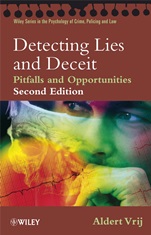
Detecting Lies and Deceit: Pitfalls and Opportunities
ISBN 9780470516256
Autor: Aldert Vrij
Wydawca: Wiley
Dostępność: 3-6 tygodni
Cena: 296,10 zł
Przed złożeniem zamówienia prosimy o kontakt mailowy celem potwierdzenia ceny.
ISBN13: |
9780470516256 |
ISBN10: |
0470516259 |
Autor: |
Aldert Vrij |
Oprawa: |
Paperback |
Rok Wydania: |
2008-01-11 |
Numer Wydania: |
2nd Edition |
Ilość stron: |
502 |
Wymiary: |
229x153 |
Tematy: |
JC |
Why do people lie? Do gender and personality differences affect how people lie? How can lies be detected?
Detecting Lies and Deceit provides the most comprehensive review of deception to date. This revised edition provides an up–to–date account of deception research and discusses the working and efficacy of the most commonly used lie detection tools, including:
Behaviour Analysis Interview
Statement Validity Assessment
Reality Monitoring
Scientific Content Analysis
Several different polygraph testsVoice Stress Analysis
Thermal Imaging
EEG–P300
Functional Magnetic Resonance Imaging (fMRI)
All three aspects of deception are covered: nonverbal cues, speech and written statement analysis and (neuro)physiological responses. The most common errors in lie detection are discussed and practical guidelines are provided to help professionals improve their lie detection skills.
Detecting Lies and Deceit is a must–have resource for students, academics and professionals in psychology, criminology, policing and law.
Published in the Wiley Series in the Psychology of Crime, Policing and Law
Seried Editors:
Professor Graham Davies and Professor Ray Bull, University of Leicester, UK
Spis treści:
About the Author.
Series Preface.
Preface.
Acknowledgements.
1 Introduction.
2 Lying: A Selfish Act and a Social Lubricant.
3 Nonverbal Behaviour and Deception.
4 Individual Verbal Cues to Deception.
5 Beliefs about Nonverbal and Verbal Cues to Deception.
6 Lie Detection Without Using Specialised Tools.
7 The Behaviour Analysis Interview.
8 Statement Validity Assessment.
9 Reality Monitoring.
10 Scientific Content Analysis.
11 Physiological Lie Detection: The Concern Approach.
12 Physiological Lie Detection: The Orienting Reflex Approach.
13 Physiological Lie Detecti
on: Functional Magnetic Resonance Imaging (fMRI).
14 Pitfalls: Why People Fail to Catch Liars.
15 Opportunities: How People Can Improve Their Lie Detection Skills.
Epilogue.
References.
Index.
Nota biograficzna:
Aldert Vrij is a Professor of Applied Social Psychology in the Department of Psychology at the University of Portsmouth (UK). He has published more than 300 articles and book chapters to date, mainly on the subjects of nonverbal and verbal cues to deception and lie detection. he also advises the police about conducting interviews with suspects, acts as an Expert Witness in court, and gives invited talks and workshops on lie detection to practitioners and scholars across the world. he is at present Editor of Legal and Criminological Psychology, a forensic journal published by the British Psychological Society.
Okładka tylna:
Why do people lie? Do gender and personality differences affect how people lie? How can lies be detected?
Detecting Lies and Deceit provides the most comprehensive review of deception to date. This revised edition provides an up–to–date account of deception research and discusses the working and efficacy of the most commonly used lie detection tools, including:
Behaviour Analysis Interview
Statement Validity Assessment
Reality Monitoring
Scientific Content Analysis
Several different polygraph testsVoice Stress Analysis
Thermal Imaging
EEG–P300
Functional Magnetic Resonance Imaging (fMRI)
All three aspects of deception are covered: nonverbal cues, speech and written statement analysis and (neuro)physiological responses. The most common errors in lie detection are discussed and practical guidelines are provided to help professionals improve their lie detection skills.
Detecting Lies and Deceit is a must–have resource for students, academics and professionals in psyc
hology, criminology, policing and law.
Published in the Wiley Series in the Psychology of Crime, Policing and Law
Seried Editors:
Professor Graham Davies and Professor Ray Bull, University of Leicester, UK
Koszyk
Książek w koszyku: 0 szt.
Wartość zakupów: 0,00 zł
Informacje


Kontakt
Gambit
Centrum Oprogramowania
i Szkoleń Sp. z o.o.
Al. Pokoju 29b/22-24
31-564 Kraków
Siedziba Księgarni
ul. Kordylewskiego 1
31-542 Kraków
+48 12 410 5991
+48 12 410 5987
+48 12 410 5989
Subskrypcje
Administratorem danych osobowych jest firma Gambit COiS Sp. z o.o. Na podany adres będzie wysyłany wyłącznie biuletyn informacyjny.
Autoryzacja płatności

Informacje na temat autoryzacji płatności poprzez PayU.

© Copyright 2012: GAMBIT COiS Sp. z o.o. Wszelkie prawa zastrzeżone.
Projekt i wykonanie: Alchemia Studio Reklamy