


Wydawcy
Katalog tematyczny
- Archeologia (109)
- Ekonomia, finanse, business (13704)
- Filozofia (1445)
- Historia (3040)
- Języki i językoznawstwo (2356)
- Lifestyle, hobby i rozrywka (475)
- Medycyna (9704)
- Nauki humanistyczne (4)
- Nauki o Ziemi i środowisku (2638)
- Nauki ścisłe (20412)
- Astronomia (294)
- Biologia (5119)
- Chemia (6540)
- Chemia analityczna (361)
- Chemia fizyczna (346)
- Chemia nieorganiczna (137)
- Chemia organiczna (535)
- Krystalografia (27)
- Minerologia (46)
- Fizyka (3309)
- Matematyka (4574)
- Nauki ścisłe, ogólnie (503)
- Nauki społeczne (8486)
- Nauki techniczne (13450)
- Prawo (1696)
- Publikacje informacyjne i interdyscyplinarne (1288)
- Religia i wierzenia (917)
- Technika komputerowa (4067)
- Zdrowie, relacje międzyludzkie i rozwój osobisty (657)





Informacje szczegółowe o książce
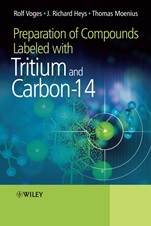
Preparation of Compounds Labeled with Tritium and Carbon–14
ISBN 9780470516072
Autor: Rolf Voges, J. Richard Heys, Thomas Moenius
Wydawca: Wiley
Dostępność: 3-6 tygodni
Cena: 882,00 zł
Przed złożeniem zamówienia prosimy o kontakt mailowy celem potwierdzenia ceny.
ISBN13: |
9780470516072 |
ISBN10: |
0470516070 |
Autor: |
Rolf Voges, J. Richard Heys, Thomas Moenius |
Oprawa: |
Hardback |
Rok Wydania: |
2009-03-20 |
Ilość stron: |
682 |
Wymiary: |
253x176 |
Tematy: |
PN |
Compounds labeled with carbon–14 and tritium are indispensable tools for research in biomedical sciences, discovery and development of pharmaceuticals and agrochemicals.
Preparation of Compounds Labeled with Tritium and Carbon–14 is a comprehensive authoritative and up–to–date discussion of the strategies, synthetic approaches, reactions techniques, and resources for the preparation of compounds labeled with either of these isotopes. A large number of examples are presented for the use of isotopic sources and building blocks in the preparation of labeled target compounds, illustrating the range of possibilities for embedding isotopic labels in selected moieties of complex structures.
Topics include:Formulation of synthetic strategies for preparing labeled compoundsIsotope exchange methods and synthetic alternatives for preparing tritiated compoundsIn–depth discussion of catrbon–14 building blocks and their utility in synthesisPreparation of enantiomerically pure isotopically labeled compoundsApplications of biotransformations
Preparation of Compounds Labeled with Tritium and Carbon–14 is an essential guide to the specialist strategies and tactics used by chemists to prepare compounds tagged with the radioactive atoms carbon–14 and tritium.
Spis treści:
Preface.
Glossary.
Author Biographies.
1 Introduction.
1.1 Physical Properties of Tritium and Carbon–14.
1.2 Purification.
1.3 Analysis.
1.4 Stability and Storage of Compounds Labeled with Tritium or Carbon–14.
1.5 Specialist Techniques and Equipment.
References .
2 Strategies for Target Preparation.
2.1 Formulating Target Specifications.
2.2 Planning Radiotracer Preparations.
References.
3 Preparation of Tritium–Labeled Compounds by Isotope Exchange Reactions.
3.1 Homogeneous Acid– or Ba
se–Catalyzed Exchange.
3.2 Heterogeneous Catalysis with Tritium in Solvent.
3.3 Heterogeneous Catalysis in Solution with Tritium Gas.
3.4 Homogeneous Catalysis in Solution with Tritiated Water.
3.5 Homogeneous Catalysis with Tritium Gas.
3.6 Solvent–Free Catalytic Exchange.
References.
4 Preparation of Tritium–Labeled Compounds by Chemical Synthesis.
4.1 Catalytic Tritiations.
4.2 Catalytic Tritiolyses.
4.3 Tritide Reductions.
4.4 Small Tritiated Building Blocks.
References.
5 Barium [14C]Carbonate and the Preparation of Carbon–14–Labeled Compounds via One–Carbon Building Blocks of the [14C]Carbon Dioxide Tree.
5.1 [14C]Carbon Dioxide (14CO2).
5.2 [14C]Carbon Monoxide (14CO).
5.3 [14C]Formic Acid (H14COOH).
5.4 [14C]Formaldehyde (H14CHO).
5.5 [14C]Methyl Iodide (14CH3I).
5.6 [14C]Nitromethane (14CH3NO2).
References.
6 Preparation of Carbon–14–Labeled Compounds via Multi–Carbon Building Blocks of the [14C]Carbon Dioxide Tree.
6.1 [14C]Acetic Acid and Its Derivatives.
6.2 Halo[14C]acetates.
6.3 [14C]Acetone.
6.4 Alkyl [14C]Acetoacetate.
6.5 [14C]Malonates.
References.
7 Preparation of Carbon–14–Labeled Compounds via the [14C]Cyanide Tree.
7.1 Metal [14C]Cyanides.
7.2 Preparation of Other Building Blocks from [14C]Cyanide.
References.
8 Preparation of Carbon–14–Labeled Compounds via the [14C2]Acetylene Tree.
8.1 [14C2]Acetylene (H14C≡14CH).
8.2 [14C2]Acetaldehyde (
14CH3 14CHO).
8.3 [1,2–14C2]Acetic Acid (14CH3 14COOH).
8.4 2–[2,3–14C2]Propyne–1–ol ([2,3–14C2]Propargyl Alcohol) and 2–[2,3–14C2]Butyne–1,4–diol.
8.5 Methyl [2,3–14C2]Propiolate (H14C≡14CCOOMe) and Dimethyl [2,3–14C2]Acetylenedicarboxylate (HOOC14C—14CCOOH).
8.6 1,2–[14C2]Dibromoethane (Br14CH2 14CH2Br).
8.7 [14C2]Ethylene Oxide.
8.8 [14Cn]Benzene and the Synthesis of Ring–Labeled Aromatic Compounds.
References.
9 Preparation of Carbon–14–Labeled Compounds via the [14C]Cyanamide Tree.
9.1 [14C]Cyanamide (H2N14C≡N).
9.2 [14C]Guanidine (H2N14C=NH)NH2).
9.3 [14C]Urea, H2N14CONH2.
9.4 [14C]Thiourea, H2N14CSNH2 .
References.
10 Reconstitution Strategies.
10.1 Replacement Strategies.
10.2 Disconnection Reconnection Strategies.
References.
11 Preparation of Enantiomerically Pure Compounds Labeled with Isotopes of Hydrogen and Carbon.
11.1 Resolution of Racemates.
11.2 Enantioselective Synthetic Methods.
11.3 Diastereoselective Synthetic Procedures.
References.
12 Biotransformations in the Preparation of Compounds Labeled with Carbon and Hydrogen Isotopes.
12.1 Applications of Isolated Enzymes.
12.2 Application of Cell–Containing Systems.
12.3 Biocatalyzed Synthesis of Key Intermediates for Reconstitution Approaches.
References.
Index.
Nota biograficzna:<
/b>
Rolf Voges studied chemistry at the Universities of Marburg and Freiburg, where he received his Ph.D. in organic chemistry on investigations into steric isotope effects, for which he received the Go¨deke Award. After postdoctoral research on stereoselective syntheses he joined the isotope group of Sandoz Pharma AG (now Novartis AG) being involved for thirty years in organic radiochemical synthesis as Head of the Isotope Laboratories and then Head of Isotope Section. He is author or coauthor of about 40 publications, one patent, and coeditor of two previous conference proceeding volumes in the field, co–organizer of two international symposia on the synthesis and application of isotopically labeled compounds, founder and co–organizer of eleven Bad Soden meetings of the Central European Division of the International Isotope Society (CED–IIS), and co–editor of the proceedings. For three years he held a leadership position in the IIS, serving as its 2001 president. In recognition of his scientific achievements and his service to the isotope society he received the IIS–CED Award in 1995 and in 2003 the IISAward. He is now retired and lives in southwestern Germany, near the Swiss and French borders.
Richard Heys received his Ph.D. in organic chemistry from Stanford University in 1976 and conducted postdoctoral research in the chemistry department at Yale; both involved the synthesis of radiolabeled compounds and their use in elucidation of biosynthetic pathways. His subsequent 29–year career in organic radiochemical synthesis both in the laboratory and as a manager took him to the Radiochemistry Department of Midwest Research Institute (now part of Aptuit, Inc.), Smith Kline & French Laboratories/SmithKline Beecham Pharmaceuticals (now GlaxoSmithKline) and AstraZeneca Pharmaceuticals. Author or coauthor of over 85 publications, 8 patents and a previous conference proceedings volume in the field, org
Koszyk
Książek w koszyku: 0 szt.
Wartość zakupów: 0,00 zł
Informacje


Kontakt
Gambit
Centrum Oprogramowania
i Szkoleń Sp. z o.o.
Al. Pokoju 29b/22-24
31-564 Kraków
Siedziba Księgarni
ul. Kordylewskiego 1
31-542 Kraków
+48 12 410 5991
+48 12 410 5987
+48 12 410 5989
Subskrypcje
Administratorem danych osobowych jest firma Gambit COiS Sp. z o.o. Na podany adres będzie wysyłany wyłącznie biuletyn informacyjny.
Autoryzacja płatności

Informacje na temat autoryzacji płatności poprzez PayU.

© Copyright 2012: GAMBIT COiS Sp. z o.o. Wszelkie prawa zastrzeżone.
Projekt i wykonanie: Alchemia Studio Reklamy