


Wydawcy
Katalog tematyczny
- Archeologia (109)
- Ekonomia, finanse, business (13704)
- Filozofia (1445)
- Historia (3040)
- Języki i językoznawstwo (2356)
- Lifestyle, hobby i rozrywka (475)
- Medycyna (9704)
- Nauki humanistyczne (4)
- Nauki o Ziemi i środowisku (2638)
- Nauki ścisłe (20412)
- Astronomia (294)
- Biologia (5119)
- Chemia (6540)
- Chemia analityczna (361)
- Chemia fizyczna (346)
- Chemia nieorganiczna (137)
- Chemia organiczna (535)
- Krystalografia (27)
- Minerologia (46)
- Fizyka (3309)
- Matematyka (4574)
- Nauki ścisłe, ogólnie (503)
- Nauki społeczne (8486)
- Nauki techniczne (13450)
- Prawo (1696)
- Publikacje informacyjne i interdyscyplinarne (1288)
- Religia i wierzenia (917)
- Technika komputerowa (4067)
- Zdrowie, relacje międzyludzkie i rozwój osobisty (657)





Informacje szczegółowe o książce
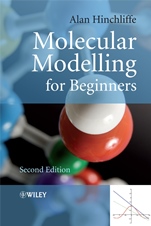
Molecular Modelling for Beginners
ISBN 9780470513132
Autor: Alan Hinchliffe
Wydawca: Wiley
Dostępność: 3-6 tygodni
Cena: 814,80 zł
Przed złożeniem zamówienia prosimy o kontakt mailowy celem potwierdzenia ceny.
ISBN13: |
9780470513132 |
ISBN10: |
0470513136 |
Autor: |
Alan Hinchliffe |
Oprawa: |
Hardback |
Rok Wydania: |
2008-10-10 |
Numer Wydania: |
2nd Edition |
Ilość stron: |
432 |
Wymiary: |
253x182 |
Tematy: |
PN |
Molecular Modelling for beginners, Second Edition is a concise, basic introduction to modelling and computational chemistry including relevant introductory material to ensure greater accessibility to the subject.Partially updated from the first edition, chapter dealing with Monte Carlo and molecular dynamics, the Gn models, transition states and solvent models have been completely rewritten. A new chapter entitled ′Sharing out the energy′ has been added to give a deeper understanding of the many statistical concepts discussed. All the illustrative examples contained in the text have been reworked using state of the art software. The associated 3website contains a number of relevant problem sets, together with suggested solutions.The Appendix (′A Mathematical aide–memoire′) gives relevant mathematical detail and can be used stand–alone.
Carefully structured and including many real chemical examples:The text begins by introducing the relevant fundamental theories of classical mechanics and classical electrostatics.These basic theories are then applied to modelling, concentrating on developing models from classical mechanics an focusing in particular on molecular mechanics.Attention then turns to statistical concepts, with a discussion of the basic methods of statistical thermodynamics.Monte Carlo and molecular dynamics are then treated in some depth.We then turn to quantum models, from simple quantum gases through fashionable density functional theory.With an entire chapter devoted to QSAR and discovery chemistry, the text successfully combines the essential theory with relevant applications and examples designed to encourage student understanding.The text ends with a discussion of transition states and hybrid models.
This text will appeal to student taking undergraduate courses in chemistry, pharmacy, biochemistry, chemical engineering and materials science. It may also p
rove useful to students and researcher sin departments of biology, physics and maths who are required to study molecular modelling as part of their course and professionals who need a basic introduction to this increasingly important subject.
Spis treści:
Preface to the Second Edition.
Preface to the First Edition.
Chapter 1: Electric Charges and their Properties.
1.1 Point Charges.
1.2 Coulomb′s Law.
1.3 Pair Wise Additivity.
1.4 Electric Field.
1.5 Work.
1.6 Charge Distributions.
1.7 The Mutual Potential Energy U.
1.8 Relationship between Force and Mutual Potential Energy.
1.9 Electric Multipoles.
1.10 Electrostatic Potential.
1.11 Polarization and Polarizability.
1.12 Dipole Polarizability.
1.13 Many–body forces.
1.14 Problem Set.
Chapter 2: The Forces between Molecules.
2.1 Pair Potential.
2.2 Multipole Expansion.
2.3 Charge–Dipole interaction.
2.4 Dipole–Dipole Interaction.
2.5 Taking Account of the Temperature.
2.6 Induction Energy.
2.7 Dispersion Energy.
2.8 Repulsive Contributions.
2.9 Combination Rules.
2.10 Comparison with Experiment.
2.11 Improved Pair Potentials.
2.12 A Numerical Potential.
2.13 Site–Site Potentials.
2.14 Problem Set.
Chapter 3: Balls on Springs.
3.1 Vibrational Motion.
3.2 The Force Law.
3.3 A Simple Diatomic.
3.4 Three Problems.
3.5 The Morse Potential.
3.6 More Advanced Potentials.
Chapter 4: Molecular Mechanics.
4.1 More about Balls on Springs.
4.2 Larger Systems of Balls on Springs.
4.3 Force Fields.
4.4 Molecular Mechanics (MM).
4.5 Modelling the Solvent.
4.6 Time–and–Money–Saving Tricks.
4.7 Modern Force Fields.
4.8 Some commercial force fields.
Chapter 5: The Molecular Potential Energy Surface.
5.1 Multiple Minima.
5.2 Saddle Points.
5.3 Characterization.
5.4 Finding Minim
a.
5.5 Multivariate Grid Search.
5.6 Derivative Methods.
5.7 First–Order Methods.
5.8 Second–Order Methods.
5.9 Choice of Method.
5.10 The Z Matrix.
5.11 The End of the Z–Matrix.
5.12 Redundant Internal Coordinates.
Chapter 6: Molecular Mechanics Examples.
6.1 Geometry Optimization.
6.2 Conformation Searches.
6.3 Amino Acids.
6.4 QSAR.
6.5 Problem Set.
Chapter 7: Sharing Out the Energy.
7.1 Games of Chance.
7.2 Enumeration.
7.3 Boltzmann Probability.
7.4 Safety in Numbers.
7.5 Partition Function.
7.6 Two –level Quantum System.
7.7 Lindemann′s Theory of Melting.
7.8 Problem Set.
Chapter 8: Introduction to Statistical Thermodynamics.
8.1 The Ensemble.
8.2 The Internal Energy Uth.
8.3 Helmholtz Energy A.
8.4 Entropy S.
8.5 Equation of State and Pressure.
8.6 Phase Space.
8.7 Configurational Integral.
8.8 Virial of Clausius.
Chapter 9: Monte Carlo Simulations.
9.1 An Early Paper.
9.2 The First "Chemical" Monte Carlo Simulation.
9.3 Importance Sampling.
9.4 Periodic Box.
9.5 Cutoffs.
9.6 MC Simulation of Rigid Molecules.
9.7 Flexible Molecules.
Chapter 10: Molecular Dynamics.
10.1 Radial Distribution Function.
10.2 Pair Correlation Functions.
10.3 Molecular Dynamics Methodology.
10.5 Algorithms for Time Dependence.
10.6 Molten Salts.
10.7 Liquid Water.
10.8 Different Types of Molecular Dynamics.
10.9 Uses in Conformational Studies.
Chapter 11: Introduction to Quantum Modeling.
11.1 The Schrödinger Equation.
11.2 The Time–Independent Schrödinger Equation.
11.3 Particles in Potential Wells.
11.4 Correspondence Principle.
11.5 Two–Dimensional Infinite Well.
11.6 Three–Dimensional Infinite Well.
11.7 Two Non–Interacting Particles.
11.8 Finite Well.
11.9 Unbound States.
11.10 Free Pa
rticles.
11.11 Vibrational Motion.
Chapter 12: Quantum Gases.
12.1 Sharing Out the Energy.
12.2 Rayleigh Counting.
12.3 The Maxwell–Boltzmann Distribution of Atomic Kinetic Energies.
12.4 Black Body Radiation.
12.5 Modelling Metals.
12.6 Indistinguishability.
12.7 Spin.
12.8 Fermions and Bosons.
12.9 Pauli Exclusion Principle.
12.10 Boltzmann′s Counting Rule.
Chapter 13: One–Electron Atoms.
13.1 Atomic Spectra.
13.2 Correspondence Principle.
13.3 Infinite Nucleus Approximation.
13.4 Hartree′s Atomic Units.
13.5 Schrödinger Treatment of the Hydrogen Atom..
13.6 Radial Solutions.
13.7 Atomic Orbitals.
13.8 The Stern–Gerlach Experiment.
13.9 Electron Spin.
13.10 Total Angular Momentum.
13.11 Dirac Theory of the Electron.
13.12 Measurement in the Quantum World.
Chapter 14: The Orbital Model.
14.1 One– and Two–Electron Operators.
14.2 Many–Body Problem.
14.3 Orbital Model.
14.4 Perturbation Theory.
14.5 Variation Method.
14.6 The Linear Variation Method.
14.7 Slater Determinants.
14.8 Slater–Condon–Shortley Rules.
14.9 Hartree Model.
14.10 Atomic Shielding Constants.
14.11 Koopmans′ Theorem.
Chapter 15: Simple Molecules.
15.1 Hydrogen Molecule–ion H2+.
15.2 LCAO Model.
15.3 Elliptic Orbitals.
15.4 Heilter–London Treatment of Dihydrogen.
15.5 Dihydrogen MO Treatment.
15.6 James and Coolidge Treatment.
15.7 Population Analysis.
Chapter 16: The HF–LCAO Model.
16.1 Roothaan′s 1951 Landmark Paper.
16.2 The Ĵ and &Kcirc; Operators.
16.3 HF–LCAO Equations.
16.4 Electronic Energy.
16.5 Koopman’s Theorem.
16.6 Open Shell Systems.
16.7 Unrestricted Hartree–Fock (UHF) Model.
16.8 Basis Sets.
16.9 Gaussian Orbitals.
Chapter17: HF–LCAO Exam
Koszyk
Książek w koszyku: 0 szt.
Wartość zakupów: 0,00 zł
Informacje


Kontakt
Gambit
Centrum Oprogramowania
i Szkoleń Sp. z o.o.
Al. Pokoju 29b/22-24
31-564 Kraków
Siedziba Księgarni
ul. Kordylewskiego 1
31-542 Kraków
+48 12 410 5991
+48 12 410 5987
+48 12 410 5989
Subskrypcje
Administratorem danych osobowych jest firma Gambit COiS Sp. z o.o. Na podany adres będzie wysyłany wyłącznie biuletyn informacyjny.
Autoryzacja płatności

Informacje na temat autoryzacji płatności poprzez PayU.

© Copyright 2012: GAMBIT COiS Sp. z o.o. Wszelkie prawa zastrzeżone.
Projekt i wykonanie: Alchemia Studio Reklamy