


Wydawcy
Katalog tematyczny
- Archeologia (109)
- Ekonomia, finanse, business (13704)
- Filozofia (1445)
- Historia (3040)
- Języki i językoznawstwo (2356)
- Lifestyle, hobby i rozrywka (475)
- Medycyna (9704)
- Nauki humanistyczne (4)
- Nauki o Ziemi i środowisku (2638)
- Nauki ścisłe (20412)
- Nauki społeczne (8486)
- Nauki techniczne (13450)
- Prawo (1696)
- Publikacje informacyjne i interdyscyplinarne (1288)
- Religia i wierzenia (917)
- Technika komputerowa (4067)
- Zdrowie, relacje międzyludzkie i rozwój osobisty (657)





Informacje szczegółowe o książce
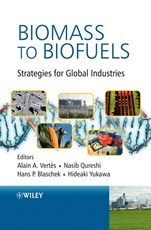
Biomass to Biofuels: Strategies for Global Industries
ISBN 9780470513125
Autor: Alain A. Vertes, Nasib Qureshi, Hideaki Yukawa, Hans P. Blaschek
Wydawca: Wiley
Dostępność: 3-6 tygodni
Cena: 384,30 zł
Przed złożeniem zamówienia prosimy o kontakt mailowy celem potwierdzenia ceny.
ISBN13: |
9780470513125 |
ISBN10: |
0470513128 |
Autor: |
Alain A. Vertes, Nasib Qureshi, Hideaki Yukawa, Hans P. Blaschek |
Oprawa: |
Hardback |
Rok Wydania: |
2010-01-15 |
Ilość stron: |
584 |
Wymiary: |
246x177 |
Tematy: |
KM |
As the demand for renewable energy solutions becomes increasingly urgent, what are the key challenges preventing industrialisation of biofuels on a global scale?
Biofuels are rapidly emerging as a popular solution to address global warming, rising energy costs and fuel supply shortages. However the environmental, economic and energetic benefits of biofuels still remain challenged. Amidst the global debate, Biomass to Biofuels addresses these challenges through a discussion of the latest scientific advances in biofuel manufacturing. Combining scientific and business perspectives, the book provides a comprehensive overview of biofuel production technologies, highlighting both manufacturing and financial concerns in order to define an appropriate R&D strategy.
The text is divided into five parts:
• Structure of the Bioenergy Business : Reviews the fundamental drivers of the biofuels market
• Diesel from Biomass : Includes chapters on liquefaction and gasification of solid biomass, Fisher–Tropsch and biofuels from microalgae
• Ethanol & Butanol : Evaluates fermentation and downstream processing technologies vs. current industrial practice
• Hydrogen, Methane & Methanol : Describes generation of hydrogen by microbial cultures and industrial scale production of methane and methanol
• Perspectives : Considers genetic engineering of biomass–producing crops and financing strategies for large scale biofuel production
This is a valuable handbook for scientists and policy makers working in the biofuels industry, as well as those working in the related fields of petrochemicals and agriculture. It is also an important resource for students and academic researchers working on renewable energy solutions and bioprocessing technology.
Spis treści:
Foreword.
Preface.
Contributors.
<
b>Part I: Structure of the Bioenergy Business.
1 Characteristics of Biofuels and Renewable Fuel Standards (Alan C. Hansen, Dimitrios C. Kyritsis, and Chia fon F. Lee).
1.1 Introduction.
1.2 Molecular Structure.
1.3 Physical Properties.
1.4 Chemical Properties.
1.5 Biofuel Standards.
1.6 Perspective.
References.
2 The Global Demand for Biofuels: Technologies, Markets and Policies (Jürgen Scheffran).
2.1 Introduction.
2.2 Motivation and Potential of Renewable Fuels.
2.3 Renewable Fuels in the Transportation Sector.
2.4 Status and Potential of Major Biofuels.
2.5 Biofuel Policies and Markets in Selected Countries.
2.6 Perspective.
References.
3 Biofuel Demand Realization (Stephen R. Hughes and Nasib Qureshi).
3.1 Introduction.
3.2 Availability of Renewable Resources to Realize Biofuel Demand.
3.3 Technology Improvements to Enhance Biofuel Production Economics.
3.4 US Regulatory Requirements for Organisms Engineered to Meet Biofuel Demand.
3.5 Conclusions.
References.
4 Advanced Biorefineries for the Production of Fuel Ethanol (Stephen R. Hughes, William Gibbons, and Scott Kohl).
4.1 Introduction.
4.2 Ethanol Production Plants Using Sugar Feedstocks.
4.3 Dedicated Dry–Grind and Dry–Mill Starch Ethanol Production Plants.
4.4 Dedicated Wet–Mill Starch Ethanol Production Plants.
4.5 Dedicated Cellulosic Ethanol Production Plants.
4.6 Advanced Combined Biorefineries.
4.7 Perspective.
References.
Part II: Diesel from Biomass.
5 Biomass Liquefaction and Gasification (Nicolaus Dahmen, Edmund Henrich, Andrea Kruse, and Klaus Raffelt).
5.1 Introduction.
5.2 Direct Liquefaction.
5.3 Biosynfuels from Biosyngas.
5.4 Summary and Conclusions.
References.
6 Diesel from Syngas (Yong–Wang Li, Jian Xu, and Yong Yang).
6.1 Introduction.
6.2 Overview of Fischer–Tropsch Synthesis.
6.
3 Historical Development of the F–T Synthesis Process.
6.4 Modern Fischer–Tropsch Synthesis Processes.
6.5 Economics.
6.6 Perspective.
Acknowledgements.
References.
7 Biodiesel from Vegetable Oils (Jon Van Gerpen).
7.1 Introduction.
7.2 Use of Vegetable Oils as Diesel Fuels.
7.3 Renewable Diesel.
7.4 Properties.
7.5 Biodiesel Production.
7.6 Transesteritication.
7.7 Biodiesel Purification.
7.8 Perspective.
References.
8 Biofuels from Microalgae and Seaweeds (Michael Huesemann, Guri Roesjadi, John Benemann, and F. Blaine Metting).
8.1 Introduction.
8.2 Biofuels from Microalgae: Products, Processes, and Limitations.
8.3 Biofuels from Seaweeds: Products, Processes, and Limitations.
8.4 Conclusions.
References.
Part III: Ethanol and Butanol.
9 Improvements in Corn to Ethanol Production Technology Using Saccharomyces cerevisiae (Vijay Singh, David B. Johnston, Kent D. Rausch, and M.E. Tumbleson).
9.1 Introduction.
9.2 Current Industrial Ethanol Production Technology.
9.3 Granular Starch Hydrolysis.
9.4 Corn Fractionation.
9.5 Simultaneous SSF and Distillation.
9.6 Dynamic Control of SSF Processes.
9.7 Cost of Ethanol.
9.8 Perspective.
References.
10 Advanced Technologies for Biomass Hydrolysis and Saccharification Using Novel Enzymes (Margret E. Berg Miller, Jennifer M. Brulc, Edward A. Bayer, Raphael Lamed, Harry J. Flint, and Bryan A. White).
10.1 Introduction.
10.2 The Substrate.
10.3 Glycosyl Hydrolases.
10.4 The Cellulosome Concept.
10.5 New Approaches for the Identification of Novel Glycoside Hydrolases.
10.6 Perspective.
References.
11 Mass Balances and Analytical Methods for Biomass Pretreatment Experiments (Bruce S. Dien).
11.1 Introduction.
11.2 Analysis of Feedstocks for Composition and Potential Ethanol Yield.
11.3 Pretreatment.
11.4 Enzymatic Extraction of Sugars.
11.5
Fermentation of Pretreated Hydrolysates to Ethanol.
11.6 Feedstock and Process Integration.
11.7 Perspective.
Acknowledgments.
References.
12 Biomass Conversion Inhibitors and In Situ Detoxification (Z. Lewis Liu and Hans P. Blaschek).
12.1 Introduction.
12.2 Inhibitory Compounds Derived from Biomass Pretreatment.
12.3 Inhibitory Effects.
12.4 Removal of Inhibitors.
12.5 Inhibitor–Tolerant Strain Development.
12.6 Inhibitor Conversion Pathways.
12.7 Molecular Mechanisms of In Situ Detoxification.
12.8 Perspective.
Acknowledgments.
References.
13 Fuel Ethanol Production From Lignocellulosic Raw Materials Using Recombinant Yeasts (Grant Stanley and Barbel Hahn–Hagerdal).
13.1 Introduction.
13.2 Consolidated Bioprocessing and Ethanol Production.
13.3 Pentose–Fermenting S. cerevisiae Strains.
13.4 Lignocellulose Fermentation and Ethanol Inhibition.
13.5 Perspective.
Acknowledgments.
References.
14 Conversion of Biomass to Ethanol by Other Organisms (Siqing Liu).
14.1 Introduction.
14.2 Desired Biocatalysts for Biomass to Bioethanol.
14.3 Gram–Negative Bacteria.
14.4 Gram–Positive Bacteria.
14.5 Perspective.
Acknowledgments.
References.
15 Advanced Fermentation Technologies (Masayuki Inui, Alain A. Vertés and Hideaki Yukawa).
15.1 Introduction.
15.2 Batch Processes.
15.3 Fed–Batch Processes.
15.4 Continuous Processes.
15.5 Immobilized Cell Systems.
15.6 Growth–Arrested Process.
15.7 Integrated Bioprocesses.
15.8 Consolidated Bioprocessing (CBP).
15.9 Perspective.
References.
16 Advanced Product Recovery Technologies (Thaddeus C Ezeji and Yebo Li).
16.1 Introduction.
16.2 Membrane Separation.
16.3 Advanced Technologies for Biofuel Recovery: Industrially Relevant Processes.
16.4 Perspective.
Acknowledgments.
References.
17 Clostridia and Proce
ss Engineering for Energy Generation (Nasib Qureshi and Hans P. Blaschek).
17.1 Introduction.
17.2 Substrates, Cultures, and Traditional Technologies.
17.3 Agricultural Residues as Substrates for the Future.
17.4 Butanol–Producing Microbial Cultures.
17.5 Regulation of Butanol Production and Microbial Genetics.
17.6 Novel Fermentation Technologies.
17.7 Novel Product Recovery Technologies.
17.8 Fermentation of Lignocellulosic Substrates in Integrated Systems.
17.9 Integrated or Consolidated Processes.
17.10 Conclusions.
Acknowledgments.
References.
Part IV: Hydrogen, methane, and methanol.
18 Hydrogen Generation by Microbial Cultures (Anja Hemschemeier, Katrin Mllner, Thilo Rhle, and Thomas Happe).
18.1. Introduction: Why Biological Hydrogen Production?
18.2. Biological Hydrogen Production.
18.3. Metabolic Basics for Hydrogen Production: Fermentation and Photosynthesis.
18.4. H2 Production in Application: Cases in Point.
18.5. Perspective.
References.
19 Engineering Photosynthesis for H2 Production from H2O: Cyanobacteria as Design Organisms (Nadine Waschewski, Gabor Bernat, and Matthias Ragner).
19.1 The Basic Idea: Why Hydrogen from Water?
19.2 Realization: Three Mutually Supporting Strategies.
19.3 The Biological Strategy: How to Design a Hydrogen–Producing (Cyano–) Bacterial Cell.
19.4 Engineering the Environment of the Cells: Reactor Design.
19.5 How Much Can We Expect? The Limit of Natural Systems.
19.6 Perspective.
Acknowledgments.
References.
20 Production and Utilization of Methane Biogas as Renewable Fuel (Zhongtang Yu, Mark Morrison, and Floyd L. Schanbacher).
20.1 Introduction.
20.2 The Microbes and Metabolisms Underpinning Biomethanation.
20.3 Potential Feedstocks Used for Methane Biogas Production.
20.4 Biomethanation Technologies for Production of Methane Biogas.
20.5 Utilization of Methane Biog
as as a Fuel.
20.6 Perspective.
20.7 Concluding Remarks.
20.8 Disclaimer.
References.
21 Methanol Production and Utilization (Gregory A. Dolan).
21.1 Introduction.
21.2 Biomass Gasification: Mature and Immature.
21.3 Feedstocks: Diverse and Plentiful.
21.4 Biomethanol: ICEs, FFVs, and FCVs.
21.5 Case Study: Waste Wood Biorefinery.
21.6 Case Study: Two–Step Thermochemical Conversion Process.
21.7 Case Study: Mobile Methanol Machine .
21.8 Case Study: Scandinavia Leading the Way with Black Liquor Methanol Production.
21.9 Case Study: Methanol Fermentation through Anaerobic Digestion.
References.
Part Five: Perspectives.
22 Enhancing Primary Raw Materials for Biofuels (Takahisa Hayashi, Rumi Kaida, Nobutaka Mitsuda, Masaru Ohme–Takagi, Nobuyuki Nishikuba, Shin–ichiro Kidou, and Kouki Yoshida).
22.1 Introduction.
22.2 In–Fibril Modification.
22.3 In–Wall Modifications.
22.4 In–Planta Modifications.
22.5 In–CRES–T Modification.
22.6 A Catalogue of Gene Families for Glycan Synthases and Hydrolases.
22.7 Perspective.
Acknowledgments.
References.
23 Axes of Development in Chemical and Process Engineering for Converting Biomass to Energy (Alain A. Vertés).
23.1 Global Outlook.
23.2 Enhancement of Raw Material Biomass.
23.3 Conversion of Biomass to Fuels and Chemicals.
23.4 Chemical Engineering Development.
23.5 Perspective.
References.
24 Financing Strategies for Industrial–Scale Biofuel Production and Technology Development Start–Ups (Sarit Soccary Ben Yochanan and Alain A. Vertés).
24.1 Background: The Financial Environment.
24.2 Biofuels Project: Steps in Value Creation and Required Funding at Each Stage.
24.3 Governmental Incentives to Support the Nascent Biofuel and Biomaterial Industry.
24.4 Perspective: What is the Best Funding Source for Each Step in
a Company’s Development?
References.
Index.
Okładka tylna:
As the demand for renewable energy solutions becomes increasingly urgent, what are the key challenges preventing industrialisation of biofuels on a global scale?
Biofuels are rapidly emerging as a popular solution to address global warming, rising energy costs and fuel supply shortages. However the environmental, economic and energetic benefits of biofuels still remain challenged. Amidst the global debate, Biomass to Biofuels addresses these challenges through a discussion of the latest scientific advances in biofuel manufacturing. Combining scientific and business perspectives, the book provides a comprehensive overview of biofuel production technologies, highlighting both manufacturing and financial concerns in order to define an appropriate R&D strategy.
The text is divided into five parts:
• Structure of the Bioenergy Business : Reviews the fundamental drivers of the biofuels market
• Diesel from Biomass : Includes chapters on liquefaction and gasification of solid biomass, Fisher–Tropsch and biofuels from microalgae
• Ethanol & Butanol : Evaluates fermentation and downstream processing technologies vs. current industrial practice
• Hydrogen, Methane & Methanol : Describes generation of hydrogen by microbial cultures and industrial scale production of methane and methanol
• Perspectives : Considers genetic engineering of biomass–producing crops and financing strategies for large scale biofuel production
This is a valuable handbook for scientists and policy makers working in the biofuels industry, as well as those working in the related fields of petrochemicals and agriculture. It is also an important resource for students and academic researchers working on renewable energy solutions and bioprocessi
ng technology.
Koszyk
Książek w koszyku: 0 szt.
Wartość zakupów: 0,00 zł
Informacje


Kontakt
Gambit
Centrum Oprogramowania
i Szkoleń Sp. z o.o.
Al. Pokoju 29b/22-24
31-564 Kraków
Siedziba Księgarni
ul. Kordylewskiego 1
31-542 Kraków
+48 12 410 5991
+48 12 410 5987
+48 12 410 5989
Subskrypcje
Administratorem danych osobowych jest firma Gambit COiS Sp. z o.o. Na podany adres będzie wysyłany wyłącznie biuletyn informacyjny.
Autoryzacja płatności

Informacje na temat autoryzacji płatności poprzez PayU.

© Copyright 2012: GAMBIT COiS Sp. z o.o. Wszelkie prawa zastrzeżone.
Projekt i wykonanie: Alchemia Studio Reklamy