


Wydawcy
Katalog tematyczny
- Archeologia (109)
- Ekonomia, finanse, business (13704)
- Filozofia (1445)
- Historia (3040)
- Języki i językoznawstwo (2356)
- Lifestyle, hobby i rozrywka (475)
- Medycyna (9704)
- Nauki humanistyczne (4)
- Nauki o Ziemi i środowisku (2638)
- Nauki ścisłe (20412)
- Nauki społeczne (8486)
- Edukacja (229)
- Kryminologia, opieka spełeczna (284)
- Obronność (10)
- Polityka (1389)
- Psychologia (777)
- Socjologia (410)
- Społeczeństwo i kultura (187)
- Nauki techniczne (13450)
- Prawo (1696)
- Publikacje informacyjne i interdyscyplinarne (1288)
- Religia i wierzenia (917)
- Technika komputerowa (4067)
- Zdrowie, relacje międzyludzkie i rozwój osobisty (657)





Informacje szczegółowe o książce
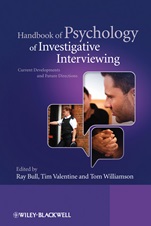
Handbook of Psychology of Investigative Interviewing: Current Developments and Future Directions
ISBN 9780470512678
Autor: Ray Bull, Tim Valentine, Tom Williamson
Wydawca: Wiley
Dostępność: 3-6 tygodni
Cena: 549,15 zł
Przed złożeniem zamówienia prosimy o kontakt mailowy celem potwierdzenia ceny.
ISBN13: |
9780470512678 |
ISBN10: |
0470512679 |
Autor: |
Ray Bull, Tim Valentine, Tom Williamson |
Oprawa: |
Hardback |
Rok Wydania: |
2009-09-11 |
Ilość stron: |
360 |
Wymiary: |
251x170 |
Tematy: |
JC |
With chapters written by internationally acclaimed experts on obtaining information from crime suspects and witnesses, this authoritative handbook explores current developments in the rapidly growing field of investigative interviewing.
The book focuses in particular on the interviewing of suspects, and chapters examine their decision–making, denial strategies, false confessions, a model for interviewing suspects and the interviewing of terrorists. It also examines the changing contexts in which alleged terrorists and members of organized crime are interviewed. The chapters on obtaining information from witnesses centre on identification issues, enhancement of person descriptions, the cognitive interview, and the relation between the accuracy and consistency of witnesses’ accounts. Topics such as recovered memories and assessing truthfulness are also included.
This book is essential reading for both researchers and practitioners in forensic psychology and law, as well as policy makers and students of forensic psychology.
Spis treści:
About the Editors.
About the Contributors.
Preface.
Chapter 1 The Psychology of Suspects’ Decision–Making during Interrogation (Michel St–Yves and Nadine Deslauriers–Varin).
Chapter 2 A Typology of Denial Strategies by Suspects in Criminal Investigations (Stephen Moston and Geoffrey M. Stephenson).
Chapter 3 A Structured Model for Investigative Interviewing of Suspects (Jannie van der Sleen).
Chapter 4 Finding False Confessions (Peter J. van Koppen).
Chapter 5 The Investigation of Terrorist Offences in the United Kingdom: The Context and Climate for Interviewing Offi cers (John Pearse).
Chapter 6 From Criminal Justice to Control Process: Interrogation in a Changing Context (David Dixon).
Chapter 7 Major Crime (Investigative Powers) Act 2004: The Chief Examiner and Coercive Powers (Damien B. Maguire).
Chapter 8 The Relation between Consistency and Accuracy of Eyewitness Testimony: Legal versus Cognitive Explanations (Ronald P. Fisher, Neil Brewer and Gregory Mitchell).
Chapter 9 The Cognitive Interview: Research and Practice across the Lifespan (Robyn E. Holliday, Charles J. Brainerd, Valerie F. Reyna and Joyce E. Humphries).
Chapter 10 Investigative Interviewing in the Courtroom: Child Witnesses under Cross–Examination (Rachel Zajac).
Chapter 11 Recovered Memories (James Ost).
Chapter 12 Obtaining and Interpreting Eyewitness Identifi cation Test Evidence: The Infl uence of Police–Witness Interactions (Neil Brewer and Gary L. Wells).
Chapter 13 Recent Developments in Eyewitness Identifi cation Procedures in the United Kingdom (Tim Valentine, Carwyn Hughes and Rod Munro).
Chapter 14 A Method to Enhance Person Description: A Field Study (Samuel Demarchi and Jacques Py).
Chapter 15 Recent Developments in North American Identifi cation Science and Practice (Steven D. Penrod and Margaret Bull Kovera).
Chapter 16 Truthfulness in Witnesses’ and Suspects’ Reports (A. Daniel Yarmey).
Chapter 17 Evaluating Truthfulness: Detecting Truths and Lies in Forensic Contexts (Barry S. Cooper, Hugues Hervé and John C. Yuille).
Index.
Nota biograficzna:
Ray Bull is Professor of Forensic Psychology at the University of Leicester. He has advised a large number of police forces in several countries on the interviewing of witnesses and suspects, and has testified as an expert witness in a number of trials. He was part of the small team commissioned by the Home Office to write the 2002 Government document Achieving Best Evidence in Criminal Proceedings: Guidance for Vulnerable or Intimidated Witnesses, Including Children (ABE). In April 2009, Professor Bull received the Senior Academic Award from the International Invest
igative Interviewing Research Group for his significant lifetime contribution to the field of investigative interviewing.
Tim Valentine was appointed to a Chair of Psychology at Goldsmiths, University of London in 1997. He has more than 25 years’ research experience in theoretical and applied aspects of human face recognition. He has authored more than 70 scientific articles and presented research papers in Australia, Canada, Europe, New Zealand and USA. He has worked as an expert witness since 1999 advising in criminal cases of disputed identification.
Tom Williamson was a highly experienced police officer who swiftly rose through the ranks while completing a Bachelor degree, followed by a PhD. He was the major driving force in the shift from ‘interrogation’ to ‘investigative interviewing’ in police interviewing.
Okładka tylna:
With chapters written by internationally acclaimed experts on obtaining information from crime suspects and witnesses, this authoritative handbook explores current developments in the rapidly growing field of investigative interviewing.
The book focuses in particular on the interviewing of suspects, and chapters examine their decision–making, denial strategies, false confessions, a model for interviewing suspects and the interviewing of terrorists. It also examines the changing contexts in which alleged terrorists and members of organized crime are interviewed. The chapters on obtaining information from witnesses centre on identification issues, enhancement of person descriptions, the cognitive interview, and the relation between the accuracy and consistency of witnesses’ accounts. Topics such as recovered memories and assessing truthfulness are also included.
This book is essential reading for both researchers and practitioners in forensic psychology and law, as well as policy makers and students of forensic psychology.
Koszyk
Książek w koszyku: 0 szt.
Wartość zakupów: 0,00 zł
Informacje


Kontakt
Gambit
Centrum Oprogramowania
i Szkoleń Sp. z o.o.
Al. Pokoju 29b/22-24
31-564 Kraków
Siedziba Księgarni
ul. Kordylewskiego 1
31-542 Kraków
+48 12 410 5991
+48 12 410 5987
+48 12 410 5989
Subskrypcje
Administratorem danych osobowych jest firma Gambit COiS Sp. z o.o. Na podany adres będzie wysyłany wyłącznie biuletyn informacyjny.
Autoryzacja płatności

Informacje na temat autoryzacji płatności poprzez PayU.

© Copyright 2012: GAMBIT COiS Sp. z o.o. Wszelkie prawa zastrzeżone.
Projekt i wykonanie: Alchemia Studio Reklamy