


Wydawcy
Katalog tematyczny
- Archeologia (109)
- Ekonomia, finanse, business (13704)
- Filozofia (1445)
- Historia (3040)
- Języki i językoznawstwo (2356)
- Lifestyle, hobby i rozrywka (475)
- Medycyna (9704)
- Nauki humanistyczne (4)
- Nauki o Ziemi i środowisku (2638)
- Nauki ścisłe (20412)
- Astronomia (294)
- Biologia (5119)
- Chemia (6540)
- Chemia analityczna (361)
- Chemia fizyczna (346)
- Chemia nieorganiczna (137)
- Chemia organiczna (535)
- Krystalografia (27)
- Minerologia (46)
- Fizyka (3309)
- Matematyka (4574)
- Nauki ścisłe, ogólnie (503)
- Nauki społeczne (8486)
- Nauki techniczne (13450)
- Prawo (1696)
- Publikacje informacyjne i interdyscyplinarne (1288)
- Religia i wierzenia (917)
- Technika komputerowa (4067)
- Zdrowie, relacje międzyludzkie i rozwój osobisty (657)





Informacje szczegółowe o książce
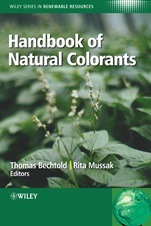
Handbook of Natural Colorants
ISBN 9780470511992
Autor: Thomas Bechtold, Rita Mussak
Wydawca: Wiley
Dostępność: 3-6 tygodni
Cena: 762,30 zł
Przed złożeniem zamówienia prosimy o kontakt mailowy celem potwierdzenia ceny.
ISBN13: |
9780470511992 |
ISBN10: |
0470511990 |
Autor: |
Thomas Bechtold, Rita Mussak |
Oprawa: |
Hardback |
Rok Wydania: |
2009-04-17 |
Ilość stron: |
434 |
Wymiary: |
253x175 |
Tematy: |
PN |
Concentration on renewable resources, sustainability and replacement of oil based products are driving forces to reassess the potential of natural resources including natural colorants. The growing consumer interest in purchasing green products, which exhibit an improved environmental profile, can be seen as the break–through force needed to reintroduce natural colorants into the modern markets.
Written by scientists with specialised knowledge in the field, Handbook of Natural Colorants provides a unique source of information, summarising the present knowledge of natural colorants in depth. Supporting researchers in this emerging field of sustainable chemistry, it provides easy access to the theory and practice of natural colorants from different viewpoints, including agricultural, economic and legislative aspects.
Topics covered include:
History of coloration technologyPresent position of natural colorantsRegional plant source availabilitySpecific application techniquesChemical properties that professional dyers and chemists have to considerAgricultural sourcing of dyes with an emphasis on renewable resourcesDiscussions on energy and material balance issues arising from the sourcing of materialsProduction aspects of colorants, leading on to the key applicationsEnvironmental and economic aspects
Also included are the pros and cons of natural dyestuffs, presenting some promising results and evaluating the potential use of vegetable dyes as alternatives to chemical–based ones with a focus on green chemistry
Spis treści:
List of Contributors.
Series Preface.
Preface.
Part I Historical Aspects.
1 History of Natural Dyes in the Ancient Mediterranean World (Maria J. Melo).
1.1 Introduction.
1.2 Ancient Reds.
1.3 Ancient Blues.
1.4 Ancient Purple (Tyrian Purple).
1.5 Ancient Yellows.
Acknowledgement.
References.
2 Colours
in Civilizations of the World and Natural Colorants: History under Tension (Dominique Cardon).
2.1 Introduction.
2.2 The Triumph of Mauvein: Synthetic Fulfilment of the Antique Purplemania.
2.3 Blue: from Kingly Regional to Globally Democratic.
2.4 Red and Yellow: from Micro to Macro Scales.
2.5 What Future for Natural Colorants in the Dawning Era of Renewable Resources?
Acknowledgement.
References.
3 History of Natural Dyes in North Africa ‘Egypt’ (Harby Ezzeldeen Ahmed).
3.1 Introduction.
3.2 Natural Dyes in Pharaonic Textiles.
3.3 Dyeing Techniques.
3.4 Dye Sources.
3.5 Dyeing in Coptic Textiles.
3.6 Wool Dyed Fabric with Natural Dye.
3.7 Dyes in Islamic Textiles.
3.8 Mordants.
References.
Part II Regional Aspects of Availability of Plant Sources.
4 Dye Plants in Europe (Andrea Biertu¨mpfel and Gu¨nter Wurl).
4.1 Introduction.
4.2 Potential European Dye Plants.
4.3 Cultivation of Dye Plants Yesterday and Now.
4.4 Modern Cultivation Methods for Important European Dye Plants.
4.5 Production of Dye Extracts.
4.6 Relevant Examples for the Application.
4.7 Conclusions, Discussion and Summary.
References.
5 Dyes in South America (Veridiana Vera de Rosso and Adriana Zerlotti Mercadante).
5.1 Introduction.
5.2 Annatto.
5.3 Turmeric.
5.4 Marigold.
5.5 Cochineal and Carmine.
Acknowledgements.
References.
6 Natural Dyes in Eastern Asia (Vietnam and Neighbouring Countries) (Hoang Thi Linh).
6.1 Introduction.
6.2 Annatto (Botanical Name Bixa orellana L., Family Bixaceae).
6.3 Tea (Botanical Name Camellia sinensis (L.) Kuntze, Family Theaceae).
6.4 Umbrella Tree (Botanical Name Terminalia catappa L., Family Combretaceae).
6.5 Diospyros mollis Mackloeur (Botanical Name Diospyros mollis L. Griff, Family Ebenaceae).
6.6 Indigo (Botanical Name Indigofera L., Family Fabaceae).
6.7 Henna (kok khan, or khao youak in Laos) (Botan
ical Name Lawsonia spinosa L., Family Lythraceae).
6.8 Nacre (Botanical Name Khaya senegalensis, Family Meliaceae).
6.9 Sappan Wood (Botanical Name Caesalpinia sappan L., Family Fabaceae).
6.10 Sophora japonica Flowers (Botanical Name Sophora japonica L., Family Leguminosae).
6.11 Turmeric (Botanical Name Curcuma longa L., Family Zingiberaceae).
6.12 Sapodilla (Botanical Name Manilkara zapota L. or Achras zapota Family Sapotaceae).
6.13 Betel (Botanical Name Piper betle L., Family Piperaceae).
6.14 Eucalyptus (Botanical Name Eucalyptus, Family Myrtaceae).
6.15 Caesalpinia Yellow (Botanical Name Caesalpinia pulcherrima L., Family Fabaceae).
6.16 Brow–tuber (Botanical Name Dioscorea cirrhosa Lour, Family Dioscoreaceae).
Part III Colorant Production and Properties.
7 Indigo Agricultural Aspects (Philip John and Luciana Gabriella Angelini).
7.1 Introduction.
7.2 Isatis.
7.3 Persicaria (Polygonum).
7.4 Indigofera.
Acknowledgements.
References.
8 Indigo Extraction (Philip John).
8.1 Introduction.
8.2 Methods of Determining Indigo.
8.3 Precursors in the Plants and Indigo Formation.
8.4 Extraction Procedures.
8.5 Purity of Natural Indigo.
Acknowledgements.
References.
9 Anthocyanins: Nature’s Glamorous Palette (Maria J. Melo, Fernando Pina and Claude Andary).
9.1 Chemical Basis.
9.2 Natural Sources for Anthocyanins.
9.3 Applications.
9.4 Examples of Commercial Products and Processing.
References.
10 Natural Colorants Quinoid, Naphthoquinoid and Anthraquinoid Dyes (Thomas Bechtold).
10.1 Introduction.
10.2 Benzoquinone Dyes.
10.3 Naphthoquinone Dyes.
10.4 Anthraquinone Dyes.
10.5 Other Sources of Anthraquinoid Dyes.
References.
11 Dyes from Lichens and Mushrooms (Riikka Ra¨isa¨nen).
11.1 Use of Lichen and Mushroom Dyes in the Past.
11.2 Cultivation of Lichens and Mushrooms.
11.3 Dyestuffs in Lichens and Mushrooms.
11
.4 Colour–fastness of Lichen and Mushroom Dyes.
11.5 New Approaches to Lichen and Fungal Natural Dyes.
References.
12 Tannins and Tannin Agents (Riitta Julkunen–Tiitto and Hely Ha¨ggman).
12.1 Introduction.
12.2 Chemical Structure, Biosynthesis and Degradation.
12.3 Properties of Tannins.
12.4 Chemical Activities of Tannins.
12.5 Analysis of Tannins.
12.6 Use, Toxicology and Safety Aspects of Tannins.
References.
13 Carotenoid Dyes Properties (U. Gamage Chandrika).
13.1 Introduction.
13.2 Properties and Functions of Carotenoids.
13.3 General Procedure for Carotenoid Analysis.
13.4 Problems in Carotenoid Analysis.
References.
14 Carotenoid Dyes Production (U. Gamage Chandrika).
14.1 Factors Influencing Carotenoid Composition in Plant Sources.
References.
15 Chlorophylls (Ursula Maria Lanfer Marquez and Daniela Borrmann).
15.1 Introduction.
15.2 Chlorophylls as Colorants.
15.3 Other Applications of Chlorophylls and their Derivatives.
15.4 Chemical Structures and Physicochemical Properties.
15.5 Stability and Analysis.
15.6 Sources, Storage and Handling.
15.7 Purity, Standardization and Quality Control.
15.8 Toxicological and Safety Aspects.
References.
Part IV Application in Technical Use and Consumer Products.
16 Flavonoids as Natural Pigments (M. Monica Giusti and Taylor C. Wallace).
16.1 Introduction.
16.2 Role of Localized Flavonoids in the Plant.
16.3 General Flavonoid Chemical Structure.
16.4 Biosynthesis of Flavonoids.
16.5 Anthocyanins as Natural Colorants.
16.6 Other Flavonoids as Natural Colorants.
16.7 Therapeutic Effects of Flavonoids in the Diet.
16.8 Regulations on the Use of Flavonoid Colorants.
References.
17 Application of Natural Dyes in the Coloration of Wood (Martin Weigl, Andreas Kandelbauer, Christian Hansmann,Johannes Po¨ckl, Ulrich Mu¨ller and Michael Grabner).
17.1 Introduction.
17.2
Koszyk
Książek w koszyku: 0 szt.
Wartość zakupów: 0,00 zł
Informacje


Kontakt
Gambit
Centrum Oprogramowania
i Szkoleń Sp. z o.o.
Al. Pokoju 29b/22-24
31-564 Kraków
Siedziba Księgarni
ul. Kordylewskiego 1
31-542 Kraków
+48 12 410 5991
+48 12 410 5987
+48 12 410 5989
Subskrypcje
Administratorem danych osobowych jest firma Gambit COiS Sp. z o.o. Na podany adres będzie wysyłany wyłącznie biuletyn informacyjny.
Autoryzacja płatności

Informacje na temat autoryzacji płatności poprzez PayU.

© Copyright 2012: GAMBIT COiS Sp. z o.o. Wszelkie prawa zastrzeżone.
Projekt i wykonanie: Alchemia Studio Reklamy